




Filters
SORT
Product Availability –
Review Score –
 --%3E %3Csvg version='1.1' id='Fill' xmlns='http://www.w3.org/2000/svg' xmlns:xlink='http://www.w3.org/1999/xlink' x='0px' y='0px' viewBox='0 0 100 100' enable-background='new 0 0 100 100' xml:space='preserve'%3E %3Cpath fill='%23F15C02' d='M79.44,0.95H20.56C9.78,0.95,0.95,9.78,0.95,20.56v58.87c0,10.79,8.82,19.61,19.61,19.61h58.87 c10.79,0,19.61-8.83,19.61-19.61V20.56C99.05,9.78,90.22,0.95,79.44,0.95z M65.38,58.24l9.38,29.58L49.69,69.78L24.5,87.82 l9.34-29.6L8.8,39.6l30.73-0.17c0,0,6.98-19.61,10-28.93c0.54,1.36,9.88,29.1,9.88,29.1H91.2L65.38,58.24z'/%3E %3C/svg%3E)
 --%3E %3Csvg version='1.1' id='With-RB' xmlns='http://www.w3.org/2000/svg' xmlns:xlink='http://www.w3.org/1999/xlink' x='0px' y='0px' viewBox='0 0 100 100' enable-background='new 0 0 100 100' xml:space='preserve'%3E %3Cpath fill='%23FBC8B4' d='M79.44,0.95H20.56C9.78,0.95,0.95,9.78,0.95,20.56v58.87c0,10.79,8.82,19.61,19.61,19.61h58.87 c10.79,0,19.61-8.83,19.61-19.61V20.56C99.05,9.78,90.22,0.95,79.44,0.95z M65.38,58.24l9.38,29.58L49.69,69.78L24.5,87.82 l9.34-29.6L8.8,39.6l30.73-0.17c0,0,6.98-19.61,10-28.93c0.54,1.36,9.88,29.1,9.88,29.1H91.2L65.38,58.24z'/%3E %3C/svg%3E)
Price Range –
Rheem TXV & Reversing Valves


 --%3E %3Csvg version='1.1' id='No-RB' xmlns='http://www.w3.org/2000/svg' xmlns:xlink='http://www.w3.org/1999/xlink' x='0px' y='0px' viewBox='0 0 100 100' enable-background='new 0 0 100 100' xml:space='preserve'%3E %3Cpath fill='%23CECECE' d='M79.44,0.95H20.56C9.78,0.95,0.95,9.78,0.95,20.56v58.87c0,10.79,8.82,19.61,19.61,19.61h58.87 c10.79,0,19.61-8.83,19.61-19.61V20.56C99.05,9.78,90.22,0.95,79.44,0.95z M65.38,58.24l9.38,29.58L49.69,69.78L24.5,87.82 l9.34-29.6L8.8,39.6l30.73-0.17c0,0,6.98-19.61,10-28.93c0.54,1.36,9.88,29.1,9.88,29.1H91.2L65.38,58.24z'/%3E %3C/svg%3E)
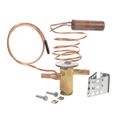
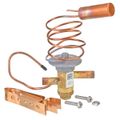

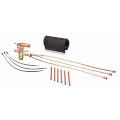
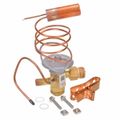
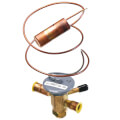
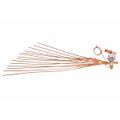
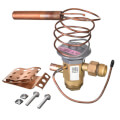
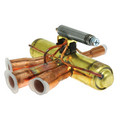
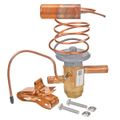
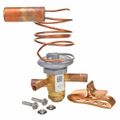
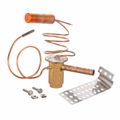
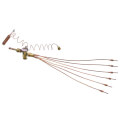
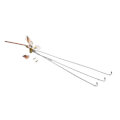

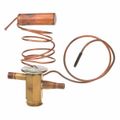
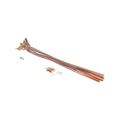
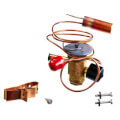
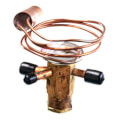
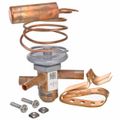
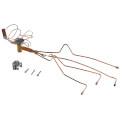
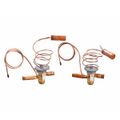
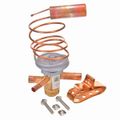
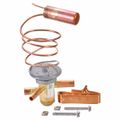
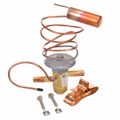
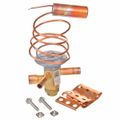
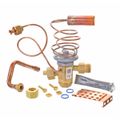
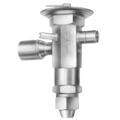
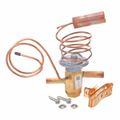
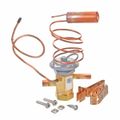

Rheem TXV and reversing valves are refrigerant metering and flow-reversal components used to service Rheem residential and light commercial heat pump and air conditioning systems. A thermostatic expansion valve meters refrigerant into the evaporator coil to match the system's cooling load, while a reversing valve switches refrigerant flow direction so a heat pump can shift between heating and cooling modes. Rheem's expansion valve lineup includes models built for R-410A systems across a range of tonnages, with connection sizes such as 1/4 inch matched to specific coil and line set configurations. Reversing valves are available with 24V coils sized for 6-ton and 10-ton equipment. Contractors replace these parts when a system loses cooling capacity, fails to switch modes, or shows a stuck or leaking valve. Matching the exact part number to the unit's tonnage and refrigerant type keeps the repair straightforward and avoids a callback.
Subcategories
- Thermostatic Expansion Valves (TXVs): TXVs meter liquid refrigerant into the evaporator coil so it evaporates at the correct rate for the system's cooling demand. Rheem's TXV lineup covers R-410A systems in various tonnages, with connection sizes matched to specific line sets and coils. Technicians select a replacement TXV by matching refrigerant type, tonnage, and connection size to the original part. A mismatched valve can cause poor cooling performance, frost buildup on the suction line, or short cycling.
- Reversing Valves: Reversing valves redirect refrigerant flow so a heat pump can switch between heating and cooling modes on demand. Rheem offers reversing valves with 24V coils sized for systems ranging from 6-ton to 10-ton capacity. A failed reversing valve typically shows up as a unit stuck in one mode, a hissing or clicking noise during mode changes, or a system that runs but stops producing heat or cool air. Replacement requires brazing the new valve body into the line set and reconnecting the coil to the low-voltage control circuit.
- Replacement Power Heads: Power heads are the diaphragm-and-spring assemblies on top of a TXV body that sense evaporator temperature and pressure to regulate refrigerant flow. Replacing just the power head instead of the full valve body can restore proper operation on some Rheem TXV designs without breaking the brazed connections in the line set. This approach can shorten a service call when the valve body itself has not failed. Confirming the power head is compatible with the existing valve body is a required step before ordering.
Buying Guide
Choosing the right Rheem TXV or reversing valve starts with confirming the exact model number stamped on the failing part or listed on the unit's rating plate. Refrigerant type matters most: an R-410A system needs a valve engineered for that pressure range, and installing a valve rated for a different refrigerant will not meter properly or may fail prematurely. Tonnage is the next factor, since a valve sized for 5-ton equipment will not regulate flow correctly on a 10-ton system, and vice versa. For reversing valves, matching the coil voltage, typically 24V, to the existing control wiring keeps the replacement compatible with the thermostat and control board already installed.
Connection size and configuration also need to line up with the existing line set. Some Rheem TXVs use a straight 1/4 inch connection while others require an adapter fitting, so checking the original part's brazing stubs before cutting into the line set avoids ordering the wrong fitting. When only the power head has failed and the valve body is intact, ordering a replacement power head instead of the full assembly can shorten the repair and reduce brazing work.
Rheem TXV and reversing valve replacements are common on aging heat pump and air conditioning systems, and stocking the most frequently needed tonnage and voltage combinations for a local service area cuts down on delays between diagnosis and repair.
Frequently Asked Questions
How do I know if a Rheem TXV needs to be replaced?
Signs include reduced cooling capacity, frost or ice forming on the suction line, or a system that short cycles. A failed TXV often cannot be diagnosed by sight alone, so checking superheat and subcooling readings against the manufacturer's specifications confirms whether the valve is metering refrigerant correctly.
Can just the power head be replaced instead of the whole TXV?
On many Rheem TXV designs, yes. Replacing the power head alone works when the valve body itself is still functional, and it avoids breaking the brazed connections in the line set, which shortens the repair.
What causes a reversing valve to get stuck?
A reversing valve can stick due to a failed solenoid coil, contamination inside the valve body, or a mechanical problem with the sliding piston. A stuck valve usually shows up as the system running in only one mode, heating or cooling, regardless of the thermostat setting.
Does the coil voltage on a reversing valve need to match the original part?
Yes. Most residential systems use a 24V coil, and installing a valve with a different coil voltage will not work with the existing low-voltage control wiring or thermostat.
Is refrigerant type the most important spec when ordering a replacement valve?
Refrigerant type and tonnage both need to match the original equipment. An R-410A valve will not perform correctly in a system charged with a different refrigerant, and using the wrong tonnage rating can lead to poor metering or premature failure.
