




Filters
SORT
Product Availability –
Review Score –
 --%3E %3Csvg version='1.1' id='Fill' xmlns='http://www.w3.org/2000/svg' xmlns:xlink='http://www.w3.org/1999/xlink' x='0px' y='0px' viewBox='0 0 100 100' enable-background='new 0 0 100 100' xml:space='preserve'%3E %3Cpath fill='%23F15C02' d='M79.44,0.95H20.56C9.78,0.95,0.95,9.78,0.95,20.56v58.87c0,10.79,8.82,19.61,19.61,19.61h58.87 c10.79,0,19.61-8.83,19.61-19.61V20.56C99.05,9.78,90.22,0.95,79.44,0.95z M65.38,58.24l9.38,29.58L49.69,69.78L24.5,87.82 l9.34-29.6L8.8,39.6l30.73-0.17c0,0,6.98-19.61,10-28.93c0.54,1.36,9.88,29.1,9.88,29.1H91.2L65.38,58.24z'/%3E %3C/svg%3E)
Price Range –
Rollout Switches


 --%3E %3Csvg version='1.1' id='No-RB' xmlns='http://www.w3.org/2000/svg' xmlns:xlink='http://www.w3.org/1999/xlink' x='0px' y='0px' viewBox='0 0 100 100' enable-background='new 0 0 100 100' xml:space='preserve'%3E %3Cpath fill='%23CECECE' d='M79.44,0.95H20.56C9.78,0.95,0.95,9.78,0.95,20.56v58.87c0,10.79,8.82,19.61,19.61,19.61h58.87 c10.79,0,19.61-8.83,19.61-19.61V20.56C99.05,9.78,90.22,0.95,79.44,0.95z M65.38,58.24l9.38,29.58L49.69,69.78L24.5,87.82 l9.34-29.6L8.8,39.6l30.73-0.17c0,0,6.98-19.61,10-28.93c0.54,1.36,9.88,29.1,9.88,29.1H91.2L65.38,58.24z'/%3E %3C/svg%3E)







 --%3E %3Csvg version='1.1' id='Half' xmlns='http://www.w3.org/2000/svg' xmlns:xlink='http://www.w3.org/1999/xlink' x='0px' y='0px' viewBox='0 0 100 100' enable-background='new 0 0 100 100' xml:space='preserve'%3E %3Cg%3E %3Cpath fill='%23F15C02' d='M30.05,70.23l3.79-12.01L8.8,39.6l30.73-0.17c0,0,6.98-19.61,10-28.93c0.54,1.36,9.88,29.1,9.88,29.1h1.58 L93.71,7.18c-3.58-3.82-8.66-6.23-14.28-6.23H20.56C9.78,0.95,0.95,9.78,0.95,20.56v58.87c0,5.41,2.22,10.32,5.79,13.88 L30.05,70.23z'/%3E %3C/g%3E %3Cpath fill='%23FBC8B4' d='M93.71,7.18L60.98,39.6H91.2L65.38,58.24l9.38,29.58L49.69,69.78L24.5,87.82l5.55-17.59L6.75,93.32 c3.55,3.54,8.44,5.73,13.82,5.73h58.87c10.79,0,19.61-8.83,19.61-19.61V20.56C99.05,15.4,97.01,10.69,93.71,7.18z'/%3E %3C/svg%3E)
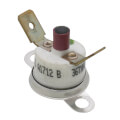

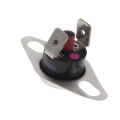
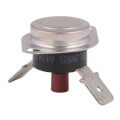

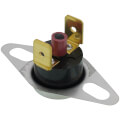
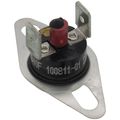
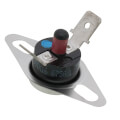
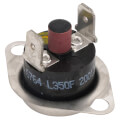
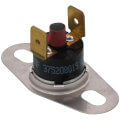
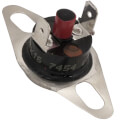
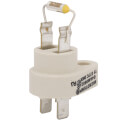
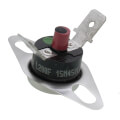
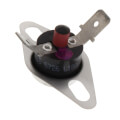
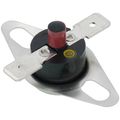
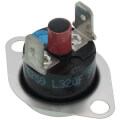
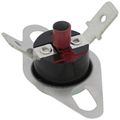
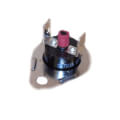
Rollout switches are safety devices installed on gas-fired furnaces and boilers that shut down the burner if flames roll outward past the burner box instead of drawing up through the heat exchanger. Mounted directly on the burner assembly or vestibule panel, these switches use a heat-sensitive element that trips at a set temperature, most commonly around 200 to 250 degrees Fahrenheit, cutting power to the gas valve within seconds of detecting rollout. HVAC technicians treat a tripped rollout switch as a signal to inspect the heat exchanger, burners, and venting for blockages before resetting service, since the switch exists specifically to prevent flue gas and flame from escaping into the equipment room. Correctly matching the switch's temperature rating and mounting style to the unit keeps this safety layer working as designed.
Subcategories
- Manual Reset Rollout Switches: Manual reset rollout switches require a technician to physically press a reset button after the device trips, which keeps a homeowner from restarting a furnace that shut down for a genuine safety reason. Service techs favor this style for furnaces where an unexplained rollout condition needs diagnosis before the burner fires again. The manual reset design is standard on most residential gas furnace rollout protection today.
- Auto Reset Rollout Switches: Auto reset rollout switches return to their normal position once the sensed temperature drops back below the trip point, allowing the burner to restart without a service call. Some commercial boiler applications use these in combination with a manual reset switch as a secondary layer of protection. Technicians still need to log repeated auto-reset trips as a sign of an underlying combustion or venting problem.
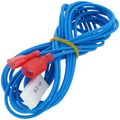
- Rollout Switch Wiring Harnesses: Wiring harnesses for rollout switches connect the switch into the furnace's ignition control circuit, and matching harness connectors to the specific control board model avoids splicing wires in the field. Techs carrying pre-made harnesses on service trucks can swap a failed switch faster during a no-heat call. Harness length and connector type vary by furnace brand and control board generation.
- Universal Rollout Switch Kits: Universal rollout switch kits bundle a switch rated for common trip temperatures with mounting brackets and wire leads that adapt to multiple furnace and boiler models. Field technicians use these kits when an exact factory replacement part is not on hand, trimming leads to match the existing harness. Confirming the trip temperature against the original part number keeps the safety function consistent after the swap.
Buying Guide
Choosing a rollout switch starts with confirming the trip temperature the furnace or boiler manufacturer specifies, since switches are built to activate at set thresholds and a mismatched rating can either trip too early during normal operation or fail to shut down the burner during an actual rollout event. Manual reset switches are the standard choice for residential gas furnaces because they force a technician to diagnose the cause before the burner restarts, while auto reset switches see more use in commercial boiler setups that pair them with a separate manual reset device for layered protection.
Mounting style matters as much as trip temperature. Rollout switches attach to the burner box or vestibule panel using brackets specific to the furnace model, so technicians should check bracket compatibility alongside the switch's electrical rating before ordering. Wiring connectors also vary across furnace brands and control board generations, and a universal kit with adaptable leads can save a return trip when the exact harness is not in stock.
For any rollout switches replacement, technicians should treat repeated trips, whether manual or auto reset, as a signal to inspect the heat exchanger, burner assembly, and venting system rather than simply swapping the switch and moving on. A properly rated, correctly mounted rollout switch is a safety component first, so matching specs precisely to the original part protects against flue gas and flame escaping into the equipment space.
Frequently Asked Questions
What temperature do most rollout switches trip at?
Most residential gas furnace rollout switches trip in the 200 to 250 degree Fahrenheit range, though the exact rating depends on the furnace manufacturer's specification. Always match the replacement switch to the original part's trip temperature.
Why does a furnace keep tripping its rollout switch?
Repeated trips usually point to a combustion or venting problem, such as a blocked heat exchanger, restricted flue, or misaligned burner, rather than a failed switch. The rollout switch should be treated as a symptom indicator, and the root cause needs inspection before reset.
What is the difference between manual and auto reset rollout switches?
Manual reset switches require a technician to press a reset button after a trip, forcing a diagnostic check before the burner restarts. Auto reset switches return to normal automatically once temperatures drop, which some commercial systems use alongside a manual reset switch for extra protection.
Can a universal rollout switch kit replace any furnace's original switch?
A universal kit can work as a replacement if its trip temperature and mounting bracket match the original part, but technicians should confirm both specs rather than assuming compatibility across furnace brands.
Is a rollout switch the same as a limit switch?
No. A limit switch monitors overall furnace temperature to prevent overheating, while a rollout switch specifically detects flame or hot gas escaping the burner box. Furnaces typically use both as separate safety devices.
