




Filters
SORT
Product Availability –
Product Type –
Size –
Shape –
Finish –
Approvals –
Review Score –
 --%3E %3Csvg version='1.1' id='Fill' xmlns='http://www.w3.org/2000/svg' xmlns:xlink='http://www.w3.org/1999/xlink' x='0px' y='0px' viewBox='0 0 100 100' enable-background='new 0 0 100 100' xml:space='preserve'%3E %3Cpath fill='%23F15C02' d='M79.44,0.95H20.56C9.78,0.95,0.95,9.78,0.95,20.56v58.87c0,10.79,8.82,19.61,19.61,19.61h58.87 c10.79,0,19.61-8.83,19.61-19.61V20.56C99.05,9.78,90.22,0.95,79.44,0.95z M65.38,58.24l9.38,29.58L49.69,69.78L24.5,87.82 l9.34-29.6L8.8,39.6l30.73-0.17c0,0,6.98-19.61,10-28.93c0.54,1.36,9.88,29.1,9.88,29.1H91.2L65.38,58.24z'/%3E %3C/svg%3E)
Price Range –
Senju Sprinkler

 --%3E %3Csvg version='1.1' id='No-RB' xmlns='http://www.w3.org/2000/svg' xmlns:xlink='http://www.w3.org/1999/xlink' x='0px' y='0px' viewBox='0 0 100 100' enable-background='new 0 0 100 100' xml:space='preserve'%3E %3Cpath fill='%23CECECE' d='M79.44,0.95H20.56C9.78,0.95,0.95,9.78,0.95,20.56v58.87c0,10.79,8.82,19.61,19.61,19.61h58.87 c10.79,0,19.61-8.83,19.61-19.61V20.56C99.05,9.78,90.22,0.95,79.44,0.95z M65.38,58.24l9.38,29.58L49.69,69.78L24.5,87.82 l9.34-29.6L8.8,39.6l30.73-0.17c0,0,6.98-19.61,10-28.93c0.54,1.36,9.88,29.1,9.88,29.1H91.2L65.38,58.24z'/%3E %3C/svg%3E)

Senju Sprinkler developed its first fire sprinkler heads in Japan in 1963 and has manufactured sprinkler heads and alarm valves for fire suppression systems for more than six decades. The company holds a majority share of the fire sprinkler market in Japan. It exports its products internationally, with listings from multiple fire protection approval authorities covering both residential and commercial applications.
Senju's U.S. operations are based in Irvine, California, with an additional office in Southlake, Texas. The company has expanded into U.S.-based manufacturing in addition to its original Japanese production. SupplyHouse carries Senju's sprinkler heads and related components for fire protection contractors installing residential and commercial systems.
Product Lines
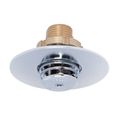
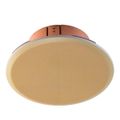
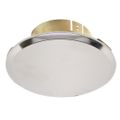
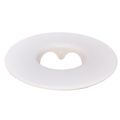
Senju's product range covers residential and commercial fire sprinkler heads. Its range includes cover plates and escutcheons, which finish a sprinkler head installation at the ceiling or wall surface. The company also supplies system accessories and components that support a full sprinkler system installation beyond the head itself.
Senju's history includes sprinkler installations in landmark Japanese buildings. Model G sprinklers were installed in the Kasumigaseki Building, Japan's first skyscraper, completed in 1968. ZN-type sprinkler heads were installed in the Tokyo Metropolitan Government Building in Shinjuku, completed in 1990.
Why Contractors Specify Senju Sprinkler
Contractors specify Senju sprinkler heads on jobs that call for a documented multi-decade manufacturing history. Listings from established fire protection approval authorities also matter during plan review and inspection. Senju has decades of production experience in a single product category: sprinkler heads and related fire suppression hardware. This gives contractors a manufacturer focused on that scope rather than a broader catalog.
With both Japanese and U.S. manufacturing now in place, contractors also have access to domestic production alongside the company's original supply chain, which can factor into lead time planning on larger commercial jobs.
How to Choose Senju Sprinkler Products
Match the sprinkler head type and temperature rating to the hazard classification and code requirements of the specific space being protected. Residential and commercial sprinkler heads are not interchangeable across occupancy types. Confirm the finish and cover plate style needed for the ceiling or wall surface at each install location before ordering. Exposed, recessed, and concealed head styles each pair with different escutcheon designs.
For system components beyond the head itself, verify compatibility with the rest of the installed system, including alarm valves already in place. This matters particularly on retrofit or partial system replacement jobs.
Frequently Asked Questions
How long has Senju Sprinkler been manufacturing fire sprinklers?
Senju developed its first fire sprinkler heads in Japan in 1963 and has manufactured sprinkler heads and alarm valves for more than six decades since.
Where are Senju's U.S. operations based?
Senju's U.S. headquarters is in Irvine, California, with an additional office location in Southlake, Texas.
Does Senju manufacture in the U.S. or only in Japan?
Senju has expanded into U.S.-based manufacturing in addition to its original production operations in Japan.
What types of buildings have used Senju sprinklers historically?
Senju sprinklers have been installed in notable Japanese buildings, including Model G sprinklers in the Kasumigaseki Building, Japan's first skyscraper, and ZN-type heads in the Tokyo Metropolitan Government Building.
What should a contractor check before selecting a Senju sprinkler head?
Match the head type and temperature rating to the space's hazard classification and code requirements. Then confirm the cover plate style matches the ceiling or wall finish at each install location.
