




SharkBite (Push-Fit) Valves
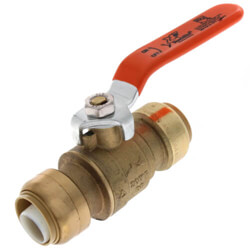
SharkBite push-fit valves connect to PEX, copper, and CPVC tubing without soldering, crimping, or clamping, using a push-to-connect design that installs in seconds. The category covers mixing valves, outlet boxes, and isolation valves built specifically for tankless water heater connections.
Push-fit valves are especially useful for repair work in occupied spaces where a torch or crimp tool is not practical. Tankless water heater isolation valves in this line let a plumber service or flush the unit without cutting into the surrounding piping.


Subcategories
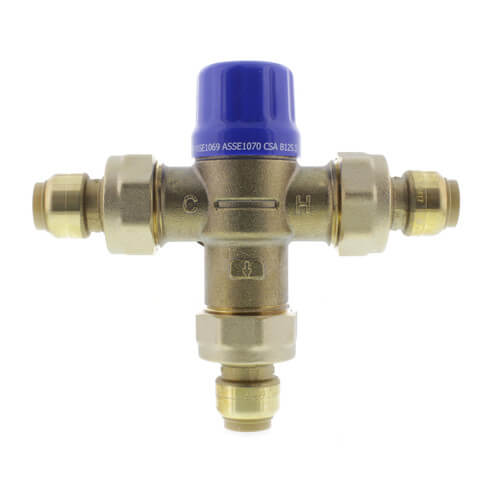
- Push-Fit Mixing Valves: Push fit mixing valves blend hot and cold water to a set output temperature without requiring a soldering or crimping tool to install. Plumbers use them for scald protection or to maintain a consistent temperature across multiple fixtures, particularly on retrofit jobs where opening a wall for a soldered connection is not practical. The valve's temperature setting can typically be adjusted after installation.
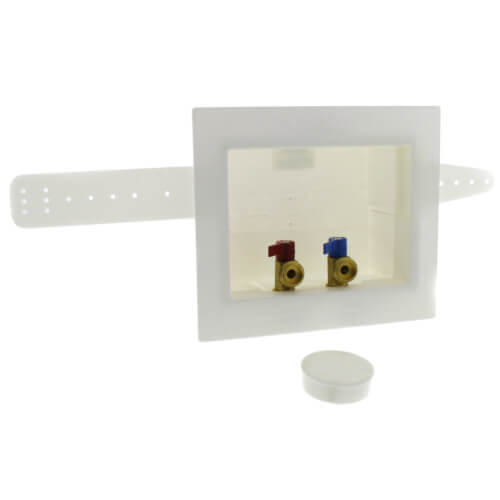
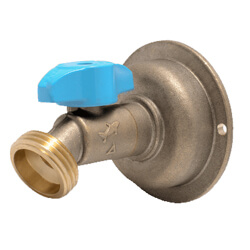
- SharkBite (Push-Fit) Outlet Boxes: SharkBite push fit outlet boxes house a valve or connection point behind a finished wall using push fit connections instead of soldered or crimped ones, making them useful for retrofit installations where a torch or crimping tool would otherwise be needed near existing finishes. The box protects the connection point during drywall work and provides a code compliant mounting location for appliance supply lines. They are commonly used for ice maker and washing machine connections.
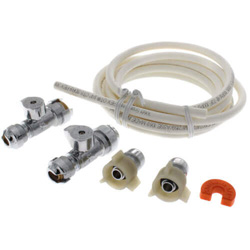
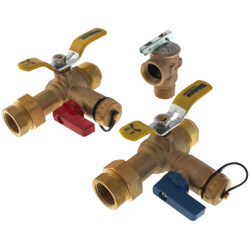
- SharkBite (Push-Fit) Tankless Water Heater Isolation Valves: SharkBite push fit tankless water heater isolation valves provide dedicated shutoffs on the hot and cold supply lines feeding a tankless unit, allowing it to be serviced or flushed without shutting down water to the rest of the building. Push fit connections let the valves be installed or replaced without a torch near the water heater's other components. Many models include a hose bib connection for attaching a flushing kit during descaling maintenance.
Buying Guide
Selecting a SharkBite push fit valve starts with confirming whether the connection is meant to be permanent or should allow future disconnection, since push fit fittings support both depending on the specific valve line.
Retrofit and repair jobs are where push fit valves offer the clearest advantage, since they avoid the need for a torch, crimping tool, or press tool in spaces where using one would be difficult or risky near existing finishes.
Tankless water heater isolation valves should be matched to the unit's supply line size and, where relevant, chosen with a hose bib connection if the maintenance routine includes periodic descaling flushes.
Outlet boxes suit any appliance connection that needs to sit behind a finished wall, with push fit connections simplifying the rough in compared to soldering near stud bays and insulation.
Because push fit valves install without specialized tools, they are also worth keeping on hand for service calls where the tools needed for a crimp or soldered repair are not available on site.
Frequently Asked Questions
Do SharkBite push fit valves work on both copper and PEX tubing?
Push fit valves are designed to accept multiple tubing materials, which is part of why they are popular for repair work where the existing piping material may not match what is being added. Confirming the specific valve's compatible materials against the tubing on site is still worth doing before installation.
Can a push fit valve be removed and reinstalled?
Many SharkBite push fit valves allow disconnection and reuse using a release tool or collar, unlike a soldered or crimped connection that requires cutting the pipe to remove. That reusability is one of the main reasons plumbers reach for a push fit valve on a service call.
Why would a tankless water heater need dedicated isolation valves?
Isolation valves let a tankless unit be shut off and serviced, including periodic descaling flushes, without cutting water to the rest of the building. Many isolation valve kits include a hose bib fitting specifically for connecting a flushing pump during that maintenance.
Are push fit outlet boxes installed the same way as standard valve boxes?
Push fit outlet boxes mount behind the wall the same way a standard box does, but the supply connection uses a push fit fitting instead of a soldered or crimped one. That difference mainly affects the tools needed during rough in rather than the box's placement or function.
How often should a tankless water heater be flushed using its isolation valves?
Flushing frequency depends on water hardness and the manufacturer's maintenance schedule rather than a single standard interval, so checking the unit's manual is the most reliable way to confirm how often to descale. The isolation valves make that maintenance possible without disrupting water service elsewhere in the building.
Resources
Subcategories
- Push-Fit Mixing Valves: Push fit mixing valves blend hot and cold water to a set output temperature without requiring a soldering or crimping tool to install. Plumbers use them for scald protection or to maintain a consistent temperature across multiple fixtures, particularly on retrofit jobs where opening a wall for a soldered connection is not practical. The valve's temperature setting can typically be adjusted after installation.
- SharkBite (Push-Fit) Outlet Boxes: SharkBite push fit outlet boxes house a valve or connection point behind a finished wall using push fit connections instead of soldered or crimped ones, making them useful for retrofit installations where a torch or crimping tool would otherwise be needed near existing finishes. The box protects the connection point during drywall work and provides a code compliant mounting location for appliance supply lines. They are commonly used for ice maker and washing machine connections.
- SharkBite (Push-Fit) Tankless Water Heater Isolation Valves: SharkBite push fit tankless water heater isolation valves provide dedicated shutoffs on the hot and cold supply lines feeding a tankless unit, allowing it to be serviced or flushed without shutting down water to the rest of the building. Push fit connections let the valves be installed or replaced without a torch near the water heater's other components. Many models include a hose bib connection for attaching a flushing kit during descaling maintenance.
Buying Guide
Selecting a SharkBite push fit valve starts with confirming whether the connection is meant to be permanent or should allow future disconnection, since push fit fittings support both depending on the specific valve line.
Retrofit and repair jobs are where push fit valves offer the clearest advantage, since they avoid the need for a torch, crimping tool, or press tool in spaces where using one would be difficult or risky near existing finishes.
Tankless water heater isolation valves should be matched to the unit's supply line size and, where relevant, chosen with a hose bib connection if the maintenance routine includes periodic descaling flushes.
Outlet boxes suit any appliance connection that needs to sit behind a finished wall, with push fit connections simplifying the rough in compared to soldering near stud bays and insulation.
Because push fit valves install without specialized tools, they are also worth keeping on hand for service calls where the tools needed for a crimp or soldered repair are not available on site.
Frequently Asked Questions
Do SharkBite push fit valves work on both copper and PEX tubing?
Push fit valves are designed to accept multiple tubing materials, which is part of why they are popular for repair work where the existing piping material may not match what is being added. Confirming the specific valve's compatible materials against the tubing on site is still worth doing before installation.
Can a push fit valve be removed and reinstalled?
Many SharkBite push fit valves allow disconnection and reuse using a release tool or collar, unlike a soldered or crimped connection that requires cutting the pipe to remove. That reusability is one of the main reasons plumbers reach for a push fit valve on a service call.
Why would a tankless water heater need dedicated isolation valves?
Isolation valves let a tankless unit be shut off and serviced, including periodic descaling flushes, without cutting water to the rest of the building. Many isolation valve kits include a hose bib fitting specifically for connecting a flushing pump during that maintenance.
Are push fit outlet boxes installed the same way as standard valve boxes?
Push fit outlet boxes mount behind the wall the same way a standard box does, but the supply connection uses a push fit fitting instead of a soldered or crimped one. That difference mainly affects the tools needed during rough in rather than the box's placement or function.
How often should a tankless water heater be flushed using its isolation valves?
Flushing frequency depends on water hardness and the manufacturer's maintenance schedule rather than a single standard interval, so checking the unit's manual is the most reliable way to confirm how often to descale. The isolation valves make that maintenance possible without disrupting water service elsewhere in the building.