




Shear Rings

 --%3E %3Csvg version='1.1' id='No-RB' xmlns='http://www.w3.org/2000/svg' xmlns:xlink='http://www.w3.org/1999/xlink' x='0px' y='0px' viewBox='0 0 100 100' enable-background='new 0 0 100 100' xml:space='preserve'%3E %3Cpath fill='%23CECECE' d='M79.44,0.95H20.56C9.78,0.95,0.95,9.78,0.95,20.56v58.87c0,10.79,8.82,19.61,19.61,19.61h58.87 c10.79,0,19.61-8.83,19.61-19.61V20.56C99.05,9.78,90.22,0.95,79.44,0.95z M65.38,58.24l9.38,29.58L49.69,69.78L24.5,87.82 l9.34-29.6L8.8,39.6l30.73-0.17c0,0,6.98-19.61,10-28.93c0.54,1.36,9.88,29.1,9.88,29.1H91.2L65.38,58.24z'/%3E %3C/svg%3E)

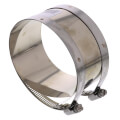
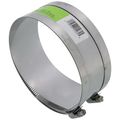
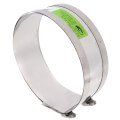

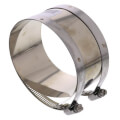
Shear rings secure a ring-type meter socket by locking the meter in place, then giving the utility company a way to detect any attempt to remove the meter without authorization. Once a technician installs the ring and the utility applies its own seal, removing the ring afterward either requires cutting it or breaks a visible tamper indicator, which is the entire point of the design. Electricians and utility crews use these rings specifically on ring-type sockets, as opposed to ringless sockets that rely on the meter cover itself as the retainer. Getting the ring size and configuration right for the specific meter socket matters, since a mismatched ring can leave the meter loose or fail to seal properly against tampering. Stocking common sizes alongside meter sockets themselves avoids a delayed utility inspection over a missing part.
Subcategories
- Standard Meter Rings: Standard meter rings hold the meter against the socket's contact jaws and provide the mechanical connection a ringless-style cover doesn't need. They're specified whenever the socket itself is a ring-type design rather than a ringless one. Matching the ring to the socket manufacturer and amperage rating keeps the fit tight enough to pass a utility inspection.
- Sealable Tamper-Evident Rings: Sealable rings add a small tab or opening where the utility company threads its own security seal after installation, so any later removal attempt leaves visible evidence. Most utilities require this feature before they'll energize a new service or approve a meter change. Removing a sealed ring without breaking the seal generally isn't possible by design, which is the reason utilities specify this style over a plain ring.
- Sizing and Amperage Compatibility: Meter rings are sized to match both the physical socket opening and the amperage rating of the service, since a ring built for a 100-amp socket won't seat correctly on a 200-amp or larger socket. Checking the socket manufacturer's specifications before ordering a replacement ring avoids a mismatch that shows up only during a failed utility inspection. Keeping a few common sizes on hand alongside meter sockets covers most residential and light commercial service changes.
- Ring vs. Ringless Sockets: Ring-type sockets rely on a separate ring to hold the meter in place, while ringless sockets use the meter cover itself as the retainer, so shear rings only apply to the ring-type design. A socket built for one style generally can't be converted to the other without a dedicated adapter kit. Confirming which style a job requires before ordering avoids stocking a ring that has no socket to fit.
Buying Guide
Specifying shear rings correctly starts with confirming the meter socket is a ring-type design rather than ringless, since the two styles aren't interchangeable without an adapter kit. Ringless sockets rely on their cover for retention and have no use for a separate ring at all.
Amperage rating and socket manufacturer both affect ring sizing, so matching the replacement ring to the original part number, or at minimum the socket's rated amperage, avoids a fit problem that only shows up during a utility inspection. Shear Rings that seat loosely against the socket jaws can fail an inspection even when the amperage rating looks correct on paper, so a snug mechanical fit matters as much as the numbers.
Sealability is the other major factor. Most utilities require a ring with a tab or opening for their own security seal before they'll energize new service or sign off on a meter change, so a plain ring without that feature often gets rejected on the spot. Confirming the local utility's specific sealing requirement before ordering saves a return trip when the inspector shows up. Stocking a small range of common amperage sizes, most residential work centers on 100-amp and 200-amp services, alongside the meter sockets themselves keeps a service change from stalling over a missing ring.
Frequently Asked Questions
What's the difference between a ring-type and ringless meter socket?
A ring-type socket uses a separate ring to lock the meter against the socket's contact jaws, while a ringless socket relies on the meter cover itself to hold the meter in place. Shear rings only apply to ring-type sockets since ringless designs have no ring to install. The two styles generally aren't interchangeable without a dedicated conversion kit.
Why does the utility company need to seal the ring after installation?
Sealing the ring gives the utility a way to detect unauthorized meter tampering after the fact, since removing a sealed ring without breaking the seal generally isn't possible by design. Most utilities require this step before they'll energize new service or sign off on a completed meter change. Skipping the seal, or using a ring without a sealing tab, can hold up a final inspection.
Does amperage rating affect which ring to order?
Yes, a ring built for a 100-amp socket won't seat correctly on a 200-amp or larger socket, even if the physical diameter looks similar. Checking the socket manufacturer's specifications, or matching the original part number, is the safest way to confirm the right ring for a given service size. A loose or mismatched fit can fail inspection even when the amperage looks close enough on paper.
Can one ring style fit multiple utility companies' sealing requirements?
Not always. Sealing requirements vary by utility territory even where the electrical code itself doesn't specify a ring brand or style. Confirming the local utility's requirement before ordering is worth the extra step, since a ring that passes inspection for one utility might get rejected by another.
What happens if a shear ring is removed without breaking the seal?
Removing a properly sealed ring without breaking the seal shouldn't be possible, which is exactly the point of the design. If a ring does show signs of removal without visible damage to the seal, it likely wasn't sealed correctly during installation or wasn't rated for tamper resistance in the first place. Either issue is worth flagging to the utility before final inspection.
