




SlantFin 350 Series Baseboard Heaters
 --%3E %3Csvg version='1.1' id='No-RB' xmlns='http://www.w3.org/2000/svg' xmlns:xlink='http://www.w3.org/1999/xlink' x='0px' y='0px' viewBox='0 0 100 100' enable-background='new 0 0 100 100' xml:space='preserve'%3E %3Cpath fill='%23CECECE' d='M79.44,0.95H20.56C9.78,0.95,0.95,9.78,0.95,20.56v58.87c0,10.79,8.82,19.61,19.61,19.61h58.87 c10.79,0,19.61-8.83,19.61-19.61V20.56C99.05,9.78,90.22,0.95,79.44,0.95z M65.38,58.24l9.38,29.58L49.69,69.78L24.5,87.82 l9.34-29.6L8.8,39.6l30.73-0.17c0,0,6.98-19.61,10-28.93c0.54,1.36,9.88,29.1,9.88,29.1H91.2L65.38,58.24z'/%3E %3C/svg%3E)




SlantFin 350 series baseboard heaters are hydronic finned-tube heating units that mount along the base of a wall, using hot water circulated from a boiler to warm a room through natural convection. Installers use this series on residential hydronic heating systems as both new installation and replacement stock, since the 350 series shares mounting dimensions with many other baseboard lines already common in older homes. Each unit consists of a copper tube with aluminum fins that maximize heat transfer surface area, enclosed in a steel cabinet that directs warm air upward into the room. Sections connect end to end to cover longer wall runs, letting contractors size a baseboard run to match a room's heat loss calculation rather than settling for a single fixed length. Replacing a damaged or corroded baseboard section without rerunning the entire piping loop is one of the more common reasons contractors specify individual sections from this series rather than an entire new run.
Subcategories
- Baseboard Sections: Baseboard sections are the core heating element, sold in various lengths so a contractor can match a room's heat loss without oversizing or undersizing the run. Sections connect at each end to form a continuous baseboard along a wall. Replacing a single damaged section is common on older systems where corrosion or physical damage has affected only part of a longer run.
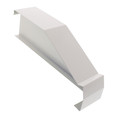
- End Caps & Corner Pieces: End caps and corner pieces finish off a baseboard run and allow it to turn a corner or terminate cleanly against a wall. Contractors use corner pieces on rooms where the baseboard needs to wrap around an inside or outside corner rather than stopping at a wall. They match the cabinet style of the section line to keep a consistent look.
- Dampers & Enclosure Accessories: Dampers mount inside the baseboard enclosure and let a homeowner or contractor manually adjust airflow to fine-tune heat output in a specific room. Enclosure accessories also include valve covers and access panels that keep the piping connections hidden while still reachable for service. Adding a damper is a common upgrade on rooms that consistently run warmer than the rest of the house.
Buying Guide
Sizing a SlantFin 350 series baseboard run starts with a room-by-room heat loss calculation, since undersized baseboard leaves a room cold on the coldest days while oversized baseboard wastes both material cost and boiler capacity. Once the required output is known, contractors select enough section length to meet that number, connecting multiple sections end to end rather than searching for one section in an unusual length.
Matching new sections to existing baseboard on a replacement job means confirming the cabinet height and mounting pattern line up, since baseboard lines from different manufacturers or different eras sometimes use slightly different dimensions even when the heating element itself is compatible. A section that doesn't match the existing cabinet profile creates a visible seam or gap where the two meet.
For rooms that need finer temperature control than the rest of the zone, adding a damper lets the room run cooler without requiring a separate thermostat or zone valve, which is a simpler and less expensive fix than re-zoning the whole system. Corner pieces and end caps should be ordered alongside the sections rather than as an afterthought, since running short on a corner piece partway through installation means a second trip to the supply house before the job can be finished.
Frequently Asked Questions
Will SlantFin 350 series sections fit baseboard from another manufacturer?
Cabinet height and mounting pattern need to match for a clean transition, and different baseboard lines occasionally use slightly different dimensions even when the heating element itself is compatible. Checking the existing cabinet dimensions before ordering avoids a visible gap or mismatch where sections meet.
How do I know how much baseboard length I need for a room?
A room-by-room heat loss calculation determines the output needed, which then translates into a required section length based on the heater's output rating per foot. Undersized baseboard leaves a room cold on the coldest days, while oversized baseboard wastes material and boiler capacity.
What does a damper do on a baseboard heater?
A damper mounts inside the enclosure and lets a homeowner or contractor manually reduce airflow to lower heat output in a specific room. It's a simpler fix than re-zoning the whole system when only one room consistently runs warmer than the rest.
Can I replace just one damaged section instead of the whole run?
Replacing a single section is common when corrosion or physical damage has affected only part of a longer baseboard run. Matching the replacement section's length and cabinet style to the rest of the run keeps the look and performance consistent.
What accessories should I order alongside new baseboard sections?
End caps and corner pieces should be ordered at the same time as the sections, especially on runs that turn a corner or terminate mid-wall. Running short on one of these parts partway through the job means an extra trip to the supply house before finishing.
