




SlantFin Multi/Pak 80 Baseboard Heaters

 --%3E %3Csvg version='1.1' id='No-RB' xmlns='http://www.w3.org/2000/svg' xmlns:xlink='http://www.w3.org/1999/xlink' x='0px' y='0px' viewBox='0 0 100 100' enable-background='new 0 0 100 100' xml:space='preserve'%3E %3Cpath fill='%23CECECE' d='M79.44,0.95H20.56C9.78,0.95,0.95,9.78,0.95,20.56v58.87c0,10.79,8.82,19.61,19.61,19.61h58.87 c10.79,0,19.61-8.83,19.61-19.61V20.56C99.05,9.78,90.22,0.95,79.44,0.95z M65.38,58.24l9.38,29.58L49.69,69.78L24.5,87.82 l9.34-29.6L8.8,39.6l30.73-0.17c0,0,6.98-19.61,10-28.93c0.54,1.36,9.88,29.1,9.88,29.1H91.2L65.38,58.24z'/%3E %3C/svg%3E)


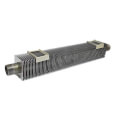
Slant/Fin Multi/Pak 80 baseboard heaters are hydronic finned-tube heating elements that install along a wall's lower perimeter to distribute heat evenly across a room without the ductwork a forced-air system needs. Hot water or steam circulates through a copper tube fitted with closely spaced aluminum fins, and rising heat off the fins creates a natural convection current that warms the room from floor level up. A steel enclosure with a front damper and top outlet controls how much of that heat escapes into the room, letting an occupant fine-tune output at each baseboard run. Modular element lengths let an installer size a run to the exact wall space available rather than settling for a fixed unit length. Compatibility with the broader Multi/Pak 80 line of covers, end caps, and accessories keeps replacement and extension work straightforward on existing systems. For anyone replacing failed baseboard sections in an older hydronic system, matching output and physical dimensions to the existing installation avoids uneven heating between rooms.
Subcategories
- Multi/Pak 80 Elements: Elements are the finned copper tube assemblies that generate the actual heat output, available in multiple lengths to match a range of wall spaces. Matching element length and fin density to the room's heat loss keeps output consistent with the rest of the system. Replacing a damaged element rather than the entire enclosure saves labor and material on a repair. Confirming tube connection size against the existing piping avoids a mismatched fitting during installation.
- Multi/Pak 80 Covers: Covers enclose the element and direct convective airflow out through the top outlet while keeping the hot fins out of reach. Steel construction with a baked enamel finish holds up to years of cleaning and incidental contact in living spaces. Matching cover length to the element inside it keeps the assembly properly sealed and prevents heat loss around the joints. Damaged or dented covers are a common reason for a baseboard replacement even when the element underneath still works.
- End Caps and Trim: End caps finish off a baseboard run at wall corners, doorways, and other stopping points, giving the installation a finished appearance and closing off exposed cover edges. Trim pieces bridge gaps between adjoining sections on longer runs that use multiple cover lengths. Matching finish and profile to the existing cover keeps a repair or extension visually consistent with the rest of the room. Stocking a range of end cap styles covers most retrofit situations without a special order.
- Dampers and Mounting Accessories: Damper assemblies control how much heated air escapes through the cover's top outlet, giving room-by-room control over comfort on systems without individual zone valves. Wall brackets and mounting hardware secure the enclosure at the correct height and distance from the floor for proper convective airflow. Replacing a stuck or broken damper restores manual temperature control without replacing the whole baseboard section. Correct bracket spacing keeps a long run from sagging or pulling away from the wall over time.
Buying Guide
Replacing or extending a Multi/Pak 80 baseboard run starts with measuring the existing element length and output rating, since matching those figures keeps heat distribution even across a room rather than creating a cold spot where a mismatched section falls short. Fin spacing and tube diameter affect how much heat a given length of element puts out, so swapping in a generic finned-tube element without checking those specifications can leave a room under-heated even though the physical dimensions appear to match. Cover condition often decides whether a repair only needs a new element or a full enclosure replacement, since dented or discolored covers are difficult to match visually to newer stock even when the underlying element is salvageable. Wall space and furniture placement influence how much baseboard length a room can accommodate, which sometimes means splitting a calculated heat output across two shorter runs on adjacent walls rather than one long run that interferes with doorways or built-in furniture. On systems already fitted with zone valves, adding a manual damper at the baseboard gives additional room-by-room control without a full rezoning project. Checking that new elements and covers share the same generation of the Multi/Pak 80 line avoids compatibility issues at the joints between old and new sections, since minor dimensional changes between production runs can leave gaps or misaligned end caps.
Frequently Asked Questions
Can a Multi/Pak 80 element be replaced without removing the entire baseboard enclosure?
The cover typically lifts off or slides away from its mounting brackets, exposing the element underneath for replacement without disturbing the enclosure or end caps. Draining or isolating the section of piping being worked on is still necessary before disconnecting the element.
Why does one room stay cooler than others on the same hydronic loop?
Uneven heating often traces back to trapped air in that section of piping, a partially closed damper, or a baseboard run that's undersized for the room's actual heat loss. Bleeding the loop and checking damper position are the first steps before assuming the baseboard itself needs replacement.
Are Multi/Pak 80 elements compatible with steam systems as well as hot water?
Finned-tube baseboard elements can work with either steam or hot water systems, but the piping configuration and control approach differ significantly between the two. Confirming the existing system type before ordering replacement elements avoids a mismatch in connection style.
How much wall space does a given length of Multi/Pak 80 baseboard actually heat?
Output depends on element length, fin density, and the water temperature circulating through the system, so the same physical length can produce different heat output across different installations. A heat loss calculation for the specific room gives a more reliable answer than a general rule of thumb.
What causes a baseboard damper to stick in one position?
Dust and debris buildup inside the enclosure is the most common cause, along with corrosion on the damper's pivot points from years of heating and cooling cycles. Cleaning the mechanism resolves most cases, though a bent or warped damper blade usually needs replacement.
