




Filters
SORT
Product Availability –
Size –
Review Score –
 --%3E %3Csvg version='1.1' id='Fill' xmlns='http://www.w3.org/2000/svg' xmlns:xlink='http://www.w3.org/1999/xlink' x='0px' y='0px' viewBox='0 0 100 100' enable-background='new 0 0 100 100' xml:space='preserve'%3E %3Cpath fill='%23F15C02' d='M79.44,0.95H20.56C9.78,0.95,0.95,9.78,0.95,20.56v58.87c0,10.79,8.82,19.61,19.61,19.61h58.87 c10.79,0,19.61-8.83,19.61-19.61V20.56C99.05,9.78,90.22,0.95,79.44,0.95z M65.38,58.24l9.38,29.58L49.69,69.78L24.5,87.82 l9.34-29.6L8.8,39.6l30.73-0.17c0,0,6.98-19.61,10-28.93c0.54,1.36,9.88,29.1,9.88,29.1H91.2L65.38,58.24z'/%3E %3C/svg%3E)
Price Range –
Steam Angle Convector Valves

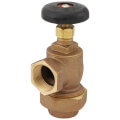

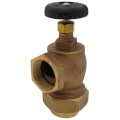


Steam Angle Convector Valves are the angle-pattern shutoff valves installed ahead of a steam or hydronic convector, radiator, or baseboard unit to isolate it for service or balancing. Watts builds two common series for this application: the RA-1-AP in bronze and the RA-2-AP in brass, both using a female iron pipe thread inlet paired with a male union outlet in an angle pattern that lines up with typical riser and unit connections. Both series carry the same pressure rating, up to 60 psi for non-shock water service and 15 psi for non-shock saturated steam, which covers the vast majority of residential and light commercial steam and hydronic heating systems. The bronze RA-1-AP line extends up to 2 inches, covering larger risers and mains that the brass line doesn't reach. Picking the correct body material and size keeps a shutoff valve rated for the system's actual steam pressure instead of an undersized substitute that can fail at a union joint.
Subcategories
- Bronze Angle Convector Valves: Bronze angle convector valves, led by the Watts RA-1-AP series, use a bronze body with a female iron pipe thread inlet and male union outlet in an angle pattern. Contractors reach for the bronze line on larger convector and radiator branches, since it's available in sizes from 1/2 inch up to 2 inches. Pressure rating tops out at 60 psi for non-shock water and 15 psi for non-shock saturated steam, matching the demands of most low-pressure steam heating systems. The union outlet lets a tech disconnect the convector or radiator for service without cutting the supply piping.
- Brass Angle Convector Valves: Brass angle convector valves, led by the Watts RA-2-AP series, share the same female iron pipe thread inlet and male union outlet configuration as the bronze line but stop at a 1-1/4 inch size. Contractors typically spec the brass line on smaller convector and baseboard branches where the larger bronze sizes aren't needed. Both the pressure rating, up to 60 psi water and 15 psi saturated steam, and the angle pattern match the bronze RA-1-AP series exactly. Choosing brass over bronze on smaller branches is largely a cost and availability decision rather than a performance one, since the ratings are identical.
- Large-Diameter Angle Valves: Large-diameter angle valves cover the sizes above 1-1/4 inch, a range only the bronze RA-1-AP series reaches, topping out at 2 inches. Mechanical rooms with larger steam mains or bigger convector banks need this size range to match the branch piping without an awkward reducer at the union. The pressure rating stays the same as the smaller sizes, up to 60 psi water and 15 psi saturated steam, so upsizing the valve doesn't change what pressure class it can handle. Ordering the correct trade size avoids a mismatched union connection at final hookup.
Buying Guide
Start by confirming what the system actually runs: non-shock water up to 60 psi or non-shock saturated steam up to 15 psi, since both Watts angle valve series share that same pressure ceiling regardless of body material. Next, measure the branch pipe size at the convector or radiator connection, since the bronze RA-1-AP series covers 1/2 inch through 2 inches while the brass RA-2-AP series tops out at 1-1/4 inch. Any branch larger than 1-1/4 inch needs the bronze line, since the brass series simply isn't made in those sizes. For smaller branches where both materials are available, the choice usually comes down to job spec requirements or what's already stocked on the truck, since the pressure rating and angle pattern are identical between the two. Selecting Steam Angle Convector Valves also means confirming the union end orientation matches the existing installation, since the female iron pipe thread inlet pairs with a male union outlet, and a valve installed in the wrong orientation won't line up with the riser. On replacement jobs, matching the old valve's size and material keeps the union threads compatible with the existing riser nipple, avoiding a rework of the branch piping. Because the union connection allows the convector or radiator to be disconnected without cutting supply piping, planning valve placement during rough-in pays off later when the unit needs service, descaling, or removal for a room renovation.
Frequently Asked Questions
What's the difference between the RA-1-AP and RA-2-AP angle valves?
The RA-1-AP uses a bronze body and covers sizes from 1/2 inch up to 2 inches, while the RA-2-AP uses a brass body and covers 1/2 inch up to 1-1/4 inch. Both share the same female iron pipe thread inlet and male union outlet in an angle pattern, and both carry the same pressure rating. Branches larger than 1-1/4 inch require the bronze RA-1-AP simply because the brass series doesn't extend that far.
What pressure rating do steam angle convector valves carry?
Steam angle convector valves from Watts carry a maximum rating of 60 psi for non-shock water service and 15 psi for non-shock saturated steam. The rating applies equally to the bronze RA-1-AP and brass RA-2-AP series across all their available sizes. Confirming a system's actual operating pressure against this rating before installation keeps the valve within its intended service.
Why does a steam angle valve use a union outlet instead of a straight threaded connection?
A union outlet lets a tech disconnect the convector or radiator from the branch piping for service, descaling, or replacement without cutting into the supply line. The female iron pipe thread inlet stays fixed to the riser while the male union half breaks free at the joint. The union design saves labor on repeat service calls compared with a valve that requires cutting pipe every time.
Can a brass angle valve be used on a 1-1/2 inch steam main?
A brass RA-2-AP angle valve isn't available above 1-1/4 inch, so a 1-1/2 inch main needs the bronze RA-1-AP series instead. Bronze RA-1-AP valves extend up to 2 inches, covering that size and the next step up. Checking the branch size before ordering avoids finding out at installation that the brass line doesn't reach that far.
Are these valves rated for hydronic hot water systems as well as steam?
Both the bronze RA-1-AP and brass RA-2-AP series are rated for non-shock water service up to 60 psi in addition to non-shock saturated steam up to 15 psi. Hydronic baseboard and convector branches use the same angle pattern and union connection as steam applications. Selecting the valve by branch size and pressure class works the same way whether the system runs steam or hot water.
