




Filters
SORT
Product Availability –
Review Score –
 --%3E %3Csvg version='1.1' id='Fill' xmlns='http://www.w3.org/2000/svg' xmlns:xlink='http://www.w3.org/1999/xlink' x='0px' y='0px' viewBox='0 0 100 100' enable-background='new 0 0 100 100' xml:space='preserve'%3E %3Cpath fill='%23F15C02' d='M79.44,0.95H20.56C9.78,0.95,0.95,9.78,0.95,20.56v58.87c0,10.79,8.82,19.61,19.61,19.61h58.87 c10.79,0,19.61-8.83,19.61-19.61V20.56C99.05,9.78,90.22,0.95,79.44,0.95z M65.38,58.24l9.38,29.58L49.69,69.78L24.5,87.82 l9.34-29.6L8.8,39.6l30.73-0.17c0,0,6.98-19.61,10-28.93c0.54,1.36,9.88,29.1,9.88,29.1H91.2L65.38,58.24z'/%3E %3C/svg%3E)
Price Range –
Thermistors/Thermistor Sensors


 --%3E %3Csvg version='1.1' id='No-RB' xmlns='http://www.w3.org/2000/svg' xmlns:xlink='http://www.w3.org/1999/xlink' x='0px' y='0px' viewBox='0 0 100 100' enable-background='new 0 0 100 100' xml:space='preserve'%3E %3Cpath fill='%23CECECE' d='M79.44,0.95H20.56C9.78,0.95,0.95,9.78,0.95,20.56v58.87c0,10.79,8.82,19.61,19.61,19.61h58.87 c10.79,0,19.61-8.83,19.61-19.61V20.56C99.05,9.78,90.22,0.95,79.44,0.95z M65.38,58.24l9.38,29.58L49.69,69.78L24.5,87.82 l9.34-29.6L8.8,39.6l30.73-0.17c0,0,6.98-19.61,10-28.93c0.54,1.36,9.88,29.1,9.88,29.1H91.2L65.38,58.24z'/%3E %3C/svg%3E)

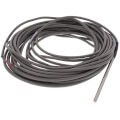
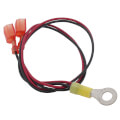
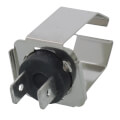
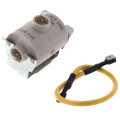
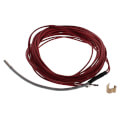
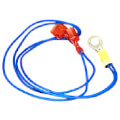
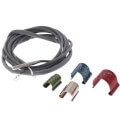
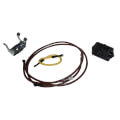
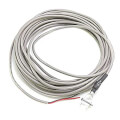
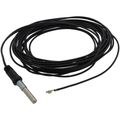
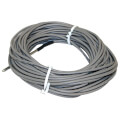
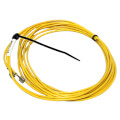
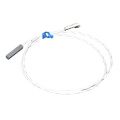
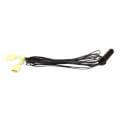

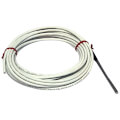
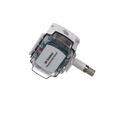
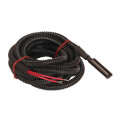
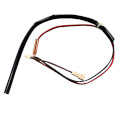
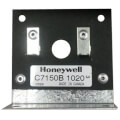

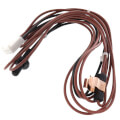
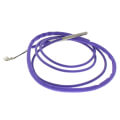
Thermistors and thermistor sensors are temperature-monitoring components that HVAC and refrigeration systems rely on to regulate defrost cycles, protect compressors, and feed accurate readings to control boards. Most units use a negative temperature coefficient design, meaning resistance drops as temperature rises, which lets a control board translate a simple resistance reading into a precise temperature value without a separate calibration step. Technicians replace these sensors on evaporator coils, condenser coils, outdoor air intakes, and water tanks whenever a unit throws a temperature-sensor fault code or cycles erratically. Because thermistors are inexpensive relative to the equipment they protect, a failed sensor is one of the first components worth checking on a no-heat or no-cool call. Matching the exact resistance curve and connector style to the original part keeps the control board's programmed logic accurate and avoids nuisance lockouts.
Subcategories
- NTC Coil Sensors: Clip-on or strapped coil sensors mount directly to evaporator or condenser coils to track refrigerant-side temperature for defrost termination and freeze protection. Refrigeration and light commercial HVAC technicians use them to replace a coil sensor without swapping the entire control board. Most models use a negative temperature coefficient design, so resistance falls as coil temperature rises. Correct placement against the coil tube keeps defrost timing accurate.
- Outdoor Air Sensors: Outdoor air sensors mount near the outdoor unit or in the airstream to give a heat pump's control board an ambient reading for staging auxiliary heat and defrost initiation. Installers use them on split system heat pumps and packaged units where outdoor temperature drives a control sequence. A sensor reading out of range is a common cause of a heat pump running in emergency heat when it doesn't need to. Weatherproof housings protect the sensing element from moisture.
- Water Temperature Sensors: Water temperature sensors thread into a tank or strap onto a pipe to monitor tank temperature for water heaters, boilers, and hydronic systems. Plumbers and hydronic technicians use them to feed a boiler control or aquastat an accurate reading for firing and circulator staging. A drifting or failed sensor often shows up as short cycling or inconsistent hot water delivery. Matching thread size and probe length to the original part is important for a tight, leak free fit.
- Control Board Thermistors: Control board thermistors are the small sensors soldered or plugged directly onto a furnace, air handler, or refrigeration control board to monitor internal component temperature. Field technicians use these mainly when a board manufacturer sells the sensor as a separate replacement part rather than requiring a full board swap. Because these sensors report directly to board logic, matching the exact resistance value is critical. Even a slightly different curve can trigger a false fault code.
Buying Guide
Matching the exact replacement part is more important with thermistors than with most electrical components, because a control board reads resistance rather than a simple pass or fail signal. Start by identifying the equipment brand, model, and the sensor's mounting style, whether that is a coil clip, an insertion probe, or a board-mounted lead. A resistance value that differs from the original, even slightly, can shift the entire control board's calibrated temperature curve and create nuisance faults or incorrect cycling.
Next, check connector type and wire length. A sensor with the correct resistance curve but the wrong plug still requires splicing, which adds a failure point and voids some manufacturer warranties. When browsing thermistors/thermistor sensors, prioritize OEM part numbers over generic equivalents whenever the equipment is still under warranty or the fault history is unclear, since an aftermarket sensor with a slightly different curve can mask a bigger control-board problem instead of fixing it.
For refrigeration and heat pump applications, confirm whether the sensor needs to withstand outdoor exposure or direct coil contact, since housings rated for indoor board mounting typically don't hold up outdoors. Stocking a small range of common resistance values and probe lengths across the most frequently serviced brands cuts down on return trips for a call that should have been resolved in one visit.
Frequently Asked Questions
How do I know if a thermistor has failed versus a bad control board?
Pull the sensor and check its resistance against the manufacturer's temperature/resistance chart at a known ambient temperature. A reading far outside the expected range points to the sensor, while a resistance that matches the chart but still produces a fault code points to the board. An open circuit or a dead short almost always means the sensor itself has failed.
Can a thermistor be used across different equipment brands?
Only if the resistance curve and mounting style match exactly, since control boards are programmed around a specific curve. A universal sensor with an adjustable resistance table can work across brands, but a strict OEM replacement typically will not.
What causes a thermistor to fail early?
Moisture intrusion at the sensor tip or connector is the most common cause, followed by physical damage from vibration or a poor mounting clip. Repeated thermal cycling over several years also degrades the sensing element gradually rather than causing a sudden failure.
Do these sensors need to be calibrated after installation?
No separate calibration step is needed for most replacement sensors, since the resistance curve is fixed by the sensor's construction rather than adjusted on site. Confirming the resistance value against the equipment's chart before buttoning up the unit is still good practice.
Is it worth stocking spare thermistors on the truck?
Yes, since a failed sensor is a common cause of an erratic-cycling or no-heat/no-cool call and the part cost is low relative to a second trip. Stocking the two or three most common resistance values for the brands serviced most often covers the majority of calls.
