




Thermodisc Steam Traps

 --%3E %3Csvg version='1.1' id='No-RB' xmlns='http://www.w3.org/2000/svg' xmlns:xlink='http://www.w3.org/1999/xlink' x='0px' y='0px' viewBox='0 0 100 100' enable-background='new 0 0 100 100' xml:space='preserve'%3E %3Cpath fill='%23CECECE' d='M79.44,0.95H20.56C9.78,0.95,0.95,9.78,0.95,20.56v58.87c0,10.79,8.82,19.61,19.61,19.61h58.87 c10.79,0,19.61-8.83,19.61-19.61V20.56C99.05,9.78,90.22,0.95,79.44,0.95z M65.38,58.24l9.38,29.58L49.69,69.78L24.5,87.82 l9.34-29.6L8.8,39.6l30.73-0.17c0,0,6.98-19.61,10-28.93c0.54,1.36,9.88,29.1,9.88,29.1H91.2L65.38,58.24z'/%3E %3C/svg%3E)
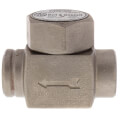
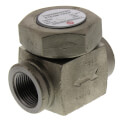

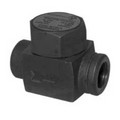

Thermodisc Steam Traps are thermostatic disc-style traps built by Hoffman Specialty to remove condensate from steam lines while blocking live steam from escaping. These traps handle light to moderate condensate loads and perform especially well on high pressure drip legs and steam tracing lines. Hoffman's Thermodisc models, like the TD6524 and TD6526, are rated for up to 600 PSI and 800 degrees Fahrenheit in cast iron construction with threaded connections. A thermostatic disc trap opens when it senses the cooler temperature of condensate and closes again once hotter steam reaches the disc, cycling automatically without external power. Steam fitters rely on this design for its simple mechanical operation and ability to handle the temperature swings common on drip and tracing applications, where a stuck trap can either waste steam or let condensate back up into the line.
Subcategories
- 1/2 Inch Thermodisc Traps: Half inch Thermodisc traps, like the Hoffman TD6524 and TD6424, are the smallest size in the line and see the most use on individual drip legs and small steam tracing runs. The TD6424 includes a built-in strainer to catch pipe scale and debris before it reaches the disc mechanism, while the TD6524 ships without one for installations that already have upstream strainer protection. Steam fitters typically choose this size for point-of-use condensate removal rather than main line drainage. Both models share the same cast iron construction rated for up to 600 PSI and 800 degrees Fahrenheit.
- 3/4 Inch Thermodisc Traps: Three-quarter inch Thermodisc traps, including the Hoffman TD6526 and TD6426, step up from the half inch size for applications with slightly higher condensate loads. The TD6426 comes with an integral strainer, and the TD6526 is available without one for systems where a separate strainer is already installed upstream. Many commercial steam tracing runs and moderate-capacity drip leg applications fit this size well. Like the smaller size, these traps carry the same 600 PSI and 800 degree Fahrenheit ratings in cast iron.
- 1 Inch Thermodisc Traps: One inch Thermodisc traps, such as the Hoffman TD6528, handle larger condensate volumes than the half inch and three-quarter inch sizes in the line. Main steam lines and larger drip leg applications with heavier condensate accumulation typically call for this size. The TD6528 ships without an integral strainer, so installers often pair it with a separate strainer to protect the disc mechanism from pipe scale. Cast iron construction and the 600 PSI, 800 degree Fahrenheit rating carry through to this size as well.
- High Pressure Drip and Steam Tracing Applications: Thermodisc traps perform especially well on high pressure drip legs and steam tracing lines, according to Hoffman's own application guidance for the line. Steam tracing uses a small steam line run alongside a process pipe to keep its contents from freezing or thickening, and a reliable trap keeps that tracing line from flooding with backed-up condensate. Drip leg applications catch condensate that collects at low points in a steam main, and undersized or failed traps at these points can lead to water hammer further down the line. Selecting a Thermodisc trap sized correctly for the expected condensate load keeps both applications running without flooding or steam loss.
Buying Guide
Sizing Thermodisc Steam Traps starts with matching the trap to the pipe connection size already in place, whether that's a half inch, three-quarter inch, or one inch line, since an undersized trap can't keep up with condensate load and an oversized trap wastes steam through excessive cycling. Next, decide whether an integral strainer is needed or whether the system already has strainer protection upstream; Hoffman offers both versions across its common sizes, so ordering the wrong strainer configuration usually just means picking the wrong SKU rather than a functional mismatch. Check the system's operating pressure and temperature against the trap's rating before ordering, since Thermodisc traps are rated to 600 PSI and 800 degrees Fahrenheit in cast iron, which covers most commercial steam applications but should still be confirmed against the specific system's design conditions. Application matters too: drip leg installations at low points in a steam main typically see different condensate loads than steam tracing lines running alongside a process pipe, so match the trap size to the actual load rather than defaulting to whatever size was removed. Connection type is worth confirming as well, since threaded connections need to match the existing pipe thread, and a mismatched connection means additional fittings or a wasted trip back to the supply house. Replacing a failed trap with the same model number, when available, is often the fastest path back to a working system, since it avoids resizing calculations altogether.
Frequently Asked Questions
How does a Thermodisc steam trap work?
A Thermodisc trap uses a thermostatic disc that responds to the temperature difference between steam and cooler condensate. The disc lifts to allow condensate to pass through when it senses lower temperature fluid, then seats closed again once hotter steam reaches it. The cycle repeats automatically without any external power source or manual adjustment.
What sizes do Hoffman Thermodisc traps come in?
Hoffman's Thermodisc line is available in half inch, three-quarter inch, and one inch sizes, with select sizes offered both with and without an integral strainer. Smaller sizes typically handle point-of-use condensate removal on individual drip legs, while larger sizes suit main steam lines with heavier condensate volumes. Checking the existing pipe connection size before ordering keeps the replacement straightforward.
What's the pressure and temperature rating on a Thermodisc trap?
Hoffman's Thermodisc steam traps carry a cast iron construction rated for up to 600 PSI and 800 degrees Fahrenheit. The rating covers most commercial and light industrial steam applications, including high pressure drip legs. Confirming the system's actual operating pressure and temperature against this rating before ordering avoids a mismatch.
Do Thermodisc traps need a strainer?
Some Hoffman Thermodisc models include a built-in strainer, like the TD6424 and TD6426, while others ship without one, like the TD6524 and TD6526. A strainer catches pipe scale and debris before it can interfere with the disc mechanism. Systems without an upstream strainer already installed generally benefit from choosing the integral strainer version.
Where are Thermodisc traps typically installed?
Thermodisc traps work especially well on high pressure drip legs and steam tracing lines, according to Hoffman's application guidance. Drip legs collect condensate at low points along a steam main, while tracing lines run alongside process piping to prevent freezing or thickening. Both applications benefit from a trap sized to match the expected condensate load.
