




Toilet Flanges
Toilet flanges anchor a toilet to the drain pipe below the floor, providing the mounting surface for the closet bolts and the seal connection to the waste line. The category covers cast iron and PVC DWV flanges built to connect with each respective pipe material, along with the range of sizes and outlet configurations needed to match different rough-in dimensions. Selecting a flange that matches the existing drain pipe material keeps the connection secure and prevents leaks at the base of the toilet.
A flange sits at floor level, so its height relative to the finished floor affects how well the wax ring or seal performs once the toilet is set. Replacing a broken or corroded flange is a common repair on older installations, particularly where a cast iron drain has deteriorated at the connection point.


Subcategories
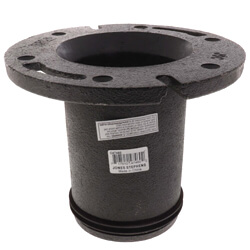
- Cast Iron Closet Flanges: Cast iron closet flanges connect to cast iron drain piping, matching the material and joint style already present in older plumbing systems. Contractors use this subcategory when repairing or replacing a flange on an existing cast iron waste line rather than converting the connection to plastic pipe. Confirming the flange's outlet size against the existing pipe diameter keeps the joint properly sealed.
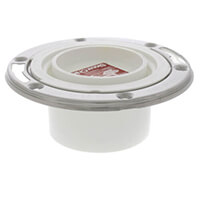
- PVC DWV Closet Flanges: PVC DWV closet flanges connect to PVC drain, waste, and vent piping used in most modern residential and light commercial plumbing systems. Contractors specify this subcategory for new construction and for replacing a flange on an existing PVC waste line. Checking the flange's height against the finished floor level before installation keeps the toilet sitting level once it is set.
Buying Guide
Matching flange material to the existing drain pipe comes first when selecting a toilet flange. Cast iron flanges connect properly to cast iron waste lines, while PVC DWV flanges match the plastic piping used in most current construction, and mixing materials without the right transition fitting can leave a joint that does not seal.
Flange height relative to the finished floor affects how well the wax ring seals once the toilet is installed. A flange sitting too low below the finished floor surface can leave a gap that a standard wax ring will not bridge, while one sitting too high can tilt the toilet off level.
Outlet size and configuration need to match the toilet's rough-in dimension, most commonly measured from the wall to the center of the drain opening. Confirming the rough-in measurement before ordering a flange avoids a mismatch that would require repositioning the drain.
Repair flanges fit over a broken or corroded original without requiring the pipe below the floor to be cut out, which saves significant demolition work on older cast iron drain lines that are otherwise sound below the break. Older installations most often call for this repair approach rather than a standard replacement flange.
Bolt pattern and slot style also vary slightly between manufacturers and flange types, so confirming closet bolt compatibility before installation keeps the toilet mounting hardware straightforward rather than requiring a mismatched bolt kit.
Frequently Asked Questions
How do I know if I need a cast iron or PVC toilet flange?
The flange material needs to match the drain pipe material already in place below the floor, so identifying whether the existing waste line is cast iron or PVC comes first. A transition fitting can bridge the two materials in some repair situations, but matching materials directly gives the most reliable seal.
What happens if a toilet flange sits too low below the finished floor?
A flange sitting too far below the finished floor can leave a gap that a standard wax ring will not fully bridge, leading to a leak at the base of the toilet. Flange extenders or spacer rings raise the flange to the correct height in that situation without replacing the entire flange.
How do I measure for a replacement toilet flange?
The rough-in measurement, taken from the finished wall to the center of the drain opening, determines where the new flange needs to sit, and the existing drain pipe's diameter determines which flange size and material fit. Recording the current rough-in measurement before removing the old toilet makes ordering a replacement more accurate.
Can a broken cast iron flange be repaired without cutting into the floor?
A repair flange designed to sit over a broken or corroded original can restore a solid mounting surface without requiring the pipe below the floor to be cut out, provided the pipe itself is still sound below the break. Extensive corrosion below the flange still requires a full pipe repair regardless of flange type.
Do all toilet flanges use the same bolt pattern?
Bolt pattern and slot style vary somewhat between flange manufacturers and models, so checking bolt compatibility with the new flange keeps the closet bolt hardware straightforward during installation. A flange with an unusual slot pattern may need a specific bolt kit rather than a generic one.
Resources
Subcategories
- Cast Iron Closet Flanges: Cast iron closet flanges connect to cast iron drain piping, matching the material and joint style already present in older plumbing systems. Contractors use this subcategory when repairing or replacing a flange on an existing cast iron waste line rather than converting the connection to plastic pipe. Confirming the flange's outlet size against the existing pipe diameter keeps the joint properly sealed.
- PVC DWV Closet Flanges: PVC DWV closet flanges connect to PVC drain, waste, and vent piping used in most modern residential and light commercial plumbing systems. Contractors specify this subcategory for new construction and for replacing a flange on an existing PVC waste line. Checking the flange's height against the finished floor level before installation keeps the toilet sitting level once it is set.
Buying Guide
Matching flange material to the existing drain pipe comes first when selecting a toilet flange. Cast iron flanges connect properly to cast iron waste lines, while PVC DWV flanges match the plastic piping used in most current construction, and mixing materials without the right transition fitting can leave a joint that does not seal.
Flange height relative to the finished floor affects how well the wax ring seals once the toilet is installed. A flange sitting too low below the finished floor surface can leave a gap that a standard wax ring will not bridge, while one sitting too high can tilt the toilet off level.
Outlet size and configuration need to match the toilet's rough-in dimension, most commonly measured from the wall to the center of the drain opening. Confirming the rough-in measurement before ordering a flange avoids a mismatch that would require repositioning the drain.
Repair flanges fit over a broken or corroded original without requiring the pipe below the floor to be cut out, which saves significant demolition work on older cast iron drain lines that are otherwise sound below the break. Older installations most often call for this repair approach rather than a standard replacement flange.
Bolt pattern and slot style also vary slightly between manufacturers and flange types, so confirming closet bolt compatibility before installation keeps the toilet mounting hardware straightforward rather than requiring a mismatched bolt kit.
Frequently Asked Questions
How do I know if I need a cast iron or PVC toilet flange?
The flange material needs to match the drain pipe material already in place below the floor, so identifying whether the existing waste line is cast iron or PVC comes first. A transition fitting can bridge the two materials in some repair situations, but matching materials directly gives the most reliable seal.
What happens if a toilet flange sits too low below the finished floor?
A flange sitting too far below the finished floor can leave a gap that a standard wax ring will not fully bridge, leading to a leak at the base of the toilet. Flange extenders or spacer rings raise the flange to the correct height in that situation without replacing the entire flange.
How do I measure for a replacement toilet flange?
The rough-in measurement, taken from the finished wall to the center of the drain opening, determines where the new flange needs to sit, and the existing drain pipe's diameter determines which flange size and material fit. Recording the current rough-in measurement before removing the old toilet makes ordering a replacement more accurate.
Can a broken cast iron flange be repaired without cutting into the floor?
A repair flange designed to sit over a broken or corroded original can restore a solid mounting surface without requiring the pipe below the floor to be cut out, provided the pipe itself is still sound below the break. Extensive corrosion below the flange still requires a full pipe repair regardless of flange type.
Do all toilet flanges use the same bolt pattern?
Bolt pattern and slot style vary somewhat between flange manufacturers and models, so checking bolt compatibility with the new flange keeps the closet bolt hardware straightforward during installation. A flange with an unusual slot pattern may need a specific bolt kit rather than a generic one.