




Filters
SORT
Product Availability –
Brand –
Review Score –
 --%3E %3Csvg version='1.1' id='Fill' xmlns='http://www.w3.org/2000/svg' xmlns:xlink='http://www.w3.org/1999/xlink' x='0px' y='0px' viewBox='0 0 100 100' enable-background='new 0 0 100 100' xml:space='preserve'%3E %3Cpath fill='%23F15C02' d='M79.44,0.95H20.56C9.78,0.95,0.95,9.78,0.95,20.56v58.87c0,10.79,8.82,19.61,19.61,19.61h58.87 c10.79,0,19.61-8.83,19.61-19.61V20.56C99.05,9.78,90.22,0.95,79.44,0.95z M65.38,58.24l9.38,29.58L49.69,69.78L24.5,87.82 l9.34-29.6L8.8,39.6l30.73-0.17c0,0,6.98-19.61,10-28.93c0.54,1.36,9.88,29.1,9.88,29.1H91.2L65.38,58.24z'/%3E %3C/svg%3E)
 --%3E %3Csvg version='1.1' id='With-RB' xmlns='http://www.w3.org/2000/svg' xmlns:xlink='http://www.w3.org/1999/xlink' x='0px' y='0px' viewBox='0 0 100 100' enable-background='new 0 0 100 100' xml:space='preserve'%3E %3Cpath fill='%23FBC8B4' d='M79.44,0.95H20.56C9.78,0.95,0.95,9.78,0.95,20.56v58.87c0,10.79,8.82,19.61,19.61,19.61h58.87 c10.79,0,19.61-8.83,19.61-19.61V20.56C99.05,9.78,90.22,0.95,79.44,0.95z M65.38,58.24l9.38,29.58L49.69,69.78L24.5,87.82 l9.34-29.6L8.8,39.6l30.73-0.17c0,0,6.98-19.61,10-28.93c0.54,1.36,9.88,29.1,9.88,29.1H91.2L65.38,58.24z'/%3E %3C/svg%3E)
Price Range –
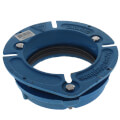
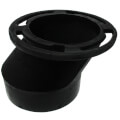
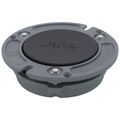
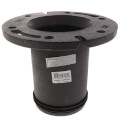
Cast Iron Closet Flanges

 --%3E %3Csvg version='1.1' id='No-RB' xmlns='http://www.w3.org/2000/svg' xmlns:xlink='http://www.w3.org/1999/xlink' x='0px' y='0px' viewBox='0 0 100 100' enable-background='new 0 0 100 100' xml:space='preserve'%3E %3Cpath fill='%23CECECE' d='M79.44,0.95H20.56C9.78,0.95,0.95,9.78,0.95,20.56v58.87c0,10.79,8.82,19.61,19.61,19.61h58.87 c10.79,0,19.61-8.83,19.61-19.61V20.56C99.05,9.78,90.22,0.95,79.44,0.95z M65.38,58.24l9.38,29.58L49.69,69.78L24.5,87.82 l9.34-29.6L8.8,39.6l30.73-0.17c0,0,6.98-19.61,10-28.93c0.54,1.36,9.88,29.1,9.88,29.1H91.2L65.38,58.24z'/%3E %3C/svg%3E)

 --%3E %3Csvg version='1.1' id='Half' xmlns='http://www.w3.org/2000/svg' xmlns:xlink='http://www.w3.org/1999/xlink' x='0px' y='0px' viewBox='0 0 100 100' enable-background='new 0 0 100 100' xml:space='preserve'%3E %3Cg%3E %3Cpath fill='%23F15C02' d='M30.05,70.23l3.79-12.01L8.8,39.6l30.73-0.17c0,0,6.98-19.61,10-28.93c0.54,1.36,9.88,29.1,9.88,29.1h1.58 L93.71,7.18c-3.58-3.82-8.66-6.23-14.28-6.23H20.56C9.78,0.95,0.95,9.78,0.95,20.56v58.87c0,5.41,2.22,10.32,5.79,13.88 L30.05,70.23z'/%3E %3C/g%3E %3Cpath fill='%23FBC8B4' d='M93.71,7.18L60.98,39.6H91.2L65.38,58.24l9.38,29.58L49.69,69.78L24.5,87.82l5.55-17.59L6.75,93.32 c3.55,3.54,8.44,5.73,13.82,5.73h58.87c10.79,0,19.61-8.83,19.61-19.61V20.56C99.05,15.4,97.01,10.69,93.71,7.18z'/%3E %3C/svg%3E)
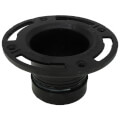
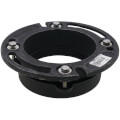
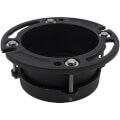
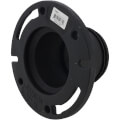
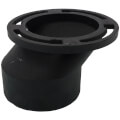
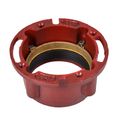
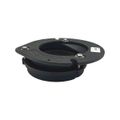

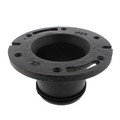
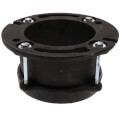
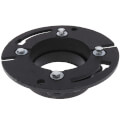
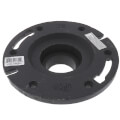
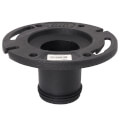
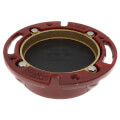
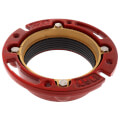
Cast Iron Closet Flanges anchor a toilet to the closet bend or drain pipe below the floor, providing the mounting surface for the toilet bolts and the seal point for the wax ring above. Plumbers choose cast iron flanges over PVC or ABS versions on jobs where the existing drain piping is cast iron, since matching materials avoids the differential expansion and corrosion issues that can develop at a dissimilar-metal or plastic-to-cast-iron joint. The flange's thickness and weight also hold up well in commercial and multifamily buildings where floor traffic and fixture turnover are higher than in a typical single-family home. Correct flange height relative to the finished floor matters as much as the material choice, since a flange set too low or too high compromises the wax ring seal regardless of what it's made of. Confirming rough-in height before the finished floor goes down avoids a repair that's far more disruptive once tile or flooring is in place.
Subcategories
- Closet Flanges: The flange bolts to the subfloor or drain pipe and gives the toilet its mounting points and its connection to the drain below. Cast iron versions are typically specified to match existing cast iron drain lines, since the joint between similar metals resists corrosion better than a mixed-material connection. Flange height needs to sit level with, or very slightly above, the finished floor for the wax ring to seal properly. Replacing a cracked or corroded flange usually means breaking the wax seal and resetting the toilet, so most plumbers combine that work with a full toilet swap when possible.
- Wax Rings and Seals: The wax ring sits between the flange and the base of the toilet, sealing the connection against leaks and sewer gas. Standard wax rings work for most installations, while extra-thick or flanged wax rings compensate for a flange that sits slightly below the finished floor. A gap between the flange and floor that's too large sometimes calls for a spacer or extender instead of relying on wax alone. Reseating a toilet always means replacing the wax ring rather than reusing the old one.
- Closet Bolts and Hardware: Closet bolts anchor the toilet to the flange through slotted openings that allow some adjustment for alignment. Corroded or damaged bolts are a common reason a toilet rocks or feels loose at the base, and replacing them is usually straightforward once the toilet is lifted off. Brass or stainless steel bolts resist the corrosion that steel bolts develop from moisture at the floor. Covering the bolts with caps after installation protects them from future corrosion and improves the finished look.
- Floor Repair Flanges: Repair flanges fit over or into a damaged original flange without requiring the drain pipe itself to be cut and replaced. They're a practical option when the original cast iron flange has cracked or corroded but the pipe below is still sound. Several repair flange styles exist depending on whether the damage is at the bolt slots, the pipe connection, or the flange ring itself. Matching the repair flange to the specific type of damage keeps the fix durable rather than temporary.
- Closet Bends: The closet bend is the curved pipe section beneath the flange that routes waste from the toilet into the branch drain. Cast iron closet bends pair naturally with cast iron flanges and existing cast iron drain systems, maintaining consistent material throughout that section of piping. Replacing a closet bend typically requires more floor and subfloor access than a flange-only repair. Confirming the bend's angle and outlet direction against the existing rough-in prevents a mismatch during installation.
Buying Guide
Matching a flange to the existing drain material is the first decision on most toilet flange jobs, since a joint between dissimilar materials can develop leaks or corrosion issues over time that a matched joint avoids.
Cast Iron Closet Flanges are the right choice when the drain piping below the floor is already cast iron, keeping the connection consistent rather than transitioning to PVC or ABS at that single point. Where the existing system is plastic, a cast iron flange typically isn't necessary and a matching plastic flange simplifies the connection instead.
Flange height relative to the finished floor determines whether the wax ring seals properly, so confirming rough-in height before flooring or tile installation prevents a much larger repair later. A flange sitting low after a floor buildup calls for a spacer, extender, or repair flange rather than forcing an undersized wax ring to compensate.
Condition of the existing flange and bend also factors into the decision between a full replacement and a repair flange. A cracked or corroded original flange with a still-sound bend below is often a good candidate for a repair flange rather than opening up the floor for a full pipe replacement.
Frequently Asked Questions
Why would a cast iron closet flange be specified instead of a PVC one?
Cast iron flanges keep the connection consistent when the existing drain piping below the floor is also cast iron, avoiding the corrosion issues that can develop at a joint between dissimilar materials. They also hold up well under the higher floor traffic and fixture turnover common in commercial and multifamily buildings. Where the drain system is already plastic, a matching plastic flange is usually the simpler choice.
How do I know if a toilet flange is set at the correct height?
A flange should sit level with, or just slightly above, the finished floor so the wax ring can form a proper seal. A flange set too low often needs a spacer or extender rather than a thicker wax ring alone. Checking flange height before flooring or tile goes down avoids having to address the problem after the floor is finished.
Can a cracked cast iron flange be repaired without replacing the drain pipe?
In many cases, yes. Repair flanges fit over or into a damaged original flange and address cracks or corrosion at the bolt slots or flange ring without requiring the closet bend below to be replaced. The repair flange style needed depends on exactly where the damage is located.
What causes a toilet to rock or feel loose at the base?
Corroded or damaged closet bolts are one of the most common causes, since they lose their grip on the flange over time. A cracked or improperly seated flange can also allow movement even with new bolts installed. Lifting the toilet to inspect both the bolts and the flange condition usually identifies the cause.
Does the wax ring need to be replaced every time a toilet is reset?
Yes, a wax ring should always be replaced when a toilet is removed and reset, since the seal doesn't hold up to reuse. Standard wax rings work for most installations, while extra-thick or flanged versions help when the flange sits slightly below the finished floor. Reusing an old wax ring risks a leak that may not show up until well after the job is finished.
