




Filters
SORT
Product Availability –
Product Type –
Review Score –
 --%3E %3Csvg version='1.1' id='Fill' xmlns='http://www.w3.org/2000/svg' xmlns:xlink='http://www.w3.org/1999/xlink' x='0px' y='0px' viewBox='0 0 100 100' enable-background='new 0 0 100 100' xml:space='preserve'%3E %3Cpath fill='%23F15C02' d='M79.44,0.95H20.56C9.78,0.95,0.95,9.78,0.95,20.56v58.87c0,10.79,8.82,19.61,19.61,19.61h58.87 c10.79,0,19.61-8.83,19.61-19.61V20.56C99.05,9.78,90.22,0.95,79.44,0.95z M65.38,58.24l9.38,29.58L49.69,69.78L24.5,87.82 l9.34-29.6L8.8,39.6l30.73-0.17c0,0,6.98-19.61,10-28.93c0.54,1.36,9.88,29.1,9.88,29.1H91.2L65.38,58.24z'/%3E %3C/svg%3E)
 --%3E %3Csvg version='1.1' id='With-RB' xmlns='http://www.w3.org/2000/svg' xmlns:xlink='http://www.w3.org/1999/xlink' x='0px' y='0px' viewBox='0 0 100 100' enable-background='new 0 0 100 100' xml:space='preserve'%3E %3Cpath fill='%23FBC8B4' d='M79.44,0.95H20.56C9.78,0.95,0.95,9.78,0.95,20.56v58.87c0,10.79,8.82,19.61,19.61,19.61h58.87 c10.79,0,19.61-8.83,19.61-19.61V20.56C99.05,9.78,90.22,0.95,79.44,0.95z M65.38,58.24l9.38,29.58L49.69,69.78L24.5,87.82 l9.34-29.6L8.8,39.6l30.73-0.17c0,0,6.98-19.61,10-28.93c0.54,1.36,9.88,29.1,9.88,29.1H91.2L65.38,58.24z'/%3E %3C/svg%3E)
Price Range –
Expansion Valves

 --%3E %3Csvg version='1.1' id='No-RB' xmlns='http://www.w3.org/2000/svg' xmlns:xlink='http://www.w3.org/1999/xlink' x='0px' y='0px' viewBox='0 0 100 100' enable-background='new 0 0 100 100' xml:space='preserve'%3E %3Cpath fill='%23CECECE' d='M79.44,0.95H20.56C9.78,0.95,0.95,9.78,0.95,20.56v58.87c0,10.79,8.82,19.61,19.61,19.61h58.87 c10.79,0,19.61-8.83,19.61-19.61V20.56C99.05,9.78,90.22,0.95,79.44,0.95z M65.38,58.24l9.38,29.58L49.69,69.78L24.5,87.82 l9.34-29.6L8.8,39.6l30.73-0.17c0,0,6.98-19.61,10-28.93c0.54,1.36,9.88,29.1,9.88,29.1H91.2L65.38,58.24z'/%3E %3C/svg%3E)
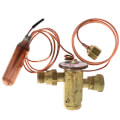
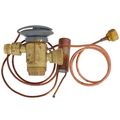
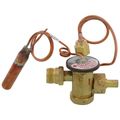
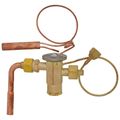

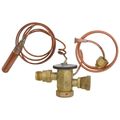
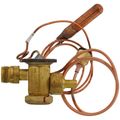
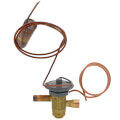

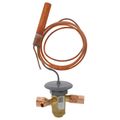


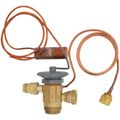

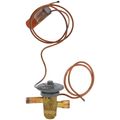
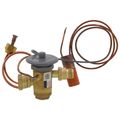
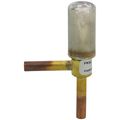
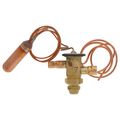
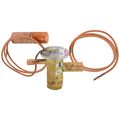
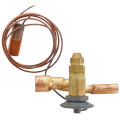
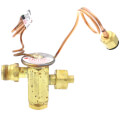
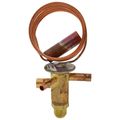
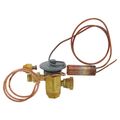

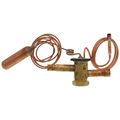
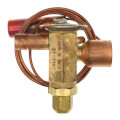
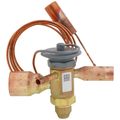

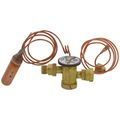
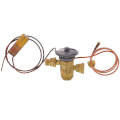
Expansion valves are the metering devices that regulate how much liquid refrigerant enters the evaporator coil on Trane air conditioners and heat pumps, and this category covers the thermostatic expansion valves (TXVs) used across Trane's residential and light commercial coil and condensing unit lineup. A TXV reacts to the temperature and pressure of refrigerant leaving the evaporator, opening and closing a metering orifice to hold a target superheat as the load on the system changes with outdoor temperature and indoor demand. Because Trane pairs specific valve bodies and orifice sizes to particular coil models and refrigerant charges, a valve pulled from one tonnage or refrigerant type will not meter correctly if installed on a different coil. Technicians typically replace a TXV when a system shows erratic superheat, frosting on the suction line, or reduced cooling capacity that isn't explained by a charge or airflow problem elsewhere in the system.
Subcategories
- TXV Valve Bodies: The valve body is the metering device itself, containing the diaphragm and orifice that open and close in response to the sensing bulb's signal. Trane matches valve body capacity to specific coil tonnage and refrigerant type, so the body ordered has to correspond to both the system size and whether it runs R-410A or a newer refrigerant. A valve body that is undersized for the coil will starve the evaporator, while an oversized body can flood it and return liquid refrigerant to the compressor.
- Sensing Bulbs and Elements: The remote sensing bulb clamps to the suction line near the evaporator outlet and reads refrigerant temperature to drive the valve's response to changing load. A bulb that loses its charge or is clamped in the wrong location on the suction line causes the valve to hunt or hold an incorrect superheat, which shows up as inconsistent cooling rather than an obvious hard failure. Bulb charge type has to match the valve body it's paired with.
- Distributor and Orifice Assemblies: The distributor splits metered refrigerant evenly across multiple evaporator circuits after it passes through the TXV, and the orifice inside it is sized for a specific tonnage. A distributor with the wrong orifice size or mismatched number of feeder tubes can starve some circuits of the coil while flooding others, producing uneven coil frosting that's easy to misdiagnose as a charge problem.
- Equalizer Lines and External Fittings: An externally equalized TXV uses a small tube routed back to the suction line so the valve reads actual outlet pressure instead of relying on the internal spring alone, which matters on coils with enough pressure drop that internal equalization would throw off the superheat reading. Fittings and flare connections for the equalizer line need to seal properly, since a slow leak there produces symptoms similar to a failing valve.
Buying Guide
Start diagnosis with superheat and subcooling readings rather than replacing the valve on suspicion. A TXV problem typically shows as erratic or excessively high superheat that doesn't respond to airflow or charge corrections, while a charge problem usually affects subcooling in a more predictable way.
Confirm refrigerant type, coil tonnage, and whether the system uses an internally or externally equalized valve before ordering a replacement. Expansion Valves for Trane equipment are matched to specific coil models, and installing a valve sized for the wrong tonnage or wrong refrigerant will produce chronic superheat problems even when the part is otherwise functioning correctly.
Inspect the sensing bulb's mounting location and insulation whenever a valve is suspected, since a loose clamp or missing insulation on the suction line lets ambient temperature interfere with the bulb's reading. Replacing a valve without correcting a bad bulb mount often produces the same complaint again shortly after the repair.
When a coil uses a distributor, check that the replacement TXV's orifice size matches the distributor's rated tonnage. A mismatch between the valve, orifice, and distributor is a common cause of uneven coil loading that gets misread as a refrigerant charge issue. Pulling the original part number, or the coil and condensing unit model and serial numbers, before ordering avoids most of these mismatches.
Frequently Asked Questions
What does a bad TXV look like on a service call?
A failing TXV typically shows up as erratic or unusually high superheat readings that don't respond to normal airflow or refrigerant charge adjustments. Frosting on the suction line or at the valve itself is another common symptom. Reduced cooling capacity that can't be traced to a charge or airflow issue elsewhere often points back to the valve.
Can any TXV be used as long as the refrigerant type matches?
No, refrigerant type is only one factor. The valve's capacity rating also has to match the coil's tonnage, and the equalization type, internal or external, has to match how the original system was designed. Using a valve that only matches on refrigerant type but not capacity or equalization style causes ongoing superheat problems.
Why would a system with a good charge still show erratic superheat?
A loose or poorly insulated sensing bulb is a common cause, since it lets ambient air temperature affect the bulb's reading instead of just the suction line temperature. A worn or contaminated valve seat can also cause erratic metering even when refrigerant charge is correct. Checking bulb mounting before replacing the valve saves an unnecessary part swap.
What's the difference between an internally and externally equalized TXV?
An internally equalized valve senses pressure using only its own internal spring and diaphragm, while an externally equalized valve uses a separate tube routed to the suction line to read actual pressure at the evaporator outlet. Coils with higher pressure drop typically require the externally equalized design to maintain accurate superheat control.
Does the distributor need to be replaced along with the TXV?
Not always, but the distributor's orifice size has to match the new valve's capacity rating. If the original distributor was sized correctly for the coil and refrigerant type, it can usually stay in place; if the coil or tonnage has changed, the distributor and orifice need to be checked as part of the same repair.
