




'/%3E%3C/svg%3E)
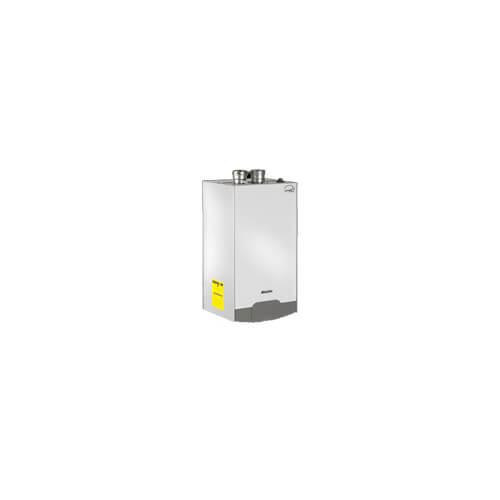
Solo 110 NG, 86,000 BTU Output Prestige Boiler
 --%3E %3Csvg version='1.1' id='Fill' xmlns='http://www.w3.org/2000/svg' xmlns:xlink='http://www.w3.org/1999/xlink' x='0px' y='0px' viewBox='0 0 100 100' enable-background='new 0 0 100 100' xml:space='preserve'%3E %3Cpath fill='%23F15C02' d='M79.44,0.95H20.56C9.78,0.95,0.95,9.78,0.95,20.56v58.87c0,10.79,8.82,19.61,19.61,19.61h58.87 c10.79,0,19.61-8.83,19.61-19.61V20.56C99.05,9.78,90.22,0.95,79.44,0.95z M65.38,58.24l9.38,29.58L49.69,69.78L24.5,87.82 l9.34-29.6L8.8,39.6l30.73-0.17c0,0,6.98-19.61,10-28.93c0.54,1.36,9.88,29.1,9.88,29.1H91.2L65.38,58.24z'/%3E %3C/svg%3E)
 --%3E %3Csvg version='1.1' id='Half' xmlns='http://www.w3.org/2000/svg' xmlns:xlink='http://www.w3.org/1999/xlink' x='0px' y='0px' viewBox='0 0 100 100' enable-background='new 0 0 100 100' xml:space='preserve'%3E %3Cg%3E %3Cpath fill='%23F15C02' d='M30.05,70.23l3.79-12.01L8.8,39.6l30.73-0.17c0,0,6.98-19.61,10-28.93c0.54,1.36,9.88,29.1,9.88,29.1h1.58 L93.71,7.18c-3.58-3.82-8.66-6.23-14.28-6.23H20.56C9.78,0.95,0.95,9.78,0.95,20.56v58.87c0,5.41,2.22,10.32,5.79,13.88 L30.05,70.23z'/%3E %3C/g%3E %3Cpath fill='%23FBC8B4' d='M93.71,7.18L60.98,39.6H91.2L65.38,58.24l9.38,29.58L49.69,69.78L24.5,87.82l5.55-17.59L6.75,93.32 c3.55,3.54,8.44,5.73,13.82,5.73h58.87c10.79,0,19.61-8.83,19.61-19.61V20.56C99.05,15.4,97.01,10.69,93.71,7.18z'/%3E %3C/svg%3E)
' fill='%23F15C02' d='M49 0C21.938 0 0 21.938 0 49s21.938 49 49 49 49-21.938 49-49S76.062 0 49 0m0 82.709a7.54 7.54 0 1 1 0-15.08 7.54 7.54 0 0 1 0 15.08m7.54-28.412a7.541 7.541 0 0 1-15.08 0V22.831a7.54 7.54 0 0 1 15.08 0v31.466z'/%3E%3C/svg%3E)
MANUALS (4)

Replacement Parts
Product Highlights


Description
The Triangle Tube brand has been discontinued by the manufacturer as of 11/3/2025. Suggested replacement units will be available on our website and replacement parts will continue to be available as supplies last. If you'd like any further assistance, please contact our customer service team.
The Prestige boiler features a uniquely designed stainless steel heat exchanger and offers 95% efficiency. The Prestige has the capability to modulate the firing rate to 25% of its rated input and is available in 5 sizes; a 60, 110 Stand Alone, 175, 250 and 399. This modulation means fewer cycles resulting in lower operating costs. A smart and equally convenient User Interface Module displays system status and fully adjustable parameter values as well as diagnostic codes for easy troubleshooting and optimum system performance.
When combined with a Smart Series Indirect Fired Water, Prestige provides cost-effective, reliable heat and an abundant supply of domestic hot water. The Prestige can be direct out of a sidewall with PVC pipe. The Prestige requires minimal installation space, operates quietly and features an attractive jacket with a digital control panel. The boiler is equipped with a stainless steel premix burner and is available in a natural gas or propane.
Triangle Tube Boiler Installation & Warranty Information:
We recommend that the installation of all Triangle Tube Boilers be done by a licensed, trained and qualified technician with the proper knowledge and background.
Should you experience an issue during the installation or the initial startup of the unit, please do not contact the manufacturer. You should have the technician that installed the unit contact either us or the manufacturer. Triangle Tube cannot accept any service or warranty calls from anybody but a licensed technician.
Neither we or Triangle Tube can be held liable for improper installation and operation of any Triangle Tube boiler product purchased from our company. Should a warranty issue arise where parts will need to be replaced, an installation receipt will be required along with your sales receipt. Failure to provide a receipt or invoice may result in the warranty not being honored.
Specs
| Fuel Type: | Natural Gas |
|---|---|
| Product Type: | Boiler |
| Boiler Type: | High Efficiency |
| Efficiency: | 95% |
| System Type: | Hydronic (Water) |
| Width (Inches): | 20" |
| Height (Inches): | 35.5" |
| Features: | Condensing Wall Mounted EI/Spark Ignition Direct Vent |
| Application: | Heating |
| Depth (Inches): | 16" |
| Vent Size: | 3" |
| Vent Type: | PVC |
| Water Connection: | 1" |
| Gas Connection: | 1/2" |
| BTU Input: | 110000 |
| BTU Output: | 86000 |
| Warranty: | 10 Year Limited (Tank), 1 Year Limited (Parts) |

Questions?

SOLO 110 (NG)
Replacement Parts
SKU: SOLO-110NG
Brand: Triangle Tube
 --%3E %3Csvg version='1.1' id='No-RB' xmlns='http://www.w3.org/2000/svg' xmlns:xlink='http://www.w3.org/1999/xlink' x='0px' y='0px' viewBox='0 0 100 100' enable-background='new 0 0 100 100' xml:space='preserve'%3E %3Cpath fill='%23CECECE' d='M79.44,0.95H20.56C9.78,0.95,0.95,9.78,0.95,20.56v58.87c0,10.79,8.82,19.61,19.61,19.61h58.87 c10.79,0,19.61-8.83,19.61-19.61V20.56C99.05,9.78,90.22,0.95,79.44,0.95z M65.38,58.24l9.38,29.58L49.69,69.78L24.5,87.82 l9.34-29.6L8.8,39.6l30.73-0.17c0,0,6.98-19.61,10-28.93c0.54,1.36,9.88,29.1,9.88,29.1H91.2L65.38,58.24z'/%3E %3C/svg%3E)

Need help finding a replacement part?
Product Reviews
Most Liked Positive Review
Silent Boiler
Most Liked Negative Review
 --%3E %3Csvg version='1.1' id='With-RB' xmlns='http://www.w3.org/2000/svg' xmlns:xlink='http://www.w3.org/1999/xlink' x='0px' y='0px' viewBox='0 0 100 100' enable-background='new 0 0 100 100' xml:space='preserve'%3E %3Cpath fill='%23FBC8B4' d='M79.44,0.95H20.56C9.78,0.95,0.95,9.78,0.95,20.56v58.87c0,10.79,8.82,19.61,19.61,19.61h58.87 c10.79,0,19.61-8.83,19.61-19.61V20.56C99.05,9.78,90.22,0.95,79.44,0.95z M65.38,58.24l9.38,29.58L49.69,69.78L24.5,87.82 l9.34-29.6L8.8,39.6l30.73-0.17c0,0,6.98-19.61,10-28.93c0.54,1.36,9.88,29.1,9.88,29.1H91.2L65.38,58.24z'/%3E %3C/svg%3E)
Watch out for replacement parts!!!!!!
Not impressed
Excellent engineering -- except controls
Works great
Love it, quiet heat
Not for do it yourselfers
Watch out for replacement parts!!!!!!
Silent Boiler
don't let plumbers turn you off unit

great product [...]
Quiet and efficient
Product Q&A
17 QuestionsQ: Obviously I know this is a high quality/efficiency product, and we will save money. We are converting oil-gas, and are considering this system, but with the indirect fired water heater in it. How reliable are these systems? It seems they are so new that no one can really say "In 5 years, this might go." Or, they just wouldn't tell us... So bottom line. How long will a system like this last?? I have a cape style home, 1 level, 2 zones (potential 3).
Asked by SimpleSimon 14 years ago
Add your answer
Condensing boilers aren't new. I kept one running for 20 years with minimal maintenance before replacing it in 2004, and would have kept it going much longer if I had earlier put a condensation trap into the exhaust (a long uphill one in that case). Yes they're changing, the manufacturers are improving them, I couldn't find the same model when I looked for our new home. I researched what was currently available in condensing boilers and ended up choosing the Triangle Tube Solo 110 Propane with a separate Triangle Tube indirect water heater. It installed & came up with ease. I can't say how long it will last but I'm expecting never to replace it. Of course it must be installed properly. Google "John Siegenthaler hydronics" for excellent advice on installation & primary/secondary hydronic plumbing. Joe Physics degree, profession engineering
PexSupply, The boiler is wonderful!! Highly recommended. We have a single zone w/o domestic hot water feature. We have gone through a winter and it worked without fault. It is neat looking on the wall. We had a commercial water leak in the basement and had no concern with the boiler. I have recommended the Solo to friends who are converting from oil, as we did, of simply replacing an older gas boiler.
We do not have the indirect fired water heater, but we do have this boiler, and we love it. I believe it has a 10-year warranty.
I have had this unit for the past 2 winters in a rental house and the tenant have had positive comments about it. It has preformed well for us over the course of this time frame. robb k
I have only had this unit about two years so the long term prognosis is unknown, however, this unit is very fussy. I've had several instances when filters weren't clean or the incoming water pressure dropped to zero because of a vapor lock in the pressure regulator that is installed prior to the unit and it shut down and wouldn't fire. All were easily fixed and no parts required, but, had to pay for a service call. I know what to do now to avoid one, however, if unit goes out in winter and you're not around, house will freeze. Good Luck!!
Q: Why do I keep getting e2 messages and have to keep resetting?
Asked by Jim 14 years ago
Add your answer
Verified Reply- PexSupply StaffIt means that there was failed ignition after 5 attempts. Please see the following and go to page 55: http://s3.pexsupply.com/manuals/1249544859835/Triangle_Tube_Solo110_Manual.pdf
Q: Can anyone tell me the amperage or watts rating on the label? usually says (120v __ amps)We are off grid and really need to know the actual power draw. Thanks for your help!
Asked by Bridget 14 years ago
Add your answer
Although I can't say for sure since I do not have a kWh meter on mine, a grundfos 15-42 draws about 120 watts (1 amp) and the types of fans used to exhaust draw about the same. The electrical energy energy consumed depends on the run time and the severity of the weather and the insulation and air sealing of the structure. My family of four uses about 10 kWh/day and we do not notice the electrical draw of the boiler increasing our bill in the Minnesota winter. Lots of other factors, though. I would assume it consumes less thatn 3 kWh in pretty cold weather but would be ready to increase the solar when the winter cloudy weather begins. Complementing with wind may be better if you live in a place where it is cold/cloudy/windy int he winter. Todd Solar instructor @ Century College
There is no where that specifically states what the draw is. This is due to the fact that one could have any number of devices hanging off it (pumps, sentry vales and so forth). That being said; in my case I have the 110, the DHW circulator, the 110's built in CH circulator all off the one AC. The Solo manual states that the DHW and CH circulators are not to exceed 4amps so with this you should be safe with a budget of 5 amps. On the same 15 amp circuit I'm running my TEKMAR controls, a pile of electronic sentry vales, 3 circulating pumps and my water softener with no issues thus far. Martin Loney CTS-D Duocom Canada Systems Designer
The name plate on the solo 110 LP says "120v 60HZ less than 12 amps". So thats not much help. Just the way the unit comes with one pump. I would think we would be talking less than 3 or 4 amps. There is some electronics, a gas valve,purge fan and one pump.But this would go up as you added pumps.
Hi Bridget, If you are of grid!! This product does not work with my generator! (beware) I was told it is because of the electricity pattern coming from the generator. (it is not a smooth wave) I learned this after it was installed and we lost electricity. Otherwise it is a good product, but if you are going to buy. get the one that has on hot water on demand built into it.
With out knowing your particular configuration. Your may have other pumps in line in addition the one installed by on the unit as it comes from the factory. One must always properly size in accordance with plans for future growth or expectations of others possibly doing so. The wiring to the house is set for a 15 amp circuit per instructions , this is derated to 80% of circuit by code and practice. So figure a maximum amp draw of 12, or 1440 watts. Currently with the small Circulator alone and zone vales You can expect to draw around 135 to 185 watts of power in unit operation. For each additional circulator you must add an additional 89 Watts of consumed power. As you can see you are well below the 1440 watts supplied. You would be safe to plan on future growth with an expectancy of 600 Watt design for system. this would largely cover additions like solar add on with their additional pumps and controls. Good Luck.
It says "no more than 12 amps".
Q: What is the power cosumption of this product?
Asked by Bridget 14 years ago
Add your answer
I will say, very low! It's 95% efficient. It really depends on the demands of your home. Since it's a modulating boiler, it only uses what is needed, unlike a conventional boiler that has to heat up its entire contents, all on or all off. This one is much more like an on-demand hot water heater, heating up only what it needs. It will do its best job when circumstances are such that the water returning is cold/warm not hot - that's when it can use it's "condensing" mode. The same happens on start up when the water is cold. I live in colorado where there are long springs and long falls, and not heating up a whole boiler which contains 10-20 gallons of water throughout the home, saves me a lot of heating costs. Switching out my 200,000 BTU conventional boiler with this one has saved me a bundle on heating costs.
If you're referring to electricity, the consumption of the boiler itself is negligible. The computer control takes very little, the spark igniter takes a little more, but it is only used occasionally (at startup). The biggest power draw would be the circulation pumps (one inside the boiler and one or more outside the boiler). I don't have numbers on these, but I know they don't draw too much since both are powered on a single 15-amp circuit. We've saved a lot on natural gas, and we haven't noticed a difference in our electric bill since we installed this boiler 2 years ago. Eric
The electrical power use of the boiler is minimal. The circulator pump is a low amp motor, I don't have a way to measure the actual power consumption but since I installed the boiler my power bill hasn't changed. The gas usage will be the higher energy use item. The gas use will depend on a number of factors; how well your building is insulated, the temperature you keep the building, local gas prices etc. I have seen a small increase in my overall gas bill but it's only 5-6 dollars a month so it's minimal. I have a well insulated building (new stand alone building that is a shop, not living space) and I keep the temperature at 60F. I hope this helps.
120V, it's more energy efficient than our previous boiler
Q: I am being told by contractors that this boiler will not operate at full efficiency if I do not install an indirect water heater to replace my two year old existing energy efficient direct gas fired water heater. I understand the benefits of indirect water heaters, but this is the first time I've heard that the performance of a condensing/modulating heater will suffer if an IDWH is NOT installed. Is there any truth to this?
Asked by Carl 15 years ago
Add your answer
Verified Reply- PexSupply StaffWe have never heard this, although your water heating system would probably operate most efficiently if it were linked to this boiler. The frequently overlooked aspect of efficiency with condensing boilers is water temperatures. If you use a condensing boiler to make high-temperature water (generally anything over 140°F), the unit will not be able to condense and operate at its maximum efficiency levels.
Probably correct but then 'full efficiency' is 95% compared to ...? I would call Triangle Tube and ask them for some specific numbers so and accurate comparison can be made..
Hi Carl. I say that's Nonsense! I've been running this thing for two years and I have a Rannai, On-Demand hot water heater separate from the unit. That said, could you benefit from an indiret WH connected to this unit, no doubt about it. Much more efficient. But you can always add it at a later date. I would say the greater issue is whether you have enough hyronic emitters in then home to make the boiler work well in condensiing mode. The colder the water returns, the more condensing occurs. As once it gets to hot operatining temp, and stays there, condensiing stops. Still, the modulating mode takes over and you are still saving gas. If you desire to send me your email we can talk more if you wish.
Carl Your complete SYSTEM may not operate at peak efficiency because you may be using a less efficient heater for domestic hot water. The mod/con boiler being the only gas burning appliance providing hot water for space heat and domestic hot water will be your maximum efficiency attainable assuming your current hot water heater operates at less than 95%. The boiler is equipped with a priority system that provides a loop for DHW production by shutting off the system circulator. Just plan on using it at some point in the future when your other hot water heater fails. Wayne ( 2nd trouble free year with my self installed Solo 110)
The efficiency of the Solo 110 will neither increase or decrease when coupled to an indirect water heater.
In the winter you would save money, in the summer you will be using your boiler when the boiler normally would not be used. I elected not to use this hook up after talking to my son who is HVAC service tech. You would still have the added expense of a the new water heater, sounds to me like they want to sell you more.
Sorry, I am not an expert. But I installed my unit and created a manifold for it. It is extremely efficient w/out an arm for WH. That is just a nice available benefit. I think they are saying you could get much more efficiency on WH if you do it that way, at a very high expense, i might add. No, I can imagine that it would be any less efficient as a stand alone. That is what it was built for....being a stand alone, efficient boiler. It has exceeded all my expectations as a stand alone in bringing down my gas bill. When I compare with associates, everybody I know wonders how I have such a low bill on my combined water heating and heat bill.
I would say this is misleading at best, and utterly fabricated marketing propaganda at worst. Even though you have a newer energy efficient DHW heater, it does stand to reason that a good indirect DHW added to the boiler could be more energy efficient when looking at the total central heating (CH) and DHW package. The Solo 110 has it's own dedicated DHW connection, but of course, this is entirely optional. The boiler itself (when properly installed) is designed to operate at maximum efficiency given the load it is being asked to heat (an indirect DHW tank just being one of those possible loads). The condensing aspect will always benefit the heat recapture, driving up the efficiency rating. The modulating aspect will also help with efficiency since it will throttle the fuel burn rate down when it's not really needed at 100%. The outdoor temp sensor should be properly installed to help with this aspect as well. For what it's worth, I also installed my indirect DHW on a timer such that it will call for the DHW to be heated around the same time as one of my programmable thermostats calls for CH heat. The rational here is to not heat the core heat exchanger water twice when not needed. Allowing the DHW to call for heating whenever the aquastat says it needs reheating would be like boiling 2 gallons of water on your stove to make pasta, allowing it to cool for 4 hours, then using the same water to make another batch of pasta, bringing that same hot water to a boil all over again. It the water is already hot after batch #1, then you save reheating fuel by making batch #2 right after batch #1. Bottom line here is that if cost is an issue to you (and for most it is), then I would keep your direct fired DHW for a few years, then consider converting it over to indirect DHW when you feel your got your money's worth out of that purchase, or when it finally breaks down and needs replacing..
I can't fully answer your question, I don't know. This boiler has worked great for radiant heat for our rental property, we are still using a standard electric water heater.
Do not believe any of the DHW non-sense that the boiler industry has created. This boiler works fine without DHW. In fact, it is one of the more efficient boilers on the market, taking into account its vertical (self-cleaning) heat exchanger. We're only using this boiler for central heating during winter months and we find it very efficient - more so than any other boiler we've had in the past. DHW application is a HOAX in the marketplace, so that you unnecessarily run your boiler year-round. Thus, having to replace and service your boiler more often than its seasonal usage only. Why would any body want to heat water with a $4000 gorilla when the same function can be achieved by a standalone $400 water heater? is beyond me. By having a stand-alone water heater of your choice, you can shut-off your boiler during the summer months and save on its maintenance and lifetime. Also, do not believe in any of the "economy" savings of DHW application that your contractor may be trying to sell you. Good luck.
Q: Can this boiler be used for in floor heating closed system when the pex tubing that is in the floor is not an oxygen barrier tubing?
Asked by Mr. Hinkle 15 years ago
Add your answer
Verified Reply- PexSupply StaffWe wouldn't recommend it. If you use PEX without an oxygen barrier, you'll really have an open system and rusting could result.
No. Use of non-oxygen barrier tubing will compromise system components eventually, even if that tubing is buried in a slab. Small amounts of oxygen (and moisture containing oxygen) can still permeate the slab and reach the tubing. It will then circulate through the system and corrode various components. I believe the use of non-barrier tubing is also expressly prohibited in Triangle Tube's instructions, so such an installation would likely void the warranty. In general, non-barrier tubing should never be used in hydronic systems, even when buried in concrete. If you decide to install the boiler anyway, isolate the boiler piping from the non-barrier piping with a stainless steel heat exchanger.
Q: I have to replace a slant/fin victory II input 120000, burner 100000, ibr 87000. It serves the radiant heat just fine in a 2000 sq ft home but I want to add IDW, say a smart 40. Would this be large enough? We are at 6500 ft in utah
Asked by Jack 15 years ago
Add your answer
Verified Reply- PexSupply StaffThis unit should be sufficient: its IBR output is roughly the same as your existing boiler and the indirect unit would take priority and not cut into this number. Please refer to page 67 of the manual linked below for information on high-altitude installations. http://s3.pexsupply.com/manuals/1249544859835/Triangle_Tube_Solo110_Manual.pdf
Q: Can you use glycol w/ this unit and if so what do you recommend?
Asked by 15 years ago
Add your answer
Verified Reply- PexSupply StaffThis boiler is compatible with mixtures of propylene glycol of up to 50%.
Q: How many gph of hot water can this boiler make without an indirect tank?
Asked by 15 years ago
Add your answer
Verified Reply- PexSupply StaffThis boiler will not produce any domestic hot water without an indirect water heater/heat exchanger.
Q: I need to replace an older LP boiler that has these ratings: MAX INPUT: 125000 BTU DOE HEATING CAP. : 100000 BTU MIN INPUT : 75000 BTU NET IBR: 87000 Is this boiler large enough, or do I need the 175 which seems like too much?
Asked by 15 years ago
Add your answer
Verified Reply- PexSupply StaffThe Solo 110 should be big enough.