




Truebro

 --%3E %3Csvg version='1.1' id='No-RB' xmlns='http://www.w3.org/2000/svg' xmlns:xlink='http://www.w3.org/1999/xlink' x='0px' y='0px' viewBox='0 0 100 100' enable-background='new 0 0 100 100' xml:space='preserve'%3E %3Cpath fill='%23CECECE' d='M79.44,0.95H20.56C9.78,0.95,0.95,9.78,0.95,20.56v58.87c0,10.79,8.82,19.61,19.61,19.61h58.87 c10.79,0,19.61-8.83,19.61-19.61V20.56C99.05,9.78,90.22,0.95,79.44,0.95z M65.38,58.24l9.38,29.58L49.69,69.78L24.5,87.82 l9.34-29.6L8.8,39.6l30.73-0.17c0,0,6.98-19.61,10-28.93c0.54,1.36,9.88,29.1,9.88,29.1H91.2L65.38,58.24z'/%3E %3C/svg%3E)


Truebro has been part of IPS Corporation since 2004, when IPS, a plumbing and construction supplies manufacturer founded in 1954, acquired the brand outright. IPS runs its plumbing division out of Compton, California. Truebro's product line stayed narrowly focused on one problem: covering exposed hot water and drain piping under a sink so it meets ADA accessibility rules.
Public buildings with wheelchair-accessible lavatories are the main market for this equipment. Building codes generally require exposed under-sink piping to be insulated or shielded once a sink is designed for wheelchair clearance. Plumbing contractors working commercial and institutional jobs are the primary buyers, more than residential trades.
Product Lines
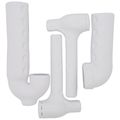
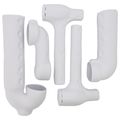
SupplyHouse carries Truebro's trap and supply line cover kits. These wrap the P-trap, angle valves, and supply lines under an accessible lavatory in a molded cover rather than pipe insulation wrap. The 82193 kit, for example, bundles a trap cover with two angle valve and supply covers as a single ordering unit instead of separate pieces.
Covers snap or clip on without adhesive or fasteners going into the wall or cabinet, which matters on a retrofit where drilling into existing casework isn't an option. The covers are a wear item exposed to daily foot and knee contact. Replacement runs on the same molded-cover design as new installation rather than a separate repair product line.
Why Contractors Specify Truebro
ADA compliance on a commercial bathroom remodel is a pass or fail inspection item, not a judgment call. A plumbing contractor who specifies a recognized ADA cover brand reduces the chance of a callback over a failed accessibility check. Truebro has spent two decades under IPS Corporation. That gives the line the kind of consistent availability a contractor needs when a job's punch list depends on getting the right part on the first order.
Because the covers install without adhesive or wall fasteners, a contractor can complete the accessibility portion of a lavatory install in the same visit as the rest of the trim-out work. This avoids scheduling a return trip.
How to Choose Truebro Products
The first step is confirming what's actually exposed under the specific lavatory. A straightforward trap and two supply lines calls for a standard kit like the 82193. An unusual valve configuration or offset drain may need a different cover combination. Measuring the existing pipe runs before ordering avoids ending up with a cover that doesn't fully enclose an oddly placed fitting.
Color match is a smaller but real consideration on a public-facing bathroom. A cover finished differently than surrounding fixtures stands out during inspection walk-throughs, even when it functions correctly. Confirming the cover finish against the rest of the fixture set before ordering avoids a mismatched look on an otherwise compliant install.
Frequently Asked Questions
What problem does a Truebro cover actually solve?
It shields the hot water pipe, trap, and supply lines under an accessible sink. This keeps a wheelchair user's legs and knees from contacting hot or sharp piping, which is the underlying safety issue ADA undersink rules are written to address.
Does a Truebro cover replace pipe insulation, or work alongside it?
It replaces the typical foam pipe wrap approach for the exposed section under the sink. The molded cover insulates against contact and gives a finished look rather than field-wrapped insulation.
Can a Truebro kit be installed without modifying the existing plumbing?
In most cases, yes. The covers clip around the existing trap, angle valves, and supply lines without cutting or replacing the pipe itself. An unusually configured trap or offset drain may still need a different cover than a standard kit.
Who owns the Truebro brand today?
IPS Corporation, a plumbing and construction supplies manufacturer founded in 1954, acquired Truebro in 2004 and continues to manufacture the line.
Are Truebro covers only used in commercial buildings?
Commercial and institutional bathrooms are the primary market, since ADA accessibility requirements mostly apply to public buildings rather than private homes. A residential job can still use the same covers wherever a homeowner wants wheelchair-accessible under-sink protection.
