




Tubular Center and End Outlets


 --%3E %3Csvg version='1.1' id='No-RB' xmlns='http://www.w3.org/2000/svg' xmlns:xlink='http://www.w3.org/1999/xlink' x='0px' y='0px' viewBox='0 0 100 100' enable-background='new 0 0 100 100' xml:space='preserve'%3E %3Cpath fill='%23CECECE' d='M79.44,0.95H20.56C9.78,0.95,0.95,9.78,0.95,20.56v58.87c0,10.79,8.82,19.61,19.61,19.61h58.87 c10.79,0,19.61-8.83,19.61-19.61V20.56C99.05,9.78,90.22,0.95,79.44,0.95z M65.38,58.24l9.38,29.58L49.69,69.78L24.5,87.82 l9.34-29.6L8.8,39.6l30.73-0.17c0,0,6.98-19.61,10-28.93c0.54,1.36,9.88,29.1,9.88,29.1H91.2L65.38,58.24z'/%3E %3C/svg%3E)

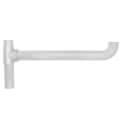
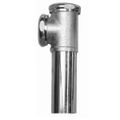

Tubular Center and End Outlets are the waste fittings that tie multiple sink bowls into a single tubular drain run. A center outlet waste places the drain opening at the middle of the tube, while an end outlet waste places it at the end of the run. Dearborn's L.A. Code End Outlet Waste, for example, is a 1-1/2 in. x 16 in. center to center unit with a brass nut, a slip joint connection, and a baffle tee. Dearborn also builds slip joint end outlet wastes in 17 gauge, 20 gauge, and budget gauge brass, so wall thickness is a real choice on the job. Contractors pick these outlets based on bowl spacing, tube length, and the connection style that matches the existing trap and wall arm. The outlet sets the drain layout for the whole sink, so a wrong length or connection type means reopening joints after the trap is already set.
Subcategories
- Center Outlet Wastes: Center outlet wastes place the drain opening at the middle of the tube so the bowls on either side feed one trap connection. Dearborn's 1-1/2 in. slip joint center outlet wastes come in chrome-plated brass in 17, 20, and 22 gauge. Jones Stephens lists 1-1/2 in. x 16 in. center outlet wastes in chrome-plated brass with slip joint and direct connection options. Plumbers use them on multi-bowl sink drain runs.
- End Outlet Wastes: End outlet wastes bring the drain opening to the end of the tube run. Dearborn's 1-1/2 in. tubular slip joint end outlet waste is made from 17 gauge, 20 gauge, or budget gauge brass. The Dearborn L.A. Code End Outlet Waste adds a baffle tee on a 1-1/2 in. x 16 in. center to center run. Installers choose them when the trap connection lands at the end of the sink set.
- Hi-Line Center Outlet Wastes: Hi-Line center outlet wastes use a Hi-Line connection instead of a slip joint. Dearborn's 1-1/2 in. version comes in 16 in. or 21 in. lengths, includes a cleanout, and offers a baffle tee as an option. Contractors choose the 21 in. length when bowl spacing runs wider. Brass gauge options are 17, 20, and budget gauge.
Buying Guide
Start with the sink layout. Count the bowls, measure the bowl spacing, and decide whether the drain opening belongs at the middle of the run or at the end. The choice separates a center outlet waste from an end outlet waste, and it drives every other decision.
Next, match the length. A 1-1/2 in. x 16 in. center to center run is the size Dearborn's L.A. Code End Outlet Waste uses, and Dearborn's Hi-Line center outlet waste also comes in 21 in. for wider bowl spacing. Measure the actual bowl centers before ordering instead of assuming a standard run will fit.
Then pick the connection. Jones Stephens lists both slip joint and direct connection center outlet wastes, so confirm which style the trap and tailpieces expect. Hi-Line is a separate connection style, and Dearborn's 1-1/2 in. Hi-Line center outlet waste includes a cleanout.
Check material and gauge last. Dearborn offers 17, 20, and 22 gauge chrome-plated brass in its slip joint center outlet wastes, and Jones Stephens lists 20 and 22 gauge.
When comparing Tubular Center and End Outlets, also confirm whether a baffle tee is included or optional. The L.A. Code End Outlet Waste includes one, and the Hi-Line center outlet waste offers one as an option. Write down bowl count, run length, connection style, and gauge before ordering, and the right outlet arrives the first time.
Frequently Asked Questions
What's the difference between a center outlet and an end outlet waste?
In Tubular Center and End Outlets, a center outlet waste places the drain opening at the middle of the tube, while an end outlet waste places it at the end of the run. Pick based on where the trap connection needs to land relative to the bowls.
What lengths do tubular center outlet wastes come in?
Dearborn's 1-1/2 in. Hi-Line center outlet waste comes in 16 in. and 21 in. lengths. Jones Stephens lists 1-1/2 in. x 16 in. center outlet wastes as well. Measure the bowl centers to confirm the length before ordering.
Are tubular outlet wastes slip joint or direct connection?
Tubular center and end outlets come in more than one connection style. Jones Stephens lists center outlet wastes with slip joint and direct connection options, and Dearborn offers slip joint models along with a Hi-Line connection. Confirm the connection on the existing trap before choosing.
What brass gauge should I pick for a tubular outlet waste?
Tubular center and end outlets in brass come in several gauges. Dearborn's slip joint center outlet wastes come in 17, 20, and 22 gauge chrome-plated brass, and Jones Stephens lists 20 and 22 gauge. Choose based on the job's budget and expected service life.
Do tubular outlet wastes come with a baffle tee?
Baffle tees on tubular center and end outlets vary by model. The Dearborn L.A. Code End Outlet Waste includes a baffle tee, and the Dearborn Hi-Line center outlet waste offers one as an option. Check the details on each outlet before ordering.
