




Utility Traps


 --%3E %3Csvg version='1.1' id='No-RB' xmlns='http://www.w3.org/2000/svg' xmlns:xlink='http://www.w3.org/1999/xlink' x='0px' y='0px' viewBox='0 0 100 100' enable-background='new 0 0 100 100' xml:space='preserve'%3E %3Cpath fill='%23CECECE' d='M79.44,0.95H20.56C9.78,0.95,0.95,9.78,0.95,20.56v58.87c0,10.79,8.82,19.61,19.61,19.61h58.87 c10.79,0,19.61-8.83,19.61-19.61V20.56C99.05,9.78,90.22,0.95,79.44,0.95z M65.38,58.24l9.38,29.58L49.69,69.78L24.5,87.82 l9.34-29.6L8.8,39.6l30.73-0.17c0,0,6.98-19.61,10-28.93c0.54,1.36,9.88,29.1,9.88,29.1H91.2L65.38,58.24z'/%3E %3C/svg%3E)

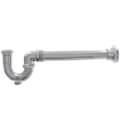
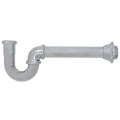
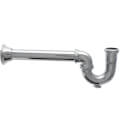
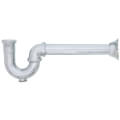
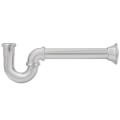

Utility Traps are P-shaped drain traps built to Milwaukee code specifications, used to seal drain lines on utility sinks, laundry tubs, and similar fixtures common in basements and commercial washrooms. These traps hold a small amount of water in the curved section to block sewer gas from entering the building through the drain line, the same function every P-trap serves, but sized and configured for utility-grade fixtures rather than standard lavatory drains. Models come in gauge options such as 17-gauge and 20-gauge construction, with chrome-plated or brass finishes depending on the application. Many include a deep flange and cleanout, which lets a plumber clear a clog without disassembling the whole trap. Because utility sinks handle heavier debris than a typical bathroom sink, a deep-flange trap with cleanout access saves service time on repeat clogs. Contractors stock these for basement laundry rooms, janitorial closets, and commercial mop sinks where Milwaukee code compliance is required.
Subcategories
- 17-Gauge Utility Traps: 17-gauge utility traps use a heavier wall thickness than standard tubular traps, which holds up better under the frequent use and debris common to utility sink drains. Plumbers select this gauge for commercial or high-use installations. These traps commonly include a deep flange and cleanout for easier clog removal. The heavier gauge adds durability without changing the trap's basic P-shape function.
- 20-Gauge Utility Traps: 20-gauge utility traps offer a lighter-duty alternative for standard residential or light commercial utility sink installations. These still meet Milwaukee code requirements for utility drain configurations. Plumbers use this gauge where the heavier 17-gauge trap isn't necessary for the expected use. Chrome-plated finishes are common on this gauge for visible installations.
- Traps with Cleanout: Traps with a built-in cleanout let a plumber access and clear a clog directly at the trap without disconnecting it from the drain line. This feature matters most on utility sinks, which handle more debris, lint, and sediment than typical fixture drains. The cleanout plug threads into a dedicated opening in the trap body. This configuration is standard on many Milwaukee code utility trap models.
Buying Guide
Confirm local code requirements before selecting a model, since Milwaukee code utility trap configurations are specifically required in certain jurisdictions for utility sink and laundry tub drains. Not every area enforces this standard, so check with the local plumbing inspector or municipal code if there's any uncertainty about which trap configuration is required for the installation.
Gauge selection comes down to expected use. Heavier 17-gauge traps hold up better in commercial settings or utility sinks that see frequent, heavy debris, while 20-gauge traps are a reasonable fit for lighter residential use. Utility Traps with a built-in cleanout are worth the small added cost on any installation where clogs are likely, since the cleanout lets a plumber clear the line without pulling the trap off the drain arm.
Finish and material selection depends on visibility and environment. Chrome-plated traps suit exposed installations where appearance matters, while unfinished or brass traps may be more appropriate in a utility closet or unfinished basement where corrosion resistance matters more than looks. Match the trap size to the existing drain arm and tailpiece diameter before ordering, since a mismatched size will require an additional adapter to complete the connection.
Frequently Asked Questions
What makes a utility trap different from a standard P-trap?
A utility trap is built to Milwaukee code specifications for utility sinks and laundry tubs, often with a deeper flange and heavier gauge construction than a standard lavatory P-trap. Both types perform the same basic function of holding water to block sewer gas.
What is the difference between 17-gauge and 20-gauge utility traps?
17-gauge traps use a heavier wall thickness suited to commercial or high-use installations, while 20-gauge traps are a lighter-duty option for standard residential use. Both meet Milwaukee code requirements for utility drain configurations.
Why would a utility trap need a cleanout?
A cleanout lets a plumber clear a clog directly at the trap without disconnecting it from the drain line. This matters most for utility sinks, which handle more debris and sediment than typical fixture drains.
Is Milwaukee code required for all utility sink installations?
Milwaukee code requirements vary by jurisdiction, so local plumbing code should be confirmed before selecting a trap configuration. Not every area enforces this specific standard.
What finish options are available for utility traps?
Utility traps commonly come in chrome-plated finishes for exposed installations or unfinished brass for utility closets and basements. The finish choice doesn't affect the trap's basic sealing function.
