




Filters
SORT
Product Availability –
Review Score –
 --%3E %3Csvg version='1.1' id='Fill' xmlns='http://www.w3.org/2000/svg' xmlns:xlink='http://www.w3.org/1999/xlink' x='0px' y='0px' viewBox='0 0 100 100' enable-background='new 0 0 100 100' xml:space='preserve'%3E %3Cpath fill='%23F15C02' d='M79.44,0.95H20.56C9.78,0.95,0.95,9.78,0.95,20.56v58.87c0,10.79,8.82,19.61,19.61,19.61h58.87 c10.79,0,19.61-8.83,19.61-19.61V20.56C99.05,9.78,90.22,0.95,79.44,0.95z M65.38,58.24l9.38,29.58L49.69,69.78L24.5,87.82 l9.34-29.6L8.8,39.6l30.73-0.17c0,0,6.98-19.61,10-28.93c0.54,1.36,9.88,29.1,9.88,29.1H91.2L65.38,58.24z'/%3E %3C/svg%3E)
 --%3E %3Csvg version='1.1' id='With-RB' xmlns='http://www.w3.org/2000/svg' xmlns:xlink='http://www.w3.org/1999/xlink' x='0px' y='0px' viewBox='0 0 100 100' enable-background='new 0 0 100 100' xml:space='preserve'%3E %3Cpath fill='%23FBC8B4' d='M79.44,0.95H20.56C9.78,0.95,0.95,9.78,0.95,20.56v58.87c0,10.79,8.82,19.61,19.61,19.61h58.87 c10.79,0,19.61-8.83,19.61-19.61V20.56C99.05,9.78,90.22,0.95,79.44,0.95z M65.38,58.24l9.38,29.58L49.69,69.78L24.5,87.82 l9.34-29.6L8.8,39.6l30.73-0.17c0,0,6.98-19.61,10-28.93c0.54,1.36,9.88,29.1,9.88,29.1H91.2L65.38,58.24z'/%3E %3C/svg%3E)
Price Range –
WELL-X-TROL Well-X1 Well Tanks

 --%3E %3Csvg version='1.1' id='No-RB' xmlns='http://www.w3.org/2000/svg' xmlns:xlink='http://www.w3.org/1999/xlink' x='0px' y='0px' viewBox='0 0 100 100' enable-background='new 0 0 100 100' xml:space='preserve'%3E %3Cpath fill='%23CECECE' d='M79.44,0.95H20.56C9.78,0.95,0.95,9.78,0.95,20.56v58.87c0,10.79,8.82,19.61,19.61,19.61h58.87 c10.79,0,19.61-8.83,19.61-19.61V20.56C99.05,9.78,90.22,0.95,79.44,0.95z M65.38,58.24l9.38,29.58L49.69,69.78L24.5,87.82 l9.34-29.6L8.8,39.6l30.73-0.17c0,0,6.98-19.61,10-28.93c0.54,1.36,9.88,29.1,9.88,29.1H91.2L65.38,58.24z'/%3E %3C/svg%3E)
 --%3E %3Csvg version='1.1' id='Half' xmlns='http://www.w3.org/2000/svg' xmlns:xlink='http://www.w3.org/1999/xlink' x='0px' y='0px' viewBox='0 0 100 100' enable-background='new 0 0 100 100' xml:space='preserve'%3E %3Cg%3E %3Cpath fill='%23F15C02' d='M30.05,70.23l3.79-12.01L8.8,39.6l30.73-0.17c0,0,6.98-19.61,10-28.93c0.54,1.36,9.88,29.1,9.88,29.1h1.58 L93.71,7.18c-3.58-3.82-8.66-6.23-14.28-6.23H20.56C9.78,0.95,0.95,9.78,0.95,20.56v58.87c0,5.41,2.22,10.32,5.79,13.88 L30.05,70.23z'/%3E %3C/g%3E %3Cpath fill='%23FBC8B4' d='M93.71,7.18L60.98,39.6H91.2L65.38,58.24l9.38,29.58L49.69,69.78L24.5,87.82l5.55-17.59L6.75,93.32 c3.55,3.54,8.44,5.73,13.82,5.73h58.87c10.79,0,19.61-8.83,19.61-19.61V20.56C99.05,15.4,97.01,10.69,93.71,7.18z'/%3E %3C/svg%3E)




WELL-X-TROL Well-X1 Well Tanks are pre charged diaphragm pressure tanks built to work with a submersible or jet pump on a private well system, storing pressurized water so the pump does not need to cycle on and off every time a fixture opens. The internal diaphragm separates the water chamber from an air charged chamber, and that separation is what lets the tank hold a stable working pressure without the air dissolving into the water over time, a problem that plagued older bladderless tank designs. Reducing pump cycling this way extends the working life of the pump motor and its internal switch contacts.
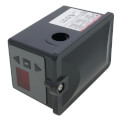
The Well-X1 line pairs the tank with an integrated pump control and pre stripped wiring connections, aimed at simplifying installation on a system upgrade or new well setup. For a well contractor sizing a system, matching tank drawdown capacity to the pump's flow rate and the household's peak demand determines how often the pump will actually cycle once the system is running.
Subcategories
- Smaller Capacity Tanks: Compact models suit smaller households or systems with limited mechanical room space, trading some drawdown capacity for a smaller footprint.
- Mid Capacity Tanks: These sizes balance drawdown volume against physical footprint and cover a large share of typical single family well installations.
- Larger Capacity Tanks: Bigger households, homes with higher simultaneous fixture use, or properties with irrigation demand pulling from the same well benefit from the added drawdown a larger tank provides, reducing how often the pump cycles at peak use.
- Integrated Pump Control Models: These Well-X1 specific models combine the pressure tank with a digital pump control, aimed at systems being upgraded from a traditional pressure switch setup to a more consistent output.
Buying Guide
Correct sizing starts with the pump's rated flow and the household's peak simultaneous water demand, since an undersized tank forces the pump to cycle far more often than necessary, shortening motor life. A well contractor should calculate expected peak draw, including any irrigation or livestock use on the property, before selecting a tank size.
WELL-X-TROL Well-X1 Well Tanks come with an integrated pump control on select models, which is worth considering when replacing an aging tank alongside a worn pressure switch, since combining both upgrades into one component can simplify future troubleshooting.
Physical space in the mechanical room or well house often narrows the choice as much as flow calculations do. Measuring available clearance before ordering avoids receiving a tank that will not fit through a doorway or stand upright in the intended location.
Precharge pressure needs to be set to match the system's pump cut in pressure before the tank goes into service, and skipping that step is a common cause of a new tank appearing to underperform right after installation.
Finally, checking the tank's working pressure rating against the well system's actual operating pressure, particularly on a property with a booster pump or unusually high static pressure, prevents installing a tank rated below what the system will actually see.
Frequently Asked Questions
How is a well tank sized for a specific property?
Sizing is based on the pump's rated flow and the household's peak simultaneous water demand, including any irrigation or livestock use. A contractor calculating too low a demand figure risks installing an undersized tank that cycles the pump excessively.
What does the diaphragm inside a Well-X-Trol tank actually do?
The diaphragm separates the water storage chamber from a precharged air chamber, keeping the two from mixing. That separation is what allows the tank to hold consistent pressure over years of service without the air charge dissolving into the water.
Why does a well tank need its precharge pressure checked at installation?
The precharge pressure needs to match the pump's cut in setting for the tank to store the expected volume of water. A tank installed without checking this setting can underperform even though the tank itself is not defective.
What is the benefit of the integrated pump control on Well-X1 models?
The integrated control combines pump protection and diagnostic features with the pressure tank itself, simplifying a system that would otherwise need a separate pressure switch and control box.
How often does a submersible pump cycle with a properly sized tank?
A correctly sized tank significantly reduces cycling compared to an undersized one, since it stores enough drawdown volume to satisfy typical fixture use between pump starts. Actual cycling frequency still depends on household demand patterns.
