




Filters
SORT
Product Availability –
Brand –
Fuel Type –
BTU Output –
Efficiency –
Review Score –
 --%3E %3Csvg version='1.1' id='Fill' xmlns='http://www.w3.org/2000/svg' xmlns:xlink='http://www.w3.org/1999/xlink' x='0px' y='0px' viewBox='0 0 100 100' enable-background='new 0 0 100 100' xml:space='preserve'%3E %3Cpath fill='%23F15C02' d='M79.44,0.95H20.56C9.78,0.95,0.95,9.78,0.95,20.56v58.87c0,10.79,8.82,19.61,19.61,19.61h58.87 c10.79,0,19.61-8.83,19.61-19.61V20.56C99.05,9.78,90.22,0.95,79.44,0.95z M65.38,58.24l9.38,29.58L49.69,69.78L24.5,87.82 l9.34-29.6L8.8,39.6l30.73-0.17c0,0,6.98-19.61,10-28.93c0.54,1.36,9.88,29.1,9.88,29.1H91.2L65.38,58.24z'/%3E %3C/svg%3E)
 --%3E %3Csvg version='1.1' id='With-RB' xmlns='http://www.w3.org/2000/svg' xmlns:xlink='http://www.w3.org/1999/xlink' x='0px' y='0px' viewBox='0 0 100 100' enable-background='new 0 0 100 100' xml:space='preserve'%3E %3Cpath fill='%23FBC8B4' d='M79.44,0.95H20.56C9.78,0.95,0.95,9.78,0.95,20.56v58.87c0,10.79,8.82,19.61,19.61,19.61h58.87 c10.79,0,19.61-8.83,19.61-19.61V20.56C99.05,9.78,90.22,0.95,79.44,0.95z M65.38,58.24l9.38,29.58L49.69,69.78L24.5,87.82 l9.34-29.6L8.8,39.6l30.73-0.17c0,0,6.98-19.61,10-28.93c0.54,1.36,9.88,29.1,9.88,29.1H91.2L65.38,58.24z'/%3E %3C/svg%3E)
Price Range –
Wall Mounted Boilers

 --%3E %3Csvg version='1.1' id='No-RB' xmlns='http://www.w3.org/2000/svg' xmlns:xlink='http://www.w3.org/1999/xlink' x='0px' y='0px' viewBox='0 0 100 100' enable-background='new 0 0 100 100' xml:space='preserve'%3E %3Cpath fill='%23CECECE' d='M79.44,0.95H20.56C9.78,0.95,0.95,9.78,0.95,20.56v58.87c0,10.79,8.82,19.61,19.61,19.61h58.87 c10.79,0,19.61-8.83,19.61-19.61V20.56C99.05,9.78,90.22,0.95,79.44,0.95z M65.38,58.24l9.38,29.58L49.69,69.78L24.5,87.82 l9.34-29.6L8.8,39.6l30.73-0.17c0,0,6.98-19.61,10-28.93c0.54,1.36,9.88,29.1,9.88,29.1H91.2L65.38,58.24z'/%3E %3C/svg%3E)
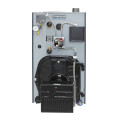
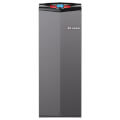


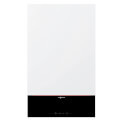
Wall Mounted Boilers are compact, hydronic heating units that mount directly to a wall rather than sitting on the floor, saving mechanical room space on tight installations and retrofits. Most models sold today use condensing technology, running a secondary heat exchanger that pulls extra heat from flue gases before they exit the vent, which pushes efficiency well above older cast-iron floor boilers. Navien's NHB-H series, for example, is rated at 95% AFUE and carries ENERGY STAR certification across its lineup, which spans four sizes from 55,000 to 150,000 BTU/h of heating input. Dual stainless steel heat exchangers and a turndown ratio as high as 15 to 1 on the largest model let these units modulate output to match a building's actual heating load rather than cycling on and off at full fire. Modulating output this way cuts down on short cycling, reduces wear on components, and lowers fuel use over a heating season compared to a fixed-output boiler running the same load.
Subcategories
- Condensing Wall Mounted Boilers: Condensing wall mounted boilers use a secondary heat exchanger to recover extra heat from flue gases before venting, pushing efficiency ratings well above non-condensing models. Navien's NHB-H series reaches 95% AFUE with ENERGY STAR certification across its four sizes. Contractors spec these on new installations and full system replacements where higher upfront efficiency pays back through lower fuel costs over the equipment's service life. Condensate drainage and PVC or polypropylene venting are required, unlike the standard steel venting older non-condensing units use.
- Combi Wall Mounted Boilers: Combi boilers handle both space heating and domestic hot water production from a single wall mounted unit, eliminating the need for a separate water heater tank. Contractors spec these on space-constrained jobs like condos and small homes where mechanical room square footage is limited. Output has to be sized for both the heating load and the peak domestic hot water draw simultaneously, which typically pushes combi units to a higher BTU input than a heat-only boiler serving the same space. Recirculation and buffer tank additions are common upgrades to combi setups that improve domestic hot water response time.
- Heat-Only Wall Mounted Boilers: Heat-only wall mounted boilers handle space heating exclusively, pairing with a separate indirect or standalone water heater for domestic hot water needs. The heat-only configuration suits larger homes or commercial spaces where dedicated domestic hot water capacity outpaces what a combi unit can deliver. Sizing focuses purely on the building's heat loss calculation without factoring in a simultaneous hot water draw. Navien's NHB-H series, sized from 55,000 to 150,000 BTU/h, is an example of a heat-only wall mounted line built for this application.
- Cascade and Multi-Boiler Systems: Cascade systems link multiple wall mounted boiler units together under shared controls, distributing the heating load across several smaller units instead of one large boiler. Navien's NHB-H series supports cascading up to 16 units, with common venting for as many as 8 units in one vent run. Cascading this way adds redundancy, since a single unit failure does not take down the whole heating system, and lets the cascade controller stage units to match partial load conditions efficiently. Commercial buildings and large residential heating plants are the most common applications for cascade setups.
Buying Guide
Sizing is the first decision on any wall mounted boiler job, and it starts with an actual heat loss calculation for the building rather than matching the output of whatever unit is being replaced. Oversized boilers short cycle and waste fuel, while undersized units cannot keep up on the coldest days of the season. Once heating load is confirmed, the next decision is heat-only versus combi. Heat-only units pair with a separate water heater and suit larger homes with high simultaneous hot water demand, while combi units fold domestic hot water production into the same box and work well on space-constrained jobs where a separate tank is not practical. Wall Mounted Boilers rated for condensing operation need PVC or polypropylene venting and a condensate drain, so confirming venting material and drain routing before the job starts avoids a mid-install surprise. AFUE rating drives long-term fuel costs, and Navien's NHB-H series, for example, is rated at 95% AFUE with ENERGY STAR certification across its four sizes. Turndown ratio is worth checking too, since a higher turndown lets the boiler modulate further down for mild days instead of short cycling at minimum fire. For larger buildings, cascading multiple smaller units under shared controls, rather than installing one oversized boiler, adds redundancy and can match partial load conditions more efficiently. Finally, confirm gas type, supply pressure, and electrical requirements against the specific model before ordering, since these vary across manufacturers and boiler sizes.
Frequently Asked Questions
What's the difference between a combi and heat-only wall mounted boiler?
A combi boiler produces both space heating and domestic hot water from one wall mounted unit, removing the need for a separate water heater tank. A heat-only boiler handles space heating exclusively and pairs with a separate indirect or standalone water heater for hot water needs. Combi units suit space-constrained jobs, while heat-only units suit larger homes or buildings with hot water demand that would outpace a combi unit's capacity.
How is a wall mounted boiler sized for a specific building?
Sizing starts with a heat loss calculation for the building rather than matching the output of an existing unit being replaced. Oversized boilers short cycle and waste fuel, while undersized units struggle to keep up on the coldest days of the season. Combi units also need sizing for peak domestic hot water draw on top of the heating load, since both demands can hit the unit at the same time.
What AFUE rating should a wall mounted boiler have?
Most current condensing wall mounted boilers land around 95% AFUE, with Navien's NHB-H series certified by ENERGY STAR at that rating across its four sizes. Higher AFUE means more of the fuel's energy converts to usable heat instead of escaping through the flue. Condensing models achieve this by recovering additional heat from flue gases with a secondary heat exchanger, which non-condensing boilers do not have.
Can multiple wall mounted boilers be installed together on one system?
Cascade systems link multiple wall mounted boilers under shared controls, splitting the heating load across several smaller units instead of relying on one large boiler. Navien's NHB-H series, for example, supports cascading up to 16 units with common venting for as many as 8 units per vent run. Cascading adds redundancy, since one unit failing does not take down the whole system, and lets the controller stage units to match partial load conditions.
What venting does a condensing wall mounted boiler need?
Condensing wall mounted boilers vent with PVC or polypropylene piping rather than the steel venting used on older non-condensing units, since flue gas temperatures run cooler after passing through the secondary heat exchanger. A condensate drain is also required to remove the acidic water produced during condensing operation. Confirming venting material, run length, and drain routing against the manufacturer's installation manual before the job starts avoids problems during startup and inspection.
