




Water Tanks
Water tanks cover the storage and expansion equipment that plumbers and contractors use across residential and commercial water heating systems. They range from tanks that hold and heat water directly to smaller tanks that manage pressure changes in a closed system. The right tank depends heavily on the type of water heating equipment it supports and the building it serves.
Selecting a water tank means matching its capacity, configuration, and pressure rating to the rest of the system it connects to. A tank sized or rated incorrectly can leave a building short on hot water during peak demand or create pressure problems that shorten the life of connected equipment.



Subcategories
- Commercial Water Heaters: Commercial water heaters are built to supply the higher hot water demand of multi-unit residential buildings, restaurants, and other commercial spaces. They typically offer larger storage capacity and higher recovery rates than residential units to keep up with simultaneous demand from multiple fixtures. Sizing is based on the building's peak usage rather than a single household's typical demand.
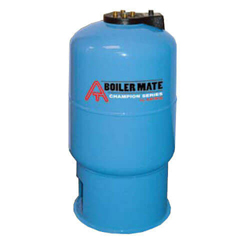
- Expansion Tanks: Expansion tanks in this category absorb the increase in water volume that occurs as water heats and expands in a closed plumbing system. Without one, that expansion has nowhere to go and can stress fittings, valves, and the water heater itself. Sizing depends on the volume of the connected system and the incoming water pressure.
- Expansion Tanks: Water heater expansion tanks serve the same pressure-management purpose but are sized and installed specifically alongside a water heater, typically on the cold water inlet line. They are common in systems with a backflow preventer or check valve. These components create a closed system by preventing expanding water from pushing back into the municipal supply line.
- Indirect Water Heaters: Indirect water heaters use a boiler as the heat source. Hot water from the boiler circulates through a coil or jacket inside the tank to heat the stored water, rather than using a dedicated burner or electric element. They are common in homes already equipped with a hydronic boiler for space heating, since the same boiler can serve both jobs.
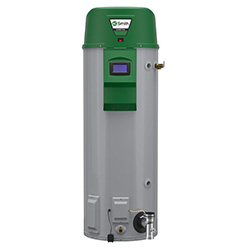
- Residential Water Heaters: Residential water heaters cover the standard tank-style units installed in single-family homes, sized to a household's typical hot water demand based on the number of bathrooms, occupants, and fixtures. Fuel type, whether gas, electric, or oil, and available installation space both factor into which model fits a given home.
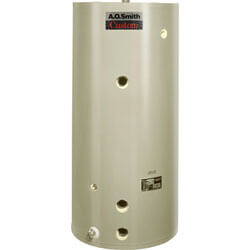
- Storage Tanks: Storage tanks in this category hold heated water for later use. They are often paired with a separate heating source, such as a tankless water heater or boiler, that would otherwise struggle to meet demand instantaneously. Adding a storage tank lets that heat source work at a steady rate while the tank buffers periods of high demand.
Buying Guide
Choosing the right water tank starts with identifying what role it needs to fill. Some tanks store and heat water directly, such as residential or commercial water heaters. An expansion tank serves a different purpose by managing pressure in a closed system.
For water heaters, demand drives sizing. Residential units are sized to household fixture count and typical usage patterns. Commercial water heaters must be sized to a building's peak simultaneous demand across multiple units or fixtures, not to a single household's habits.
For expansion tanks, the deciding factors are the volume of the connected system and the incoming water pressure. A tank sized too small will not fully absorb the expansion it needs to handle, while one sized generously provides more of a buffer against pressure spikes.
Fuel source and existing equipment also shape the decision. A home with a hydronic boiler may be well suited to an indirect water heater that uses the boiler as its heat source. A home without one typically needs a standard gas or electric residential water heater instead.
Space and installation constraints round out the decision. Storage tanks paired with tankless equipment need enough floor or wall space for both units. Expansion tanks must be installed on the correct line, typically the cold water inlet, to function as intended.
Frequently Asked Questions
What is the difference between an expansion tank and a water heater expansion tank?
Both types absorb the increase in water volume that occurs as water heats in a closed system. Water heater expansion tanks are sized and positioned specifically for installation on a water heater's cold water inlet line. A general expansion tank may serve a similar role elsewhere in a plumbing system.
Do I need an expansion tank if my home already has a water heater?
An expansion tank is typically needed when the plumbing system is closed. That means a backflow preventer, check valve, or pressure regulator prevents water from flowing back into the municipal supply. Without an expansion tank in that situation, thermal expansion has nowhere to go and can stress the system's fittings and valves.
How is an indirect water heater different from a standard residential water heater?
An indirect water heater relies on a connected boiler as its heat source. Hot water from the boiler circulates through the tank instead of the unit using its own burner or electric element. A standard residential water heater generates its own heat directly within the tank.
Why would a system use a storage tank alongside a tankless water heater?
A storage tank lets a tankless water heater run at a steady, efficient rate. The tank buffers periods of high demand, so the tankless unit does not have to meet every peak on its own. This pairing is common in buildings with high simultaneous hot water usage.
How do I size a commercial water heater correctly?
Commercial water heater sizing is based on the building's peak simultaneous hot water demand across all connected fixtures and units, not on any single household's typical usage. Recovery rate, which measures how quickly the unit reheats water after use, is as important as total storage capacity for this calculation.
Resources

 --%3E %3C!DOCTYPE svg PUBLIC '-//W3C//DTD SVG 1.1//EN' 'http://www.w3.org/Graphics/SVG/1.1/DTD/svg11.dtd'%3E %3Csvg version='1.1' id='Layer_1' xmlns='http://www.w3.org/2000/svg' xmlns:xlink='http://www.w3.org/1999/xlink' x='0px' y='0px' width='90px' height='90px' viewBox='0 0 90 90' enable-background='new 0 0 90 90' xml:space='preserve'%3E %3Crect x='27' y='23' fill='%23FFFFFF' width='43' height='44'/%3E %3Cg%3E %3Cdefs%3E %3Crect id='SVGID_1_' width='90' height='90'/%3E %3C/defs%3E %3CclipPath id='SVGID_2_'%3E %3Cuse xlink:href='%23SVGID_1_' overflow='visible'/%3E %3C/clipPath%3E %3Cpath clip-path='url(%23SVGID_2_)' fill='%234186AD' d='M45,0C20.1,0,0,20.1,0,45c0,24.9,20.1,45,45,45c24.9,0,45-20.1,45-45 C90,20.1,69.9,0,45,0'/%3E %3C/g%3E %3Cpath fill='%23FFFFFF' d='M60.6,47.4l-22.5,14c-0.5,0.3-1,0.399-1.5,0.399s-0.9-0.1-1.4-0.399c-0.9-0.5-1.4-1.4-1.4-2.5v-28 c0-1,0.6-2,1.4-2.5c0.9-0.5,2-0.5,2.9,0.1l22.5,14.1C61.4,43.1,61.9,44,61.9,45S61.4,46.9,60.6,47.4'/%3E %3C/svg%3E)


Subcategories
- Commercial Water Heaters: Commercial water heaters are built to supply the higher hot water demand of multi-unit residential buildings, restaurants, and other commercial spaces. They typically offer larger storage capacity and higher recovery rates than residential units to keep up with simultaneous demand from multiple fixtures. Sizing is based on the building's peak usage rather than a single household's typical demand.
- Expansion Tanks: Expansion tanks in this category absorb the increase in water volume that occurs as water heats and expands in a closed plumbing system. Without one, that expansion has nowhere to go and can stress fittings, valves, and the water heater itself. Sizing depends on the volume of the connected system and the incoming water pressure.
- Expansion Tanks: Water heater expansion tanks serve the same pressure-management purpose but are sized and installed specifically alongside a water heater, typically on the cold water inlet line. They are common in systems with a backflow preventer or check valve. These components create a closed system by preventing expanding water from pushing back into the municipal supply line.
- Indirect Water Heaters: Indirect water heaters use a boiler as the heat source. Hot water from the boiler circulates through a coil or jacket inside the tank to heat the stored water, rather than using a dedicated burner or electric element. They are common in homes already equipped with a hydronic boiler for space heating, since the same boiler can serve both jobs.
- Residential Water Heaters: Residential water heaters cover the standard tank-style units installed in single-family homes, sized to a household's typical hot water demand based on the number of bathrooms, occupants, and fixtures. Fuel type, whether gas, electric, or oil, and available installation space both factor into which model fits a given home.
- Storage Tanks: Storage tanks in this category hold heated water for later use. They are often paired with a separate heating source, such as a tankless water heater or boiler, that would otherwise struggle to meet demand instantaneously. Adding a storage tank lets that heat source work at a steady rate while the tank buffers periods of high demand.
Buying Guide
Choosing the right water tank starts with identifying what role it needs to fill. Some tanks store and heat water directly, such as residential or commercial water heaters. An expansion tank serves a different purpose by managing pressure in a closed system.
For water heaters, demand drives sizing. Residential units are sized to household fixture count and typical usage patterns. Commercial water heaters must be sized to a building's peak simultaneous demand across multiple units or fixtures, not to a single household's habits.
For expansion tanks, the deciding factors are the volume of the connected system and the incoming water pressure. A tank sized too small will not fully absorb the expansion it needs to handle, while one sized generously provides more of a buffer against pressure spikes.
Fuel source and existing equipment also shape the decision. A home with a hydronic boiler may be well suited to an indirect water heater that uses the boiler as its heat source. A home without one typically needs a standard gas or electric residential water heater instead.
Space and installation constraints round out the decision. Storage tanks paired with tankless equipment need enough floor or wall space for both units. Expansion tanks must be installed on the correct line, typically the cold water inlet, to function as intended.
Frequently Asked Questions
What is the difference between an expansion tank and a water heater expansion tank?
Both types absorb the increase in water volume that occurs as water heats in a closed system. Water heater expansion tanks are sized and positioned specifically for installation on a water heater's cold water inlet line. A general expansion tank may serve a similar role elsewhere in a plumbing system.
Do I need an expansion tank if my home already has a water heater?
An expansion tank is typically needed when the plumbing system is closed. That means a backflow preventer, check valve, or pressure regulator prevents water from flowing back into the municipal supply. Without an expansion tank in that situation, thermal expansion has nowhere to go and can stress the system's fittings and valves.
How is an indirect water heater different from a standard residential water heater?
An indirect water heater relies on a connected boiler as its heat source. Hot water from the boiler circulates through the tank instead of the unit using its own burner or electric element. A standard residential water heater generates its own heat directly within the tank.
Why would a system use a storage tank alongside a tankless water heater?
A storage tank lets a tankless water heater run at a steady, efficient rate. The tank buffers periods of high demand, so the tankless unit does not have to meet every peak on its own. This pairing is common in buildings with high simultaneous hot water usage.
How do I size a commercial water heater correctly?
Commercial water heater sizing is based on the building's peak simultaneous hot water demand across all connected fixtures and units, not on any single household's typical usage. Recovery rate, which measures how quickly the unit reheats water after use, is as important as total storage capacity for this calculation.