




Filters
SORT
Product Availability –
Category –
Capacity (Gallons) –
BTU Input –
Diameter (Inches) –
Review Score –
 --%3E %3Csvg version='1.1' id='Fill' xmlns='http://www.w3.org/2000/svg' xmlns:xlink='http://www.w3.org/1999/xlink' x='0px' y='0px' viewBox='0 0 100 100' enable-background='new 0 0 100 100' xml:space='preserve'%3E %3Cpath fill='%23F15C02' d='M79.44,0.95H20.56C9.78,0.95,0.95,9.78,0.95,20.56v58.87c0,10.79,8.82,19.61,19.61,19.61h58.87 c10.79,0,19.61-8.83,19.61-19.61V20.56C99.05,9.78,90.22,0.95,79.44,0.95z M65.38,58.24l9.38,29.58L49.69,69.78L24.5,87.82 l9.34-29.6L8.8,39.6l30.73-0.17c0,0,6.98-19.61,10-28.93c0.54,1.36,9.88,29.1,9.88,29.1H91.2L65.38,58.24z'/%3E %3C/svg%3E)
 --%3E %3Csvg version='1.1' id='With-RB' xmlns='http://www.w3.org/2000/svg' xmlns:xlink='http://www.w3.org/1999/xlink' x='0px' y='0px' viewBox='0 0 100 100' enable-background='new 0 0 100 100' xml:space='preserve'%3E %3Cpath fill='%23FBC8B4' d='M79.44,0.95H20.56C9.78,0.95,0.95,9.78,0.95,20.56v58.87c0,10.79,8.82,19.61,19.61,19.61h58.87 c10.79,0,19.61-8.83,19.61-19.61V20.56C99.05,9.78,90.22,0.95,79.44,0.95z M65.38,58.24l9.38,29.58L49.69,69.78L24.5,87.82 l9.34-29.6L8.8,39.6l30.73-0.17c0,0,6.98-19.61,10-28.93c0.54,1.36,9.88,29.1,9.88,29.1H91.2L65.38,58.24z'/%3E %3C/svg%3E)
Price Range –
Indirect Water Heaters

 --%3E %3Csvg version='1.1' id='Half' xmlns='http://www.w3.org/2000/svg' xmlns:xlink='http://www.w3.org/1999/xlink' x='0px' y='0px' viewBox='0 0 100 100' enable-background='new 0 0 100 100' xml:space='preserve'%3E %3Cg%3E %3Cpath fill='%23F15C02' d='M30.05,70.23l3.79-12.01L8.8,39.6l30.73-0.17c0,0,6.98-19.61,10-28.93c0.54,1.36,9.88,29.1,9.88,29.1h1.58 L93.71,7.18c-3.58-3.82-8.66-6.23-14.28-6.23H20.56C9.78,0.95,0.95,9.78,0.95,20.56v58.87c0,5.41,2.22,10.32,5.79,13.88 L30.05,70.23z'/%3E %3C/g%3E %3Cpath fill='%23FBC8B4' d='M93.71,7.18L60.98,39.6H91.2L65.38,58.24l9.38,29.58L49.69,69.78L24.5,87.82l5.55-17.59L6.75,93.32 c3.55,3.54,8.44,5.73,13.82,5.73h58.87c10.79,0,19.61-8.83,19.61-19.61V20.56C99.05,15.4,97.01,10.69,93.71,7.18z'/%3E %3C/svg%3E)


 --%3E %3Csvg version='1.1' id='No-RB' xmlns='http://www.w3.org/2000/svg' xmlns:xlink='http://www.w3.org/1999/xlink' x='0px' y='0px' viewBox='0 0 100 100' enable-background='new 0 0 100 100' xml:space='preserve'%3E %3Cpath fill='%23CECECE' d='M79.44,0.95H20.56C9.78,0.95,0.95,9.78,0.95,20.56v58.87c0,10.79,8.82,19.61,19.61,19.61h58.87 c10.79,0,19.61-8.83,19.61-19.61V20.56C99.05,9.78,90.22,0.95,79.44,0.95z M65.38,58.24l9.38,29.58L49.69,69.78L24.5,87.82 l9.34-29.6L8.8,39.6l30.73-0.17c0,0,6.98-19.61,10-28.93c0.54,1.36,9.88,29.1,9.88,29.1H91.2L65.38,58.24z'/%3E %3C/svg%3E)
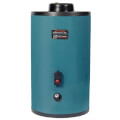
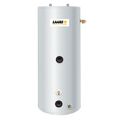
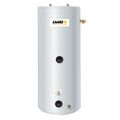
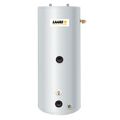

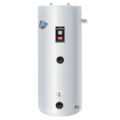
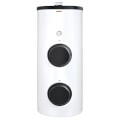
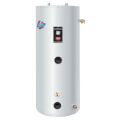
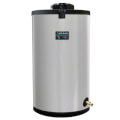
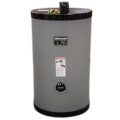
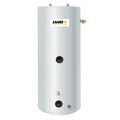
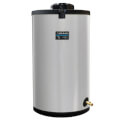
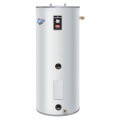

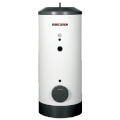
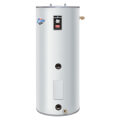
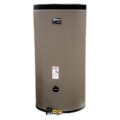
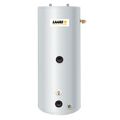
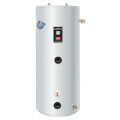


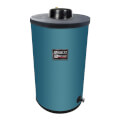

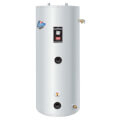
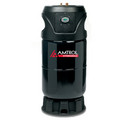

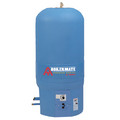

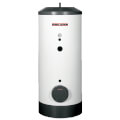

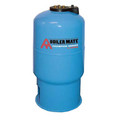
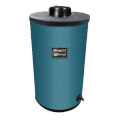
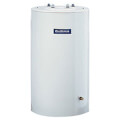
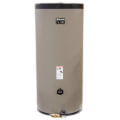
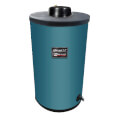
Indirect water heaters are storage tanks that produce domestic hot water using heat transferred from a boiler rather than a built-in gas burner or electric element. A closed loop of boiler water circulates through an internal coil or heat exchanger inside the tank, warming the stored water without ever mixing with it, so the same boiler that handles space heating can also carry the building's hot water load. Because the heat source lives in the boiler and not in the tank itself, an indirect unit has no combustion chamber, flue, or standing pilot to maintain, which simplifies both the tank and its long-term upkeep. They pair most often with hydronic systems that already run a boiler for radiators, baseboard, or radiant floor heat, letting one heat source cover both jobs instead of running a separate standalone water heater. For a home or building already committed to hydronic heat, adding an indirect tank is usually the more efficient and lower-maintenance way to produce hot water.
Subcategories
- Standard Indirect Water Heaters: Standard indirect tanks are the baseline option for a residential hydronic system, sized to match typical household hot water demand. They connect to the boiler's supply and return piping through a dedicated zone, usually controlled by an aquastat or zone valve so the boiler fires on demand to reheat the tank. Sizing follows the tank's first-hour rating rather than boiler output alone, since recovery speed depends on both.
- High-Recovery Indirect Water Heaters: High-recovery models use a larger internal coil surface area to reheat stored water faster after a heavy draw, which matters for larger households or light commercial applications with high simultaneous demand. They typically need a boiler with enough spare capacity to feed the larger coil without robbing BTUs from space heating. Installers size these against peak draw periods, not just average daily usage.
- Stainless Steel Indirect Water Heaters: Stainless steel tanks resist the corrosion that eventually limits the service life of a glass-lined steel tank, particularly in areas with aggressive water chemistry. The tradeoff is a higher upfront cost against a longer expected service life and reduced risk of tank failure. They're a common upgrade choice on replacement jobs where the prior glass-lined tank failed early.
Buying Guide
Sizing an indirect water heater starts with the tank's first-hour rating, which reflects how much hot water it can deliver in the first hour of heavy use, not just its stated gallon capacity. A too-small tank leaves a household running out of hot water during a full house's worth of morning showers, while an oversized tank wastes standby heat and space for no real benefit.
Confirm the boiler has enough reserve capacity to reheat the tank promptly. An indirect heater doesn't produce heat itself, so if the boiler is already sized tight for space heating, adding a large-coil indirect tank can leave both space heating and hot water recovery underperforming during peak demand.
Check the tank's coil design and rated flow rate against the boiler's output, since a mismatch here is the most common cause of slow recovery complaints on an otherwise correctly sized system.
Consider tank material next. A stainless steel tank costs more upfront but avoids the glass-lining failures that shorten the working life of standard steel tanks, especially in hard-water regions.
Finally, plan for the aquastat, zone valve, or priority control that lets the boiler favor domestic hot water over space heating during a draw, since without a priority strategy, recovery time on the tank can suffer whenever the space-heating zones are also calling for heat.
Frequently Asked Questions
How is an indirect water heater different from a standard tank water heater?
A standard tank water heater has its own gas burner or electric element to generate heat directly. An indirect water heater has no heat source of its own; it relies entirely on hot water circulated from a separate boiler to warm the water stored inside the tank.
Do I need a boiler to use an indirect water heater?
Yes. An indirect water heater only works as part of a hydronic system that already has a boiler, since the boiler is the actual heat source. It won't function as a standalone unit.
How do I size an indirect water heater for my home?
Size it by first-hour rating against expected peak demand, not just tank gallon capacity, and confirm the boiler has enough spare output to reheat that tank promptly. Undersizing either the tank or the boiler's reserve capacity leads to slow recovery during heavy use.
Are indirect water heaters more efficient than standalone units?
They can be, because they eliminate the separate combustion losses and standby losses of a second, independently fired water heater, letting one efficient boiler cover both space heating and hot water. The actual efficiency gain depends on the boiler's own efficiency and how well the system is sized.
How long do indirect water heater tanks typically last?
Service life varies by tank material and water chemistry, with stainless steel tanks generally outlasting glass-lined steel tanks in areas with harder or more corrosive water. Regular anode rod inspection, where applicable, also extends tank life.
