



Weil McLain SlimFit Boilers

 --%3E %3Csvg version='1.1' id='No-RB' xmlns='http://www.w3.org/2000/svg' xmlns:xlink='http://www.w3.org/1999/xlink' x='0px' y='0px' viewBox='0 0 100 100' enable-background='new 0 0 100 100' xml:space='preserve'%3E %3Cpath fill='%23CECECE' d='M79.44,0.95H20.56C9.78,0.95,0.95,9.78,0.95,20.56v58.87c0,10.79,8.82,19.61,19.61,19.61h58.87 c10.79,0,19.61-8.83,19.61-19.61V20.56C99.05,9.78,90.22,0.95,79.44,0.95z M65.38,58.24l9.38,29.58L49.69,69.78L24.5,87.82 l9.34-29.6L8.8,39.6l30.73-0.17c0,0,6.98-19.61,10-28.93c0.54,1.36,9.88,29.1,9.88,29.1H91.2L65.38,58.24z'/%3E %3C/svg%3E)

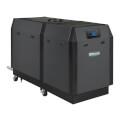
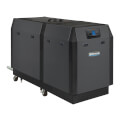
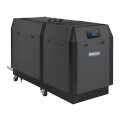
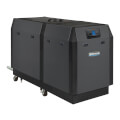
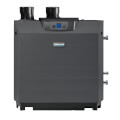

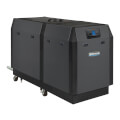
Weil McLain SlimFit boilers are compact, wall-hung gas boilers designed for hydronic heating installations where mechanical room space is limited, such as closets, tight utility rooms, or retrofits replacing an older floor-standing boiler. Their reduced footprint lets an installer mount the unit directly on a wall instead of dedicating floor space to it, which matters in older homes and multi-family buildings where mechanical rooms were never sized for modern equipment. A SlimFit boiler can be configured for space heating alone or combined with an indirect water heater for domestic hot water, giving contractors a single compact heat source for both loads. Sealed combustion venting allows installation in tighter spaces without relying on room air for combustion, which also simplifies venting runs in a retrofit. For contractors replacing an aging cast-iron boiler in a space-constrained mechanical room, the wall-hung form factor is often the deciding factor over other boiler options.
Subcategories
- SlimFit Combi Boilers: SlimFit combi boilers handle both space heating and domestic hot water from a single wall-hung unit, which saves the additional floor space or wall space a separate indirect water heater would otherwise need. Contractors specify these for smaller homes and condos where mechanical room area is limited and a single appliance handling both loads simplifies the installation. A combi configuration draws on the boiler's full output whenever there's a call for domestic hot water, which can briefly reduce capacity available for space heating during that demand. Smaller homes with lower simultaneous heating and hot water needs suit a combi configuration better than larger homes, given that tradeoff.
- SlimFit Space Heating Only Boilers: Space heating only SlimFit models handle hydronic heating alone and pair with a separate indirect water heater when domestic hot water is also needed from the same system. Separating the two loads avoids the capacity tradeoff a combi unit faces when heating and hot water calls overlap, since the boiler and the indirect tank each have dedicated capacity. Contractors typically spec this configuration for larger homes or buildings with higher simultaneous demand, or where an indirect tank is already in place from a prior boiler replacement. Keeping the two functions separate also simplifies troubleshooting, since a service issue with domestic hot water production can be isolated to the indirect tank and its controls rather than the boiler itself.
- SlimFit Venting Accessories: Venting accessories for SlimFit boilers support the sealed combustion design, drawing outside air for combustion and exhausting flue gas through a common PVC or CPVC pipe run instead of a traditional chimney. Sealed combustion venting allows installation in tighter mechanical spaces since the unit doesn't draw combustion air from the room itself. Vent kit length and configuration need to match the specific installation, including how far the boiler sits from an exterior wall and whether the vent run is horizontal, vertical, or a combination. Contractors handling a retrofit replacing a chimney-vented cast-iron boiler should confirm the sealed combustion vent path before finalizing the boiler's mounting location, since vent routing can be more restrictive than the space the wall-hung unit itself needs.
- SlimFit Replacement Parts: Replacement parts such as igniters, flame sensors, gaskets, and circuit boards let a technician service an existing SlimFit boiler without replacing the entire unit. Wall-hung, sealed-combustion boilers pack components more tightly than older floor-standing designs, so a technician benefits from confirming the exact model and serial number before ordering a part to make sure it fits the specific unit's control board and combustion assembly revision. Igniters and flame sensors are common wear items on any gas boiler and are typically the first parts checked during a no-heat service call. Keeping common wear parts on hand shortens response time on service calls for buildings that depend on the boiler for both heating and domestic hot water.
Buying Guide
Choosing a SlimFit boiler configuration starts with deciding whether space heating and domestic hot water should come from one appliance or two. A combi model saves space by combining both functions in a single wall-hung unit, which fits smaller homes and condos well, but it draws on the boiler's full output whenever hot water is called for, briefly reducing capacity available for heating during that demand. Larger homes or buildings with higher or more frequent simultaneous demand are usually better served by a space-heating-only configuration paired with a separate indirect water heater, since that keeps the two loads from competing for capacity. Available mechanical space is the next major factor: Weil McLain SlimFit boilers use a wall-hung, sealed-combustion design that fits closets and tight utility rooms that couldn't accommodate an older floor-standing boiler, but the sealed combustion vent run still needs a clear path to an exterior wall, and vent routing can end up more restrictive than the footprint of the boiler itself. Contractors retrofitting an older chimney-vented system should confirm the vent path before committing to a mounting location. Once the configuration and mechanical space are settled, matching output to the building's heat loss calculation determines the correct boiler size, since installing an undersized unit leaves a building short on cold days while an oversized one cycles more than necessary and wastes energy.
Frequently Asked Questions
Can a SlimFit boiler handle both heating and domestic hot water?
Yes, the combi configuration handles both from a single unit, though it briefly reduces heating capacity whenever there's a call for domestic hot water. A space-heating-only configuration paired with a separate indirect tank avoids that tradeoff for buildings with higher simultaneous demand.
Why does a SlimFit boiler use sealed combustion venting?
Sealed combustion draws air for combustion from outside rather than the room, which allows installation in a small closet or tight utility space without relying on room air. It also uses PVC or CPVC venting instead of a metal chimney.
What determines whether to choose a combi or space-heating-only configuration?
Building size and how often heating and hot water demand overlap are the main factors. Smaller homes with lower simultaneous demand suit a combi unit, while larger homes or buildings with frequent overlapping demand are usually better served by separate heating and indirect water heater equipment.
Does a SlimFit boiler retrofit require new venting?
In most cases, yes, since the sealed combustion design vents through PVC or CPVC rather than the chimney an older cast-iron boiler used. Confirming a clear vent path to an exterior wall is an early step in any retrofit.
What are common wear parts on a SlimFit boiler?
Igniters, flame sensors, and gaskets are common wear items checked first during a no-heat service call. Matching the exact model and serial number when ordering parts helps make sure a replacement fits the unit's specific control board and combustion assembly.
