




Welded Beam Attachments


 --%3E %3Csvg version='1.1' id='No-RB' xmlns='http://www.w3.org/2000/svg' xmlns:xlink='http://www.w3.org/1999/xlink' x='0px' y='0px' viewBox='0 0 100 100' enable-background='new 0 0 100 100' xml:space='preserve'%3E %3Cpath fill='%23CECECE' d='M79.44,0.95H20.56C9.78,0.95,0.95,9.78,0.95,20.56v58.87c0,10.79,8.82,19.61,19.61,19.61h58.87 c10.79,0,19.61-8.83,19.61-19.61V20.56C99.05,9.78,90.22,0.95,79.44,0.95z M65.38,58.24l9.38,29.58L49.69,69.78L24.5,87.82 l9.34-29.6L8.8,39.6l30.73-0.17c0,0,6.98-19.61,10-28.93c0.54,1.36,9.88,29.1,9.88,29.1H91.2L65.38,58.24z'/%3E %3C/svg%3E)
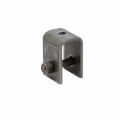

Welded Beam Attachments are forged or fabricated steel brackets that field-weld directly to the bottom flange of a structural beam to anchor a hanger rod for pipe, duct, or conduit support. The B-Line Series lineup carried in this category, manufactured by Eaton, covers rod sizes from 3/8 inch through 1 inch and larger, with the B3083-2PLN model rated for a 24,600 lb working load, a rating confirmed on Eaton's own product page. Attachments in this family can be welded in either the upright or inverted position depending on which side of the flange the hanger rod needs to drop from. Contractors reach for a welded attachment instead of a beam clamp when the load is heavy enough, or the beam flange thin enough, that a clamped connection cannot be trusted to hold without slipping. Picking the correct rod size and load rating up front keeps the hanger assembly matched to the actual suspended weight instead of guessing at a safety margin after installation.
Subcategories
- Small Rod Size Attachments (3/8 inch to 1/2 inch): Small rod size welded beam attachments, built around 3/8-inch and 1/2-inch threaded rod, support lighter pipe, duct, and conduit hanger loads in commercial mechanical rooms. Eaton's B-Line series offers this range in plain steel construction suited to field welding onto the beam flange before the hanger rod threads in. Mechanical contractors reach for this size range on branch piping and lighter duct runs rather than main risers or heavy equipment supports. Matching rod thread size to the hanger rod already specified on the job keeps the attachment compatible without an adapter.
- Mid Rod Size Attachments (5/8 inch to 7/8 inch): Mid rod size attachments step up to 5/8-inch through 7/8-inch threaded rod for heavier branch lines and some main distribution piping. Eaton manufactures this range in the same B-Line welded attachment family as the smaller sizes, keeping the same upright or inverted welding orientation available. Larger commercial and light industrial projects use this size range where pipe diameter and fluid weight exceed what a smaller rod size safely carries. Verifying the beam flange thickness against the attachment's bearing area still matters at this size, since a thin flange can deform under concentrated load even with a properly rated attachment.
- Large Rod Size and Heavy-Load Attachments (1 inch and larger): Large rod size attachments, built around 1-inch and larger threaded rod, carry the heaviest hanger loads in the welded beam attachment family. The Eaton B3083-2PLN model in this range is rated for a 24,600 lb working load, confirmed on Eaton's own product page, far exceeding what the 3/8-inch and 1/2-inch sizes are rated to carry. Industrial piping, large duct banks, and heavy equipment supports account for most of the demand in this size range. Welding this size of attachment correctly, with full penetration at the flange contact area, matters more here than at smaller sizes because the consequences of a weld failure scale with the suspended load.
- Upright and Inverted Mount Attachments: Welded beam attachments in the B-Line family can be welded to a beam flange in either an upright or inverted orientation, giving installers flexibility in which way the hanger rod drops relative to the beam. Choosing upright or inverted mounting depends on which side of the flange is accessible for welding and where the supported pipe or duct needs to sit relative to the beam. Eaton documents both mounting orientations as valid for the same attachment body rather than requiring a separate part number for each orientation. Field crews decide between the two mainly based on clearance and access during installation rather than load capacity, since the rated working load does not change between orientations.
Buying Guide
Start by confirming the actual suspended load, including the pipe or duct itself, its contents, and any insulation, since undersizing a beam attachment creates a failure risk that a bigger safety margin on rod size cannot fully offset. Match rod size to that calculated load using the manufacturer's rated working load for each model rather than assuming a larger rod number automatically means a safe multiple of the smaller size. Welded Beam Attachments require a verified structural weld between the bracket and the beam flange, so confirming a qualified welder and proper weld procedure matters as much as selecting the correct part number. Check beam flange thickness against the attachment's bearing surface before welding, since a thin flange can deform under concentrated load even when the attachment itself is rated correctly for the job. Decide between upright and inverted mounting based on which side of the flange is accessible and where the hanger rod needs to land relative to the beam, since both orientations carry the same rated load from the same part. Compare a welded attachment against a bolted beam clamp when flange access allows either option, since a clamp avoids field welding entirely but may not be rated for the same working load as a welded bracket of similar size. Confirm finish, plain steel, galvanized, or another coating, against the installation environment, since an indoor mechanical room has different corrosion requirements than an outdoor or high-humidity installation.
Frequently Asked Questions
What load can a welded beam attachment handle?
Load rating depends entirely on rod size and model, with Eaton's B-Line series ranging from lighter 3/8-inch and 1/2-inch rod models up to heavier options such as the B3083-2PLN, rated for a 24,600 lb working load. Checking the specific model's rated working load, rather than assuming a general capacity for the whole product family, is the only reliable way to confirm a given attachment fits a job's load. Beam flange thickness and weld quality also affect real-world capacity beyond the published rating.
Can a welded beam attachment be installed upside down?
Eaton's B-Line welded beam attachments are designed to be welded in either an upright or inverted position on the same beam flange, with both orientations rated for the same working load. Choosing between the two comes down to which side of the flange is accessible for welding and where the hanger rod needs to sit relative to the beam. Neither orientation requires a different part number.
When should a welded beam attachment be used instead of a beam clamp?
A welded beam attachment makes sense when the suspended load is heavy enough, or the beam flange thin enough, that a bolted clamp connection cannot be trusted to hold without slipping over time. Clamps avoid field welding but are not always rated for the same working loads as a welded bracket in a comparable rod size. Heavier piping, duct banks, and equipment supports in industrial settings frequently call for the welded option specifically for that added security.
What rod sizes do welded beam attachments come in?
Eaton's B-Line welded beam attachment family covers threaded rod sizes from 3/8 inch on the light end up through 1 inch and larger for heavy industrial loads. Smaller rod sizes handle branch piping and duct hangers, while the largest sizes support main risers, duct banks, and heavy equipment. Matching rod size to the hanger rod already specified for the job keeps the attachment compatible without needing a reducer or adapter.
Does the finish on a welded beam attachment matter for outdoor installations?
Finish affects how well a welded beam attachment resists corrosion in damp, outdoor, or high-humidity locations, with plain steel suited to dry indoor mechanical rooms and coated or galvanized options better suited to harsher environments. Choosing a finish rated for the installation environment matters because the attachment cannot easily be swapped out once it is field-welded in place. Matching finish to environment up front avoids a corrosion problem that would otherwise require cutting out and replacing a welded connection later.
