



Plumbing Valves
Plumbing valves cover the shutoff, check, and specialty valve types used throughout a building's water and gas distribution system. The category spans quarter-turn ball and butterfly valves, rising-stem gate valves, one-directional check valves, and gas-rated shutoffs.
Selecting the right valve type depends on how often it needs operating and what it is controlling, since a quarter-turn ball valve suits frequent shutoff use while a gate valve is more common on mains that rarely need adjustment. Gas ball valves require specific code-rated construction not found in standard water valves.
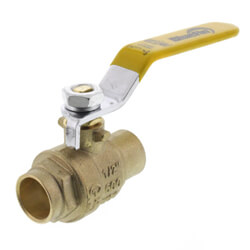



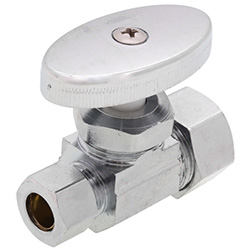
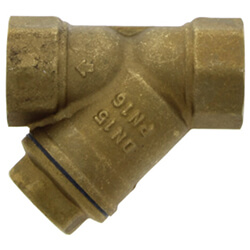
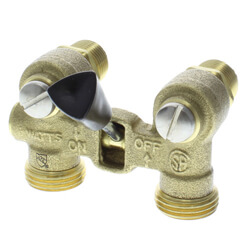

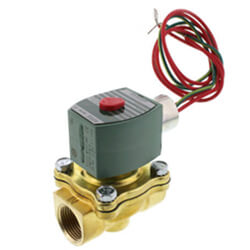
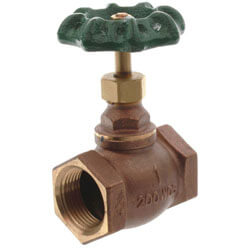
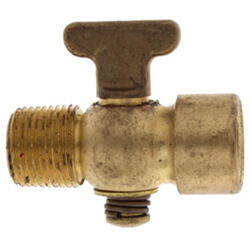
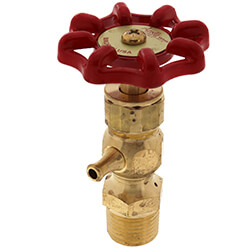
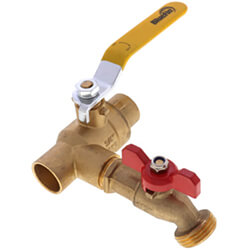

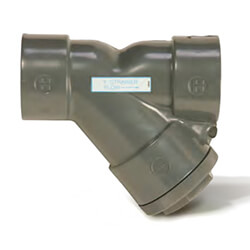


Ball Valves are quarter-turn valves that use a rotating ball with a through bore to open or close the flow path. In the fully open position the bore aligns with the pipe, providing full port flow with minimal pressure drop. A 90-degree turn to the closed position provides bubble-tight shutoff. Ball valves are the most commonly used isolation valve in plumbing and heating systems because of their fast operation, low torque, and reliable shutoff over thousands of cycles.
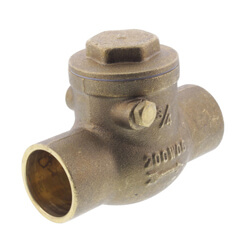
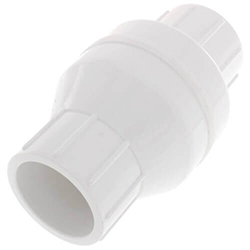
Check Valves are automatic one-directional flow devices that open under forward flow pressure and close when flow stops or reverses, preventing backflow without manual operation. They protect pumps from reverse flow at shutdown, prevent cross-contamination between circuits, and maintain system pressure during off cycles. Silent check valves use a spring-loaded design that closes before flow reverses, eliminating water hammer.
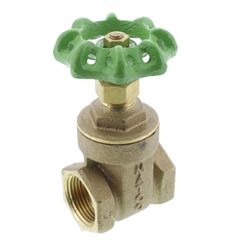
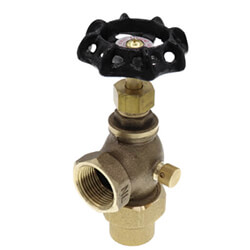
Gate Valves use a wedge-shaped gate that slides perpendicular to the flow path to open or close. In the fully open position, the gate retracts completely out of the flow path, providing full bore flow with minimal pressure drop. Gate valves are not suitable for throttling and are used as isolation valves where infrequent operation is expected and full port flow is required.
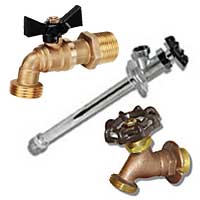
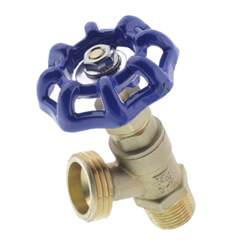
Sillcocks - Hose Bibbs are exterior-mounted faucets that provide hose connection points on the outside of a building for garden, wash-down, and general water access. Frost-free sillcocks have an extended body that positions the seat inside the heated envelope of the building, preventing freezing in cold weather. All sillcocks should include a vacuum breaker to prevent backflow from hoses or attached equipment.
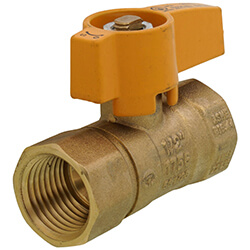
Gas Ball Valves (Gas Cocks) are quarter-turn shutoff valves rated and approved for use with natural gas and liquid propane in residential and commercial gas piping systems. Gas ball valves are listed to ANSI Z21.15 or equivalent standards and must be used instead of standard plumbing ball valves in gas applications. They are installed at appliance connection points and branch isolation points throughout the gas piping system.
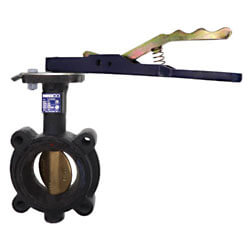
Butterfly Valves use a disc rotating on a central shaft to control flow through the valve body. They are compact and lightweight relative to their pipe size, making them practical for large-diameter applications. Lug-body butterfly valves allow the valve to be removed from the line without disturbing piping on either side. They are available with elastomeric liners for bubble-tight shutoff.
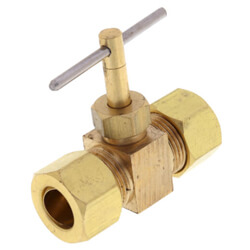
The first selection criterion for any plumbing valve is the type of service: isolation or throttling. Ball valves and gate valves are the standard for isolation. Globe valves and needle valves are designed for throttling. Material compatibility with the fluid determines the valve body material. Brass and bronze are standard for potable water and heating systems. PVC and CPVC are used for corrosive fluids within their pressure and temperature limits.
Pressure and temperature ratings must be verified against the system's maximum operating conditions. A valve's rated working pressure decreases as temperature increases. Always confirm the valve's rated pressure at the system's maximum operating temperature. For gas service, only valves listed for gas service should be used. Standard plumbing ball valves are not approved for gas even if made of brass and rated for the correct pressure.
What is the difference between a full port and a standard port ball valve?
A full port ball valve has a ball bore diameter equal to the inside diameter of the pipe, providing unrestricted flow with minimal pressure drop. A standard port ball valve has a reduced bore one pipe size smaller, creating a measurable pressure drop. Full port valves are preferred where pressure drop must be minimized, such as in hydronic heating systems with pump curves sensitive to added resistance.
Can I use a ball valve to throttle flow?
Ball valves are designed for fully open or fully closed operation and are not recommended for throttling. Partial opening causes high velocity flow across the seated area, which erodes the ball and seats over time and can cause the valve to leak when closed. For flow adjustment, use a globe valve, needle valve, or circuit balancing valve designed for throttling service.
What is a frost-free sillcock and when is it required?
A frost-free sillcock positions the valve seat and packing inside the building wall in the heated space rather than at the exterior face, keeping the water-wetted parts warm enough to prevent freezing. Frost-free sillcocks are required in any climate where outdoor temperatures fall below freezing. The hose must be disconnected after each use to allow the body to drain; a connected hose traps water and can freeze even on a frost-free model.
How do I choose between a swing check valve and a silent check valve?
Swing check valves are simple and low-cost but can create water hammer when they slam shut if flow reverses suddenly. Silent check valves use a spring-loaded design that closes before flow reverses, eliminating the slam. Silent check valves are preferred in pump discharge piping where water hammer is a concern. Swing check valves are acceptable for low-velocity gravity-drain applications.
What is the difference between a WOG rating and a CWP rating on a valve?
WOG (Water, Oil, Gas) and CWP (Cold Working Pressure) both indicate the maximum non-shock cold working pressure of the valve body at ambient temperature. A valve rated 400 WOG is rated for 400 PSI at room temperature. Both ratings decrease at elevated temperatures. Always check the pressure-temperature rating chart in the manufacturer's data sheet for the allowable pressure at the system's operating temperature.
Resources
Ball Valves are quarter-turn valves that use a rotating ball with a through bore to open or close the flow path. In the fully open position the bore aligns with the pipe, providing full port flow with minimal pressure drop. A 90-degree turn to the closed position provides bubble-tight shutoff. Ball valves are the most commonly used isolation valve in plumbing and heating systems because of their fast operation, low torque, and reliable shutoff over thousands of cycles.
Check Valves are automatic one-directional flow devices that open under forward flow pressure and close when flow stops or reverses, preventing backflow without manual operation. They protect pumps from reverse flow at shutdown, prevent cross-contamination between circuits, and maintain system pressure during off cycles. Silent check valves use a spring-loaded design that closes before flow reverses, eliminating water hammer.
Gate Valves use a wedge-shaped gate that slides perpendicular to the flow path to open or close. In the fully open position, the gate retracts completely out of the flow path, providing full bore flow with minimal pressure drop. Gate valves are not suitable for throttling and are used as isolation valves where infrequent operation is expected and full port flow is required.
Sillcocks - Hose Bibbs are exterior-mounted faucets that provide hose connection points on the outside of a building for garden, wash-down, and general water access. Frost-free sillcocks have an extended body that positions the seat inside the heated envelope of the building, preventing freezing in cold weather. All sillcocks should include a vacuum breaker to prevent backflow from hoses or attached equipment.
Gas Ball Valves (Gas Cocks) are quarter-turn shutoff valves rated and approved for use with natural gas and liquid propane in residential and commercial gas piping systems. Gas ball valves are listed to ANSI Z21.15 or equivalent standards and must be used instead of standard plumbing ball valves in gas applications. They are installed at appliance connection points and branch isolation points throughout the gas piping system.
Butterfly Valves use a disc rotating on a central shaft to control flow through the valve body. They are compact and lightweight relative to their pipe size, making them practical for large-diameter applications. Lug-body butterfly valves allow the valve to be removed from the line without disturbing piping on either side. They are available with elastomeric liners for bubble-tight shutoff.
The first selection criterion for any plumbing valve is the type of service: isolation or throttling. Ball valves and gate valves are the standard for isolation. Globe valves and needle valves are designed for throttling. Material compatibility with the fluid determines the valve body material. Brass and bronze are standard for potable water and heating systems. PVC and CPVC are used for corrosive fluids within their pressure and temperature limits.
Pressure and temperature ratings must be verified against the system's maximum operating conditions. A valve's rated working pressure decreases as temperature increases. Always confirm the valve's rated pressure at the system's maximum operating temperature. For gas service, only valves listed for gas service should be used. Standard plumbing ball valves are not approved for gas even if made of brass and rated for the correct pressure.
What is the difference between a full port and a standard port ball valve?
A full port ball valve has a ball bore diameter equal to the inside diameter of the pipe, providing unrestricted flow with minimal pressure drop. A standard port ball valve has a reduced bore one pipe size smaller, creating a measurable pressure drop. Full port valves are preferred where pressure drop must be minimized, such as in hydronic heating systems with pump curves sensitive to added resistance.
Can I use a ball valve to throttle flow?
Ball valves are designed for fully open or fully closed operation and are not recommended for throttling. Partial opening causes high velocity flow across the seated area, which erodes the ball and seats over time and can cause the valve to leak when closed. For flow adjustment, use a globe valve, needle valve, or circuit balancing valve designed for throttling service.
What is a frost-free sillcock and when is it required?
A frost-free sillcock positions the valve seat and packing inside the building wall in the heated space rather than at the exterior face, keeping the water-wetted parts warm enough to prevent freezing. Frost-free sillcocks are required in any climate where outdoor temperatures fall below freezing. The hose must be disconnected after each use to allow the body to drain; a connected hose traps water and can freeze even on a frost-free model.
How do I choose between a swing check valve and a silent check valve?
Swing check valves are simple and low-cost but can create water hammer when they slam shut if flow reverses suddenly. Silent check valves use a spring-loaded design that closes before flow reverses, eliminating the slam. Silent check valves are preferred in pump discharge piping where water hammer is a concern. Swing check valves are acceptable for low-velocity gravity-drain applications.
What is the difference between a WOG rating and a CWP rating on a valve?
WOG (Water, Oil, Gas) and CWP (Cold Working Pressure) both indicate the maximum non-shock cold working pressure of the valve body at ambient temperature. A valve rated 400 WOG is rated for 400 PSI at room temperature. Both ratings decrease at elevated temperatures. Always check the pressure-temperature rating chart in the manufacturer's data sheet for the allowable pressure at the system's operating temperature.