




Filters
SORT
Product Availability –
Brand –
Size –
Connection Method –
Port Type –
Connection Type –
Features –
Material –
Lead Free –
Handle Style –
Valve Construction –
Review Score –
 --%3E %3Csvg version='1.1' id='Fill' xmlns='http://www.w3.org/2000/svg' xmlns:xlink='http://www.w3.org/1999/xlink' x='0px' y='0px' viewBox='0 0 100 100' enable-background='new 0 0 100 100' xml:space='preserve'%3E %3Cpath fill='%23F15C02' d='M79.44,0.95H20.56C9.78,0.95,0.95,9.78,0.95,20.56v58.87c0,10.79,8.82,19.61,19.61,19.61h58.87 c10.79,0,19.61-8.83,19.61-19.61V20.56C99.05,9.78,90.22,0.95,79.44,0.95z M65.38,58.24l9.38,29.58L49.69,69.78L24.5,87.82 l9.34-29.6L8.8,39.6l30.73-0.17c0,0,6.98-19.61,10-28.93c0.54,1.36,9.88,29.1,9.88,29.1H91.2L65.38,58.24z'/%3E %3C/svg%3E)
 --%3E %3Csvg version='1.1' id='With-RB' xmlns='http://www.w3.org/2000/svg' xmlns:xlink='http://www.w3.org/1999/xlink' x='0px' y='0px' viewBox='0 0 100 100' enable-background='new 0 0 100 100' xml:space='preserve'%3E %3Cpath fill='%23FBC8B4' d='M79.44,0.95H20.56C9.78,0.95,0.95,9.78,0.95,20.56v58.87c0,10.79,8.82,19.61,19.61,19.61h58.87 c10.79,0,19.61-8.83,19.61-19.61V20.56C99.05,9.78,90.22,0.95,79.44,0.95z M65.38,58.24l9.38,29.58L49.69,69.78L24.5,87.82 l9.34-29.6L8.8,39.6l30.73-0.17c0,0,6.98-19.61,10-28.93c0.54,1.36,9.88,29.1,9.88,29.1H91.2L65.38,58.24z'/%3E %3C/svg%3E)
Price Range –
Ball Valves


 --%3E %3Csvg version='1.1' id='Half' xmlns='http://www.w3.org/2000/svg' xmlns:xlink='http://www.w3.org/1999/xlink' x='0px' y='0px' viewBox='0 0 100 100' enable-background='new 0 0 100 100' xml:space='preserve'%3E %3Cg%3E %3Cpath fill='%23F15C02' d='M30.05,70.23l3.79-12.01L8.8,39.6l30.73-0.17c0,0,6.98-19.61,10-28.93c0.54,1.36,9.88,29.1,9.88,29.1h1.58 L93.71,7.18c-3.58-3.82-8.66-6.23-14.28-6.23H20.56C9.78,0.95,0.95,9.78,0.95,20.56v58.87c0,5.41,2.22,10.32,5.79,13.88 L30.05,70.23z'/%3E %3C/g%3E %3Cpath fill='%23FBC8B4' d='M93.71,7.18L60.98,39.6H91.2L65.38,58.24l9.38,29.58L49.69,69.78L24.5,87.82l5.55-17.59L6.75,93.32 c3.55,3.54,8.44,5.73,13.82,5.73h58.87c10.79,0,19.61-8.83,19.61-19.61V20.56C99.05,15.4,97.01,10.69,93.71,7.18z'/%3E %3C/svg%3E)












 --%3E %3Csvg version='1.1' id='No-RB' xmlns='http://www.w3.org/2000/svg' xmlns:xlink='http://www.w3.org/1999/xlink' x='0px' y='0px' viewBox='0 0 100 100' enable-background='new 0 0 100 100' xml:space='preserve'%3E %3Cpath fill='%23CECECE' d='M79.44,0.95H20.56C9.78,0.95,0.95,9.78,0.95,20.56v58.87c0,10.79,8.82,19.61,19.61,19.61h58.87 c10.79,0,19.61-8.83,19.61-19.61V20.56C99.05,9.78,90.22,0.95,79.44,0.95z M65.38,58.24l9.38,29.58L49.69,69.78L24.5,87.82 l9.34-29.6L8.8,39.6l30.73-0.17c0,0,6.98-19.61,10-28.93c0.54,1.36,9.88,29.1,9.88,29.1H91.2L65.38,58.24z'/%3E %3C/svg%3E)


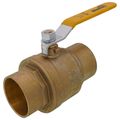
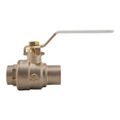
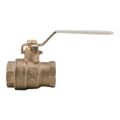
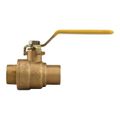
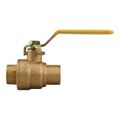
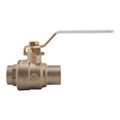
Ball Valves are brass valves used in residential, commercial and industrial piping for a full range of liquids and gases. Full port styles come in threaded and sweat connections, and models from Bluefin and Watts, including 1/2 inch threaded and 1-1/2 inch sweat sizes, carry a 600 WOG rating. Lead free versions are listed too, including a Watts model described for residential and commercial potable water applications. Watts valves in the FBV-3C series use a blowout proof stem, virgin PTFE seats and a chrome plated brass ball. Choosing the right connection, material and pressure rating matters because the wrong valve means a leak, a shutdown and a return visit. Plumbers and mechanical contractors compare these details before ordering, and confirming approvals and ratings first keeps the job on schedule.
Subcategories
- Threaded Ball Valves: Threaded ball valves join pipe through female NPT end connections. Installers choose them for threaded piping runs. The Watts FBV-3C in 1/2 inch is a full port brass valve with FNPT by FNPT ends and a 600 WOG rating. The Bluefin 1/2 inch threaded valve lists a 175 PSI maximum pressure.
- Sweat Ball Valves: Sweat ball valves have copper by copper ends for sweat connections. Plumbers use them on copper piping. The Watts FBVS-3C in 1/2 inch lists a water temperature range of negative 40 to 400 degrees F. The Bluefin 1-1/2 inch full port sweat valve lists a 600 WOG rating and a 175 PSI maximum pressure.
- Lead Free Ball Valves: Lead free ball valves are brass valves listed as lead free for potable water work. The Watts LFFBV-3C-M1 is a 1/2 inch threaded model described for residential and commercial potable water applications, with a 0 to 400 degree F temperature range. Plumbers specify lead free valves for potable water jobs. The Bluefin lead free listings note that the product is susceptible to dezincification and should not be used where brass parts may be exposed to hard water.
Buying Guide
Start with the connection type, because it decides everything else. Threaded valves such as the Watts FBV-3C use FNPT by FNPT ends, and sweat valves such as the Bluefin 1-1/2 inch model use copper by copper ends. Match the valve to the pipe already in the system.
Next, confirm pressure and temperature ratings. The Bluefin and Watts listings referenced here each show a 600 WOG rating. Maximum pressure runs 150 PSI on the Watts FBV-3C, FBVS-3C and LFFBV-3C-M1 listings and 175 PSI on the Bluefin 1/2 inch threaded and 1-1/2 inch sweat listings. The Watts FBVS-3C lists a water temperature range of negative 40 to 400 degrees F, and the LFFBV-3C-M1 lists 0 to 400 degrees F.
Then check water quality and compliance. When selecting Ball Valves for potable water, look for lead free models, and the Watts LFFBV-3C-M1 is described for residential and commercial potable water. Bluefin notes that its lead free listings are susceptible to dezincification and should not be used where brass parts may be exposed to hard water with high sulfur or mineral content. Review the approvals on the listing, such as cUPC, FM and NSF-61 on the Bluefin 1/2 inch threaded valve, before specifying.
Finally, consider construction. Watts FBV-3C series valves list a blowout proof stem, virgin PTFE seats and an adjustable stem packing gland.
Frequently Asked Questions
What pressure ratings do these ball valves carry?
Ball valves on this page, including Bluefin and Watts full port models, list a 600 WOG rating. Maximum pressure is 175 PSI on the Bluefin 1/2 inch threaded and 1-1/2 inch sweat valves and 150 PSI on the Watts 1/2 inch threaded and sweat models. Confirm the rating on the specific listing before ordering.
Can I use a Bluefin ball valve in hard water conditions?
Bluefin lists a note on its lead free ball valves that the product is susceptible to dezincification and does not hold a high DZR rating. Ball valves with that note shouldn't be used where brass parts may be exposed to hard water with high sulfur or mineral content. The listing points to a suggested alternative for hard water conditions.
What's the difference between threaded and sweat ball valves?
Threaded ball valves, such as the Watts FBV-3C, connect with FNPT by FNPT ends. Sweat ball valves, such as the Watts FBVS-3C, have copper by copper ends. Both Watts 1/2 inch full port models list a 600 WOG rating and a 150 PSI maximum pressure.
Which ball valve is described for potable water?
Among ball valves for potable water, the Watts LFFBV-3C-M1 is a 1/2 inch two-piece full port valve described for residential and commercial potable water applications. It uses a lead free brass body and adapter with female threaded ends. Its temperature range is 0 to 400 degrees F, and the pressure rating is 600 psi WOG non-shock.
What temperature range can the Watts sweat ball valve handle?
The Watts FBVS-3C full port sweat ball valve lists a water temperature range of negative 40 to 400 degrees F. Its pressure ratings are 600 psi WOG and 150 psi WSP. Ball valves in the FBV-3C series are described for commercial and industrial applications.
