




3 Ton Evaporator Coils

 --%3E %3Csvg version='1.1' id='No-RB' xmlns='http://www.w3.org/2000/svg' xmlns:xlink='http://www.w3.org/1999/xlink' x='0px' y='0px' viewBox='0 0 100 100' enable-background='new 0 0 100 100' xml:space='preserve'%3E %3Cpath fill='%23CECECE' d='M79.44,0.95H20.56C9.78,0.95,0.95,9.78,0.95,20.56v58.87c0,10.79,8.82,19.61,19.61,19.61h58.87 c10.79,0,19.61-8.83,19.61-19.61V20.56C99.05,9.78,90.22,0.95,79.44,0.95z M65.38,58.24l9.38,29.58L49.69,69.78L24.5,87.82 l9.34-29.6L8.8,39.6l30.73-0.17c0,0,6.98-19.61,10-28.93c0.54,1.36,9.88,29.1,9.88,29.1H91.2L65.38,58.24z'/%3E %3C/svg%3E)
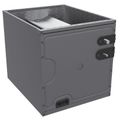
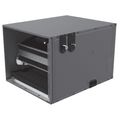
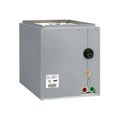
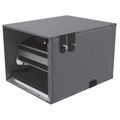
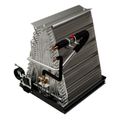
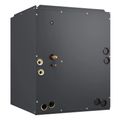
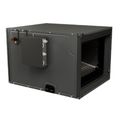
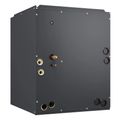
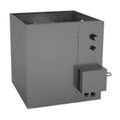

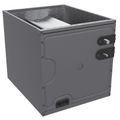
3 Ton evaporator coils are indoor cooling coils sized to work with a matching 3-ton condensing unit or heat pump in a split-system air conditioner. The coil sits inside the air handler or furnace cabinet and absorbs heat from the return air stream as refrigerant expands across its tubing. Contractors match coil tonnage to condenser tonnage first, since a mismatched pairing shortens compressor life and hurts dehumidification performance. Coil construction varies by cabinet width, coil configuration such as A-coil, N-coil, or slab, and the refrigerant metering device installed, so confirming the air handler's cabinet dimensions before ordering avoids a mismatched fit. Getting coil size and configuration right up front keeps the system running at its rated capacity and keeps manufacturer warranty coverage intact for the homeowner or building owner.
Subcategories
- Cased Evaporator Coils: Cased coils arrive in a fully enclosed sheet-metal cabinet designed to connect directly to a furnace or air handler plenum. Residential replacement crews favor cased coils because the cabinet is already sized and sealed, cutting fabrication time on the job site. They install faster in tight closets or attics where custom ductwork transitions aren't practical.
- Uncased (Slab) Evaporator Coils: Uncased, or slab, coils ship without an outer cabinet and are built into custom sheet-metal plenums fabricated on site. Commercial and new-construction installers use slab coils when duct design calls for a non-standard transition size. Because there's no factory cabinet, contractors need matching supply and return plenums ordered or built separately.
- A-Coil and N-Coil Configurations: A-coils and N-coils describe the shape of the coil face inside the cabinet, chosen based on available cabinet height and airflow direction. A-coils are the more common upflow and downflow configuration in residential furnaces, while N-coils suit horizontal air handlers in attics or crawlspaces. Matching the coil shape to the existing cabinet avoids a costly cabinet swap.
- TXV and Piston Metering Coils: Coils are built with either a thermal expansion valve (TXV) or a fixed-orifice piston to meter refrigerant flow into the coil. TXV coils modulate refrigerant flow across a range of outdoor temperatures and are the standard choice for variable-capacity or high-efficiency condensers. Piston coils are simpler and typically paired with single-stage, lower-efficiency systems, and swapping metering devices in the field is common when upgrading condenser efficiency.
Buying Guide
Start by confirming the tonnage of the existing or planned outdoor condensing unit, since the evaporator coil has to match it within the manufacturer's approved range. Undersized coils choke airflow and ice up; oversized coils short-cycle and leave the space clammy even when the temperature reads comfortable. Next, measure the cabinet opening or existing plenum dimensions, because coil width and height vary by brand and by cased versus uncased construction.
Refrigerant type matters too: coils built for current-generation refrigerants use different tubing and orifice sizing than older R-22 coils, so replacement jobs on older systems often mean swapping the whole refrigerant circuit, not just the coil. When replacing a failed coil on an aging system, weighing the cost of matching an obsolete platform against upgrading the condenser and coil together as a matched pair usually holds a stronger warranty.
For 3 Ton Evaporator Coils specifically, confirm whether the application calls for upflow, downflow, or horizontal airflow, since that determines A-coil versus N-coil selection. Coil drain pan orientation and the location of the refrigerant line connections also need to line up with the existing duct and line set runs to avoid rework. Contractors doing multiple installs in a season often standardize on one or two coil families to simplify stocking suction line kits, TXVs, and drain pan accessories across jobs.
Frequently Asked Questions
How do I know if a 3 ton evaporator coil will fit my existing furnace or air handler?
Match the coil model to the air handler or furnace manufacturer's approved coil list first, since coil width and connection points are cabinet-specific. If the existing brand doesn't carry a listed match, measuring the cabinet opening and comparing it against a universal or cased coil's dimensions is the next step. Confirming the refrigerant line size and drain pan orientation before ordering prevents a mismatched fit.
Can I use a piston metering coil with a TXV-required condenser?
No. Manufacturers pair piston (fixed-orifice) coils with single-stage condensers and TXV coils with variable- or multi-stage condensers, and running the wrong metering device against the wrong condenser reduces capacity and can trip high-pressure limits. Checking the condenser's specification sheet for its required metering device before ordering the coil avoids a callback.
What's the difference between a cased and uncased 3 ton evaporator coil?
A cased coil comes inside its own sheet-metal cabinet and connects straight to the existing plenum, while an uncased coil is a bare coil built into custom ductwork fabricated on the job. Replacement work on existing residential systems typically uses cased coils for speed, while new construction and commercial jobs often use uncased coils to match a custom duct design.
Does the evaporator coil need to match the condenser's refrigerant type?
Yes. Coils built for current refrigerants use different tubing alloys and orifice sizing than older R-22 coils, so pairing a new coil with an old refrigerant circuit isn't supported by manufacturers. Replacing the coil on an older R-22 system typically means replacing the full refrigerant circuit, condenser included.
How much airflow clearance does a 3 ton evaporator coil need around the cabinet?
Clearance requirements vary by manufacturer and are listed in the installation instructions shipped with the coil, but return air access and service clearance for coil removal are the two dimensions installers check most often. Leaving enough clearance to slide the coil straight out for future service or cleaning saves labor time on the next call.
