




Filters
SORT
Product Availability –
Size –
Review Score –
 --%3E %3Csvg version='1.1' id='Fill' xmlns='http://www.w3.org/2000/svg' xmlns:xlink='http://www.w3.org/1999/xlink' x='0px' y='0px' viewBox='0 0 100 100' enable-background='new 0 0 100 100' xml:space='preserve'%3E %3Cpath fill='%23F15C02' d='M79.44,0.95H20.56C9.78,0.95,0.95,9.78,0.95,20.56v58.87c0,10.79,8.82,19.61,19.61,19.61h58.87 c10.79,0,19.61-8.83,19.61-19.61V20.56C99.05,9.78,90.22,0.95,79.44,0.95z M65.38,58.24l9.38,29.58L49.69,69.78L24.5,87.82 l9.34-29.6L8.8,39.6l30.73-0.17c0,0,6.98-19.61,10-28.93c0.54,1.36,9.88,29.1,9.88,29.1H91.2L65.38,58.24z'/%3E %3C/svg%3E)
 --%3E %3Csvg version='1.1' id='With-RB' xmlns='http://www.w3.org/2000/svg' xmlns:xlink='http://www.w3.org/1999/xlink' x='0px' y='0px' viewBox='0 0 100 100' enable-background='new 0 0 100 100' xml:space='preserve'%3E %3Cpath fill='%23FBC8B4' d='M79.44,0.95H20.56C9.78,0.95,0.95,9.78,0.95,20.56v58.87c0,10.79,8.82,19.61,19.61,19.61h58.87 c10.79,0,19.61-8.83,19.61-19.61V20.56C99.05,9.78,90.22,0.95,79.44,0.95z M65.38,58.24l9.38,29.58L49.69,69.78L24.5,87.82 l9.34-29.6L8.8,39.6l30.73-0.17c0,0,6.98-19.61,10-28.93c0.54,1.36,9.88,29.1,9.88,29.1H91.2L65.38,58.24z'/%3E %3C/svg%3E)
Price Range –
ABS Cleanout Plugs


 --%3E %3Csvg version='1.1' id='No-RB' xmlns='http://www.w3.org/2000/svg' xmlns:xlink='http://www.w3.org/1999/xlink' x='0px' y='0px' viewBox='0 0 100 100' enable-background='new 0 0 100 100' xml:space='preserve'%3E %3Cpath fill='%23CECECE' d='M79.44,0.95H20.56C9.78,0.95,0.95,9.78,0.95,20.56v58.87c0,10.79,8.82,19.61,19.61,19.61h58.87 c10.79,0,19.61-8.83,19.61-19.61V20.56C99.05,9.78,90.22,0.95,79.44,0.95z M65.38,58.24l9.38,29.58L49.69,69.78L24.5,87.82 l9.34-29.6L8.8,39.6l30.73-0.17c0,0,6.98-19.61,10-28.93c0.54,1.36,9.88,29.1,9.88,29.1H91.2L65.38,58.24z'/%3E %3C/svg%3E)
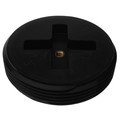
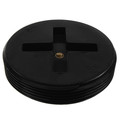
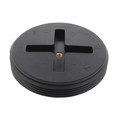
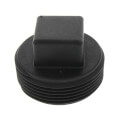
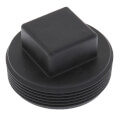
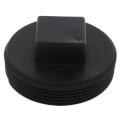
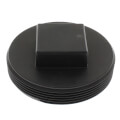

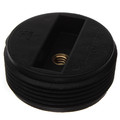
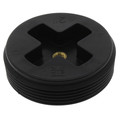
ABS Cleanout Plugs are threaded fittings that seal access points in drain, waste, and vent piping so a line can be opened later for clearing a blockage or camera inspection. Molded from Schedule 40 ABS, the plugs thread into a cleanout fitting with male NPT (MPT) threads and are sized from 1-1/4 inch through 6 inch to match common DWV branch and stack diameters. Some styles seal with a rubber O-ring for a standard raised head, while recessed or countersunk head plugs sit flush for installations under flooring or behind finished walls. Because ABS resists sewage, common household chemicals, and a wide range of waste stream contents, it is the standard material for cleanout plugs installed on ABS drain systems rather than mixing in PVC or brass. Plumbers rely on these plugs at the base of stacks, at transitions in the pipe run, and near building sewer connections, wherever code requires an accessible point for snaking a line or running a camera without cutting into finished piping.
Subcategories
- 1-1/4 Inch to 2 Inch Cleanout Plugs: Smaller plugs of this size thread into cleanout tees and wyes serving individual fixture branches, such as a lavatory or kitchen sink drain. Plumbers use them anywhere a branch line needs a dedicated access point without tying into the main stack. Male NPT threads match the corresponding cleanout fitting size, so plug size follows the branch pipe diameter throughout the run.
- 3 Inch to 4 Inch Cleanout Plugs: Larger plugs in this range fit the main stack and building drain cleanouts most codes require near the point where an interior line exits to the exterior sewer connection. Crews pull the plug to run a sewer camera or snake a clog affecting multiple fixtures rather than just one branch. Because building drains carry more waste volume, the wider thread diameter gives full access for larger-diameter cleaning equipment.
- Recessed Head Cleanout Plugs: Recessed, or countersunk, plugs sit flush with the surrounding surface instead of protruding above it. Installers choose this style when a cleanout lands under finished flooring, behind a cabinet, or in a location where a raised head would create a trip hazard or interfere with trim. The flush profile still accepts a plug wrench for removal, so access is not sacrificed for a cleaner finished look.
- Standard Raised Head Cleanout Plugs: Standard plugs use a raised head sealed with a rubber O-ring, giving a plumber a clear grip point for a plug wrench. Crews favor this style in mechanical rooms, basements, and other unfinished spaces where the taller profile does not interfere with a floor or wall finish. Removing and reinstalling the plug is quick, which matters on lines that need repeat camera inspection or snaking over the life of a building.
Buying Guide
Choosing a cleanout plug starts with matching pipe size to the existing fitting. Measure the cleanout tee, wye, or adapter already in the wall or floor, since the plug has to thread into that exact diameter using male NPT threads; a mismatch means the plug will not seat or seal correctly. Sizes commonly run from 1-1/4 inch for individual fixture branches up through 4 inch or larger for building drains and main stacks, so confirm which portion of the system needs access before ordering. Next, decide between a standard raised head and a recessed, countersunk head. ABS Cleanout Plugs with a raised head work well in mechanical rooms, basements, and other unfinished areas where the extra height does not matter, while recessed styles suit locations under flooring, behind cabinetry, or anywhere a protruding plug would create a trip hazard or clearance problem. Material compatibility matters too: pairing an ABS plug with an ABS cleanout fitting keeps the solvent-welded system consistent, since mixing ABS and PVC components on the same joint can create a bond that fails over time. Finally, factor in how the plug will be removed later. A wrench-friendly, raised head speeds up routine snaking or camera work, while a recessed head trades some ease of removal for a cleaner finished appearance in occupied spaces.
Frequently Asked Questions
What size ABS Cleanout Plug is needed for a specific fitting?
ABS Cleanout Plugs need to match the exact size of the cleanout tee, wye, or adapter already installed, since the male NPT threads only seal correctly against a same-size fitting. Common sizes range from 1-1/4 inch for fixture branches up through 4 inch or larger for building drains, so field-measuring the existing fitting before ordering avoids a return trip.
Are ABS Cleanout Plugs interchangeable with PVC cleanout plugs?
ABS Cleanout Plugs are not solvent-compatible with PVC, so pairing them on the same joint risks a bond that does not cure properly. Crews working on an ABS DWV system should stay with ABS plugs and fittings throughout, reserving PVC plugs for PVC systems.
What is the difference between a raised head and a recessed head cleanout plug?
A raised head cleanout plug sits above the surrounding surface and gives a plumber a clear grip for a wrench, which suits mechanical rooms and other unfinished spaces. A recessed, or countersunk, head sits flush with the floor or wall, a better fit under flooring or behind finished surfaces where a protruding plug would be a trip hazard.
How are ABS Cleanout Plugs sealed?
Standard ABS Cleanout Plugs seal with a rubber O-ring seated against the plug threads, while recessed styles use a similar O-ring seal in a countersunk body. Either style needs the O-ring in good condition to hold back sewer gas and prevent leaks at the access point.
Where should an ABS Cleanout Plug be installed?
ABS Cleanout Plugs belong anywhere code requires accessible service points, including the base of a stack, transitions in the drain run, and near the point a building drain exits to the sewer connection. Positioning a plug at these spots lets a plumber snake a line or run a camera without cutting into finished piping.
