




Filters
SORT
Product Availability –
Brand –
Size –
Color –
Review Score –
 --%3E %3Csvg version='1.1' id='Fill' xmlns='http://www.w3.org/2000/svg' xmlns:xlink='http://www.w3.org/1999/xlink' x='0px' y='0px' viewBox='0 0 100 100' enable-background='new 0 0 100 100' xml:space='preserve'%3E %3Cpath fill='%23F15C02' d='M79.44,0.95H20.56C9.78,0.95,0.95,9.78,0.95,20.56v58.87c0,10.79,8.82,19.61,19.61,19.61h58.87 c10.79,0,19.61-8.83,19.61-19.61V20.56C99.05,9.78,90.22,0.95,79.44,0.95z M65.38,58.24l9.38,29.58L49.69,69.78L24.5,87.82 l9.34-29.6L8.8,39.6l30.73-0.17c0,0,6.98-19.61,10-28.93c0.54,1.36,9.88,29.1,9.88,29.1H91.2L65.38,58.24z'/%3E %3C/svg%3E)
 --%3E %3Csvg version='1.1' id='With-RB' xmlns='http://www.w3.org/2000/svg' xmlns:xlink='http://www.w3.org/1999/xlink' x='0px' y='0px' viewBox='0 0 100 100' enable-background='new 0 0 100 100' xml:space='preserve'%3E %3Cpath fill='%23FBC8B4' d='M79.44,0.95H20.56C9.78,0.95,0.95,9.78,0.95,20.56v58.87c0,10.79,8.82,19.61,19.61,19.61h58.87 c10.79,0,19.61-8.83,19.61-19.61V20.56C99.05,9.78,90.22,0.95,79.44,0.95z M65.38,58.24l9.38,29.58L49.69,69.78L24.5,87.82 l9.34-29.6L8.8,39.6l30.73-0.17c0,0,6.98-19.61,10-28.93c0.54,1.36,9.88,29.1,9.88,29.1H91.2L65.38,58.24z'/%3E %3C/svg%3E)
Price Range –
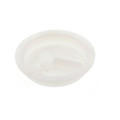
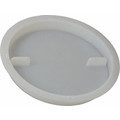
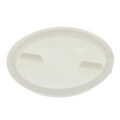
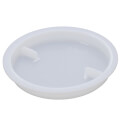
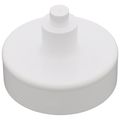
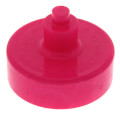
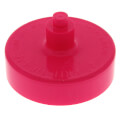
ABS DWV Test Caps


 --%3E %3Csvg version='1.1' id='No-RB' xmlns='http://www.w3.org/2000/svg' xmlns:xlink='http://www.w3.org/1999/xlink' x='0px' y='0px' viewBox='0 0 100 100' enable-background='new 0 0 100 100' xml:space='preserve'%3E %3Cpath fill='%23CECECE' d='M79.44,0.95H20.56C9.78,0.95,0.95,9.78,0.95,20.56v58.87c0,10.79,8.82,19.61,19.61,19.61h58.87 c10.79,0,19.61-8.83,19.61-19.61V20.56C99.05,9.78,90.22,0.95,79.44,0.95z M65.38,58.24l9.38,29.58L49.69,69.78L24.5,87.82 l9.34-29.6L8.8,39.6l30.73-0.17c0,0,6.98-19.61,10-28.93c0.54,1.36,9.88,29.1,9.88,29.1H91.2L65.38,58.24z'/%3E %3C/svg%3E)
 --%3E %3Csvg version='1.1' id='Half' xmlns='http://www.w3.org/2000/svg' xmlns:xlink='http://www.w3.org/1999/xlink' x='0px' y='0px' viewBox='0 0 100 100' enable-background='new 0 0 100 100' xml:space='preserve'%3E %3Cg%3E %3Cpath fill='%23F15C02' d='M30.05,70.23l3.79-12.01L8.8,39.6l30.73-0.17c0,0,6.98-19.61,10-28.93c0.54,1.36,9.88,29.1,9.88,29.1h1.58 L93.71,7.18c-3.58-3.82-8.66-6.23-14.28-6.23H20.56C9.78,0.95,0.95,9.78,0.95,20.56v58.87c0,5.41,2.22,10.32,5.79,13.88 L30.05,70.23z'/%3E %3C/g%3E %3Cpath fill='%23FBC8B4' d='M93.71,7.18L60.98,39.6H91.2L65.38,58.24l9.38,29.58L49.69,69.78L24.5,87.82l5.55-17.59L6.75,93.32 c3.55,3.54,8.44,5.73,13.82,5.73h58.87c10.79,0,19.61-8.83,19.61-19.61V20.56C99.05,15.4,97.01,10.69,93.71,7.18z'/%3E %3C/svg%3E)
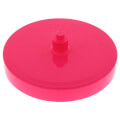
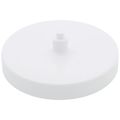

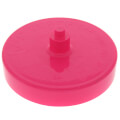
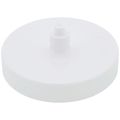
ABS DWV Test Caps are temporary fittings that plumbers solvent-weld onto the open end of drain, waste, and vent piping to seal the system for a pressure or leak test before final connections go in. Built from ABS thermoplastic rated for a service temperature range of negative 40 to 180 degrees Fahrenheit, the caps hold up to the water fill test required before a rough-in inspection without leaking at the joint. Plumbers use them on new construction rough-ins, additions tied into existing DWV lines, and any job where a section of pipe needs to hold water long enough to confirm every joint is sound. Since a test cap has a socket connection sized to match standard DWV pipe, from smaller branch lines up through the larger stacks, choosing the right size keeps the seal tight during testing. Passing this test before backfilling a trench or closing up a wall saves a costly repair down the line if a joint were to fail after the system is buried or covered.
Subcategories
- Hub (Socket) Test Caps: Hub test caps solvent-weld directly onto the open end of ABS pipe using a standard socket joint, the same connection method used throughout an ABS DWV system. Plumbers reach for this style on the most common test points, such as capping a branch line or a stack before a rough-in inspection. Because the joint is solvent-welded, the cap becomes permanent once cemented, so it either gets cut off after testing or left in place as a future connection point.
- Insert-Style Test Caps: Insert-style test caps push into the pipe rather than socketing over the outside, which some plumbers prefer when working in tight spaces where a socket fitting would stick out too far. The insert style still relies on solvent cement for a permanent, watertight seal during the test. Sizes commonly run from 1-1/2 inch up through larger stack diameters to match whatever branch or stack is being tested.
- Test Caps with Knockout Plugs: Test caps with a knockout plug offer a way to reopen the capped line after testing without cutting out the fitting, since the center knockout section can be removed to convert the cap into a usable cleanout or connection point. Plumbers use this style when a tested section will eventually tie into the rest of the system rather than remaining a dead end. Removing the knockout instead of cutting the fitting avoids damaging finished pipe after inspection passes.
Buying Guide
Start with pipe size. Test caps come in the same sizes as standard ABS DWV pipe, commonly from 1-1/2 inch branch lines up through 4 inch stacks, and the cap has to match the pipe diameter exactly for the solvent-welded joint to seal during testing. Confirm whether the test is a water-fill test or something else before choosing a cap, since ABS test caps are built for water testing and shouldn't be pressurized with compressed air or other gases.
ABS DWV Test Caps also come in a few different styles worth matching to how the tested section will be used afterward. A standard hub cap solvent-welds permanently in place and typically gets cut off once the test passes and the line needs to connect to the rest of the system. A cap with a knockout plug, by contrast, lets a plumber remove the center section and convert the fitting into a working cleanout or connection point instead of cutting into finished pipe. Insert-style caps fit inside the pipe rather than over it, which helps in tight spaces where a socket-style cap would take up too much room.
Solvent cement quality matters as much as the cap itself. Following the cement manufacturer's cure time before filling the line with water prevents a joint failure during the test that gets blamed on the fitting when the real issue was an undercured joint.
Frequently Asked Questions
Can an ABS DWV test cap be pressurized with air instead of water?
No. ABS test caps are built for a water-fill test and shouldn't be pressurized with compressed air or other gases. Testing with air instead of water can turn a fitting failure into a safety hazard rather than a simple leak to fix. Sticking to a water-fill test keeps the inspection both accurate and safe.
What sizes do ABS DWV test caps come in?
ABS DWV test caps commonly run from 1-1/2 inch branch line sizes up through 4 inch stack sizes, matching standard DWV pipe diameters. The cap has to match the pipe size exactly for the solvent-welded joint to hold during a pressure or water test. Checking the pipe diameter before ordering avoids a seal that fails under test conditions.
What's the difference between a standard test cap and one with a knockout plug?
A standard test cap solvent-welds permanently in place and typically gets cut off once testing passes and the line needs to connect to the rest of the system. A cap with a knockout plug lets a plumber remove the center section instead, converting the fitting into a working cleanout or connection point. Choosing the knockout style makes sense whenever the tested section will tie into the system later rather than staying capped.
What temperature range can ABS test caps handle?
ABS test caps carry a service temperature rating from negative 40 to 180 degrees Fahrenheit. The rated range covers the conditions a DWV system typically sees during testing and normal operation. ABS thermoplastic construction holds up to this span without degrading during a standard water-fill test.
Are ABS test caps a permanent fitting or a temporary one?
Test caps solvent-weld in place just like any other ABS DWV fitting, making the joint itself permanent once cemented. Whether the cap stays permanently depends on the style: a standard hub cap usually gets cut off after testing, while a knockout-style cap can be reopened and reused as a cleanout or connection point. Either way, the solvent-welded joint needs to cure fully before the line gets filled for testing.
