




ACP(E) Series Thermal Expansion Valves

 --%3E %3Csvg version='1.1' id='No-RB' xmlns='http://www.w3.org/2000/svg' xmlns:xlink='http://www.w3.org/1999/xlink' x='0px' y='0px' viewBox='0 0 100 100' enable-background='new 0 0 100 100' xml:space='preserve'%3E %3Cpath fill='%23CECECE' d='M79.44,0.95H20.56C9.78,0.95,0.95,9.78,0.95,20.56v58.87c0,10.79,8.82,19.61,19.61,19.61h58.87 c10.79,0,19.61-8.83,19.61-19.61V20.56C99.05,9.78,90.22,0.95,79.44,0.95z M65.38,58.24l9.38,29.58L49.69,69.78L24.5,87.82 l9.34-29.6L8.8,39.6l30.73-0.17c0,0,6.98-19.61,10-28.93c0.54,1.36,9.88,29.1,9.88,29.1H91.2L65.38,58.24z'/%3E %3C/svg%3E)
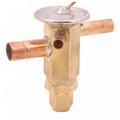



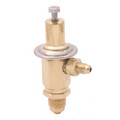
ACP(E) Series thermal expansion valves are refrigerant metering devices used in air conditioning and refrigeration systems to control the flow of liquid refrigerant into an evaporator coil. The valve reacts to changes in evaporator superheat, opening or closing its orifice to keep refrigerant feed matched to the system's cooling load. Angled configurations in this style of valve are common on equipment where straight-through body designs won't fit the available line routing, which makes them a frequent replacement part on packaged rooftop units and split systems with tight coil connections. An HVAC technician typically selects one of these valves by matching refrigerant type, tonnage rating, and orifice size to the original equipment rather than by physical size alone. Getting that match right keeps evaporator superheat in the correct range, which protects the compressor from liquid slugging and keeps the system running at its rated capacity.
Subcategories
- Fixed-Orifice ACP(E) Valves: Fixed-orifice models use a single, non-adjustable orifice sized for a specific tonnage and refrigerant combination. A technician replacing one of these valves needs to match the original orifice size exactly, since the fixed opening is what sets the refrigerant feed rate for the whole system.
- Externally Equalized ACP(E) Valves: External equalization routes evaporator outlet pressure to the valve's diaphragm through a separate line rather than sensing it internally at the valve body. This style is common on evaporators with a meaningful pressure drop across the coil, since internal equalization alone would misjudge the true outlet pressure on those coils.
- Replacement Power Elements: The power element is the sealed, refrigerant-charged component that senses bulb temperature and drives the valve's opening and closing. A worn or ruptured power element is a common failure point, and a replacement element lets a technician restore proper valve operation without swapping the entire valve body.
- ACP(E) Valve Repair Kits: Repair kits bundle the internal parts most likely to wear, such as seat assemblies and gaskets, into a single part number. Keeping a kit on hand shortens a service call when the valve body itself is still in good condition and only the internal seat needs replacing.
Buying Guide
Selecting the right ACP(E) Series valve starts with confirming the refrigerant type the system uses. A valve calibrated for one refrigerant blend will not meter a different refrigerant correctly, since the pressure-temperature relationship the valve's power element relies on changes with the refrigerant charge.
Tonnage and orifice size come next. An oversized orifice floods the evaporator with too much refrigerant, while an undersized orifice starves the coil and reduces cooling capacity. Matching the orifice rating to the equipment's original specification, rather than estimating from tonnage alone, avoids both problems.
Equalization type matters on systems with a coil that has significant internal pressure drop. An internally equalized valve senses pressure at the valve body itself, which works fine on short, low-pressure-drop coils but can cause hunting or poor superheat control on coils where the pressure at the outlet differs meaningfully from the valve inlet. An externally equalized valve corrects for that by sensing pressure directly at the evaporator outlet.
Physical configuration, including angle valve versus straight-through body and the size of the flare or solder connections, needs to match the existing line set unless new connections are being fabricated as part of the repair. An angle configuration often solves tight clearance issues around a coil header that a straight body can't accommodate.
Finally, consider whether the power element is replaceable separately from the valve body. On some models a worn element can be swapped without removing the entire valve from the line set, which saves labor time and avoids breaking brazed joints that don't need to be disturbed.
Frequently Asked Questions
What does a thermal expansion valve do in an HVAC system?
A thermal expansion valve meters liquid refrigerant into the evaporator coil, adjusting its opening based on the superheat of the refrigerant leaving the coil. Correct metering keeps the compressor protected from liquid refrigerant while maintaining rated cooling capacity.
What's the difference between internally and externally equalized valves?
An internally equalized valve senses pressure at its own body, while an externally equalized valve senses pressure directly at the evaporator outlet through a separate equalizer line. Coils with a larger pressure drop typically need the externally equalized style for accurate superheat control.
Can the power element be replaced without removing the whole valve?
On many ACP(E) Series valves, yes. The power element is a separate, bulb-and-diaphragm assembly that threads onto the valve body, so a technician can often replace a failed element without breaking the brazed connections to the line set.
How is the correct orifice size determined for a replacement valve?
Orifice size is matched to the original equipment manufacturer's specification for the unit's tonnage and refrigerant type, not estimated from the physical size of the old valve. Using the equipment's nameplate data or original parts documentation is the most reliable way to confirm it.
What happens if the wrong refrigerant valve is installed?
A valve calibrated for the wrong refrigerant will meter incorrectly because its power element responds to a different pressure-temperature curve than the system's actual refrigerant. This typically shows up as poor superheat control, reduced cooling capacity, or a system that short-cycles.
