




Thermal Expansion Valves (TXV)
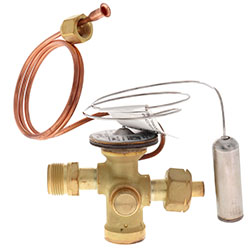
Thermal expansion valves meter refrigerant flow into an evaporator coil based on temperature, maintaining proper superheat across varying load conditions. The category covers valves from Danfoss, Emerson Flow Controls, Parker Hannifin, and Ranco, along with the orifices that let a technician adjust valve capacity.
Matching a replacement TXV to the system's refrigerant type and capacity keeps the evaporator operating efficiently across a range of operating conditions. OxBox thermal expansion valves ship factory-installed on OxBox air handlers, making this category useful for both original equipment matching and aftermarket replacement.

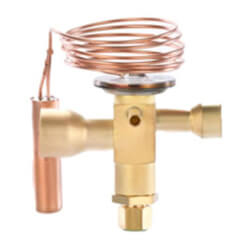
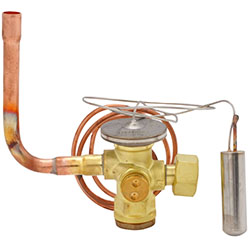
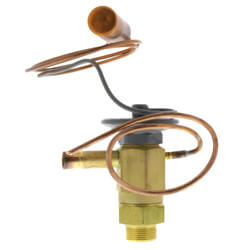
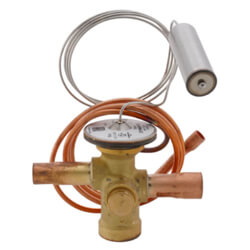

Subcategories
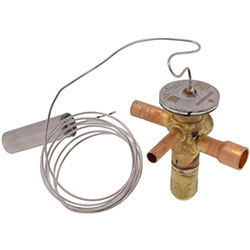
- Danfoss Thermostatic Expansion Valves: Danfoss thermostatic expansion valves span several series built for different tonnage ranges and applications. The TR6 series targets residential and light commercial split systems, rooftop units, and heat pumps, with a balanced port design and a built-in check valve for heat pump operation, while the TGE series scales up to commercial air conditioning applications from roughly 2.75 to 34.7 tons of refrigeration.
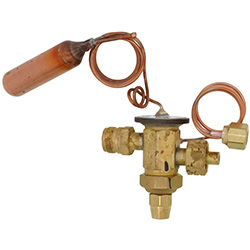
- Emerson Flow Controls Thermal Expansion Valves: Emerson Flow Controls thermal expansion valves, built on the longstanding Sporlan valve platform, use a brass bar body with a replaceable thermostatic element and a permanent strainer at the inlet connection. Balanced port constructions such as the type EBS and type O valves resist the effect of condensing pressure swings, making them a fit for both air conditioning and refrigeration service work.
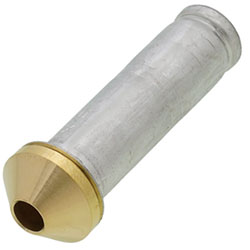
- Expansion Valve Orifices: Expansion valve orifices give technicians a way to change the capacity of a valve without replacing the entire body, since many TXV designs use an interchangeable orifice rather than a fixed one. Selecting the correct orifice size depends on the pressure drop across the valve, the evaporating temperature, and the calculated evaporator capacity, so matching those figures to the manufacturer's capacity table matters more than guessing by system tonnage alone.
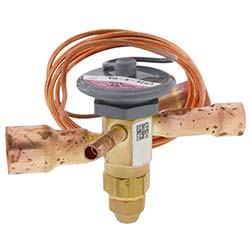
- OxBox Thermal Expansion Valves: OxBox thermal expansion valves ship factory-installed on OxBox air handlers and coils built for R410A systems, with connection sizes such as a 3/8 inch liquid line and 7/8 inch suction line on common models. Technicians servicing or replacing components on OxBox equipment typically source a matching TXV kit rather than a generic valve to preserve the factory connection sizing.
- Parker Hannifin Thermal Expansion Valves: Parker Hannifin thermal expansion valves cover a capacity range from about 1/8 ton up to 8 tons and support refrigerants including R22, R410A, R134a, R404A, and R407C. A balanced port design keeps pin and port alignment consistent, and the line offers both internal and external equalizer options along with SAE flare and ODF solder connections for residential, commercial, and transport refrigeration applications.
- Ranco Thermostatic Expansion Valves: Ranco thermostatic expansion valves, sold under the Robertshaw brand, break into series built for different jobs: the CV series includes a built-in check valve, the CO series uses a replaceable port for changing nominal capacity, the BD series meets bidirectional flow requirements for heat pumps, and the M series covers small refrigeration equipment.
Buying Guide
Sizing a thermal expansion valve starts with the tonnage of the system it serves, not the physical size of the valve being replaced. An undersized valve starves the evaporator of refrigerant and cuts cooling capacity, while an oversized valve can flood the compressor with liquid refrigerant on light load days.
Heat pump systems need a valve built for flow reversal between heating and cooling modes, either through a built-in check valve or a bidirectional design. Installing a straight cooling-only valve on a heat pump blocks proper flow in one mode and leads to a callback shortly after the season changes.
Refrigerant type narrows the valve selection further, since a valve's thermostatic charge is calibrated to the pressure and temperature curve of a specific refrigerant. A valve charged for R22 will not regulate superheat correctly on an R410A system, even if the connection sizes happen to match.
Equalizer type matters most on systems with a distributor feeding multiple evaporator circuits or with a meaningful pressure drop between the valve outlet and the sensing bulb location. External equalizer valves reference pressure directly at the evaporator outlet, which keeps superheat control accurate in those layouts, while internal equalizer valves suit simpler single-circuit coils.
Fixed versus interchangeable orifice designs affect how much future flexibility a system has. A valve built around an interchangeable orifice lets a technician adjust capacity within a range without swapping the whole valve body, which is worth factoring in on equipment that might see a coil or condenser change down the line.
Frequently Asked Questions
How is the correct TXV size determined for a system?
Match the valve to the tonnage of the equipment it serves, along with its refrigerant type and equalizer configuration, using the manufacturer's capacity table rather than the physical dimensions of the valve being replaced.
Can a cooling-only TXV be used on a heat pump?
No. Heat pumps need a valve with a built-in check valve or a bidirectional design to handle refrigerant flow reversal between heating and cooling modes, and a cooling-only valve will restrict flow in one of those modes.
What's the difference between an internal and external equalizer valve?
An internal equalizer valve references pressure inside the valve body, which works on simple single-circuit coils, while an external equalizer valve references pressure directly at the evaporator outlet, which keeps superheat control accurate on systems with a distributor or a longer pressure drop to the sensing bulb.
Does refrigerant type affect which TXV to install?
Yes. A valve's thermostatic charge is calibrated to a specific refrigerant's pressure and temperature relationship, so a valve built for R22 will not regulate superheat correctly on an R410A system even if the physical connections match.
Is an expansion valve orifice the same thing as a fixed orifice metering device?
Not exactly. A fixed orifice is a standalone metering device used instead of a TXV on some systems, while an expansion valve orifice is the interchangeable internal component inside certain TXV bodies that sets the valve's capacity.
Resources
Subcategories
- Danfoss Thermostatic Expansion Valves: Danfoss thermostatic expansion valves span several series built for different tonnage ranges and applications. The TR6 series targets residential and light commercial split systems, rooftop units, and heat pumps, with a balanced port design and a built-in check valve for heat pump operation, while the TGE series scales up to commercial air conditioning applications from roughly 2.75 to 34.7 tons of refrigeration.
- Emerson Flow Controls Thermal Expansion Valves: Emerson Flow Controls thermal expansion valves, built on the longstanding Sporlan valve platform, use a brass bar body with a replaceable thermostatic element and a permanent strainer at the inlet connection. Balanced port constructions such as the type EBS and type O valves resist the effect of condensing pressure swings, making them a fit for both air conditioning and refrigeration service work.
- Expansion Valve Orifices: Expansion valve orifices give technicians a way to change the capacity of a valve without replacing the entire body, since many TXV designs use an interchangeable orifice rather than a fixed one. Selecting the correct orifice size depends on the pressure drop across the valve, the evaporating temperature, and the calculated evaporator capacity, so matching those figures to the manufacturer's capacity table matters more than guessing by system tonnage alone.
- OxBox Thermal Expansion Valves: OxBox thermal expansion valves ship factory-installed on OxBox air handlers and coils built for R410A systems, with connection sizes such as a 3/8 inch liquid line and 7/8 inch suction line on common models. Technicians servicing or replacing components on OxBox equipment typically source a matching TXV kit rather than a generic valve to preserve the factory connection sizing.
- Parker Hannifin Thermal Expansion Valves: Parker Hannifin thermal expansion valves cover a capacity range from about 1/8 ton up to 8 tons and support refrigerants including R22, R410A, R134a, R404A, and R407C. A balanced port design keeps pin and port alignment consistent, and the line offers both internal and external equalizer options along with SAE flare and ODF solder connections for residential, commercial, and transport refrigeration applications.
- Ranco Thermostatic Expansion Valves: Ranco thermostatic expansion valves, sold under the Robertshaw brand, break into series built for different jobs: the CV series includes a built-in check valve, the CO series uses a replaceable port for changing nominal capacity, the BD series meets bidirectional flow requirements for heat pumps, and the M series covers small refrigeration equipment.
Buying Guide
Sizing a thermal expansion valve starts with the tonnage of the system it serves, not the physical size of the valve being replaced. An undersized valve starves the evaporator of refrigerant and cuts cooling capacity, while an oversized valve can flood the compressor with liquid refrigerant on light load days.
Heat pump systems need a valve built for flow reversal between heating and cooling modes, either through a built-in check valve or a bidirectional design. Installing a straight cooling-only valve on a heat pump blocks proper flow in one mode and leads to a callback shortly after the season changes.
Refrigerant type narrows the valve selection further, since a valve's thermostatic charge is calibrated to the pressure and temperature curve of a specific refrigerant. A valve charged for R22 will not regulate superheat correctly on an R410A system, even if the connection sizes happen to match.
Equalizer type matters most on systems with a distributor feeding multiple evaporator circuits or with a meaningful pressure drop between the valve outlet and the sensing bulb location. External equalizer valves reference pressure directly at the evaporator outlet, which keeps superheat control accurate in those layouts, while internal equalizer valves suit simpler single-circuit coils.
Fixed versus interchangeable orifice designs affect how much future flexibility a system has. A valve built around an interchangeable orifice lets a technician adjust capacity within a range without swapping the whole valve body, which is worth factoring in on equipment that might see a coil or condenser change down the line.
Frequently Asked Questions
How is the correct TXV size determined for a system?
Match the valve to the tonnage of the equipment it serves, along with its refrigerant type and equalizer configuration, using the manufacturer's capacity table rather than the physical dimensions of the valve being replaced.
Can a cooling-only TXV be used on a heat pump?
No. Heat pumps need a valve with a built-in check valve or a bidirectional design to handle refrigerant flow reversal between heating and cooling modes, and a cooling-only valve will restrict flow in one of those modes.
What's the difference between an internal and external equalizer valve?
An internal equalizer valve references pressure inside the valve body, which works on simple single-circuit coils, while an external equalizer valve references pressure directly at the evaporator outlet, which keeps superheat control accurate on systems with a distributor or a longer pressure drop to the sensing bulb.
Does refrigerant type affect which TXV to install?
Yes. A valve's thermostatic charge is calibrated to a specific refrigerant's pressure and temperature relationship, so a valve built for R22 will not regulate superheat correctly on an R410A system even if the physical connections match.
Is an expansion valve orifice the same thing as a fixed orifice metering device?
Not exactly. A fixed orifice is a standalone metering device used instead of a TXV on some systems, while an expansion valve orifice is the interchangeable internal component inside certain TXV bodies that sets the valve's capacity.