




AO Smith Burkay Boilers

 --%3E %3Csvg version='1.1' id='No-RB' xmlns='http://www.w3.org/2000/svg' xmlns:xlink='http://www.w3.org/1999/xlink' x='0px' y='0px' viewBox='0 0 100 100' enable-background='new 0 0 100 100' xml:space='preserve'%3E %3Cpath fill='%23CECECE' d='M79.44,0.95H20.56C9.78,0.95,0.95,9.78,0.95,20.56v58.87c0,10.79,8.82,19.61,19.61,19.61h58.87 c10.79,0,19.61-8.83,19.61-19.61V20.56C99.05,9.78,90.22,0.95,79.44,0.95z M65.38,58.24l9.38,29.58L49.69,69.78L24.5,87.82 l9.34-29.6L8.8,39.6l30.73-0.17c0,0,6.98-19.61,10-28.93c0.54,1.36,9.88,29.1,9.88,29.1H91.2L65.38,58.24z'/%3E %3C/svg%3E)


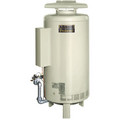
AO Smith Burkay boilers are commercial water heating boilers designed for facilities with heavy, continuous hot water demand, including restaurants, laundromats, car washes, and multi-family residential buildings. Built around a copper fin tube or cast iron heat exchanger, these units recover quickly after periods of high draw, which keeps operations running without long waits between hot water cycles. Burkay boilers pair with a separate storage tank in many installations, letting the boiler focus on heating capacity while the tank holds reserve volume for peak demand.
Contractors specify Burkay boilers when a building's usage pattern calls for dependable recovery rather than a single large tank. Compact footprints suit mechanical rooms where floor space runs tight, and gas-fired models connect into existing venting and gas supply lines already common in commercial retrofits. Choosing the right Burkay model comes down to matching input capacity and recovery rate to the facility's peak simultaneous demand, not just its average daily usage.
Subcategories
- Cast Iron Burkay Boilers: Cast iron Burkay boilers use a heavy cast iron heat exchanger built to handle continuous cycling in commercial kitchens and laundry operations. Contractors favor cast iron construction where mineral content in local water runs high, since the metal resists scale buildup better than lighter alternatives. Cast iron models typically pair with an indirect storage tank sized to the building's peak draw.
- Copper Fin Tube Burkay Boilers: Copper fin tube Burkay boilers rely on a lighter, fast-recovery heat exchanger suited to buildings with quick swings in demand, like hotel laundry rooms or gym locker rooms. Copper's higher thermal conductivity lets the boiler heat water faster than cast iron alternatives, shortening recovery time between high-draw periods. Contractors often choose copper fin tube models in space-limited installations where a compact footprint matters as much as heating capacity.
- Burkay Gas Valves & Controls: Gas valves and control modules regulate ignition sequencing and modulate burner output to match real-time demand. Replacement valves and controls keep an aging Burkay boiler running to factory specifications without a full unit swap. Facility maintenance teams stock these parts to minimize downtime when a control component fails during service.
- Burkay Ignition Components: Ignition components, including igniters, flame sensors, and pilot assemblies, start and monitor the burner each time the boiler calls for heat. Worn or fouled ignition parts are a common cause of nuisance lockouts on commercial boilers running long duty cycles. Keeping spare ignition components on hand shortens repair time for buildings that cannot tolerate extended hot water outages.
- Burkay Heat Exchangers & Repair Parts: Replacement heat exchangers, gaskets, and related repair parts extend the service life of an existing Burkay boiler past its original installation. Facility engineers turn to these parts when a unit still meets the building's capacity needs but a single component has failed or corroded. Sourcing the correct heat exchanger for the specific Burkay model avoids compatibility issues during a repair.
Buying Guide
Selecting an AO Smith Burkay boiler starts with calculating the facility's peak simultaneous hot water demand, not its average daily usage. A restaurant kitchen running dish machines, hand sinks, and prep sinks at the same time during a lunch rush needs a boiler sized for that overlap, even if usage tapers off for the rest of the day. Undersizing a Burkay boiler leads to temperature drops during peak hours, while oversizing adds unnecessary upfront and operating cost.
Heat exchanger material matters as much as raw capacity. Cast iron construction holds up well in areas with hard water and high mineral content, resisting scale that would shorten the life of a lighter alternative. Copper fin tube construction recovers faster and fits tighter mechanical rooms, making it a common choice for renovations where space is limited.
Venting and gas supply also factor into the decision. Gas-fired Burkay boilers need a compatible venting configuration and adequate gas line sizing, so contractors check existing infrastructure before committing to a specific model, especially in older buildings undergoing equipment replacement.
Storage tank pairing rounds out the buying decision. A Burkay boiler paired with an appropriately sized indirect storage tank spreads heating and storage duties between two components, letting each do its job efficiently. Facility managers replacing an aging system should confirm that any new Burkay boiler installation includes recovery rate calculations matched to both the boiler and its paired tank, not the boiler alone.
Frequently Asked Questions
What's the difference between a Burkay boiler and a standard water heater?
A Burkay boiler focuses on rapid heating capacity and pairs with a separate storage tank, while a standard water heater combines heating and storage in one unit. Splitting the two functions lets a facility scale storage volume independently of heating capacity, which matters for buildings with sharp demand spikes.
How do I know if I need a cast iron or copper fin tube model?
Cast iron models hold up better against scale in hard water areas and suit long duty cycles in commercial kitchens. Copper fin tube models recover faster and fit tighter mechanical rooms, making them a common pick for space-constrained retrofits.
Can a Burkay boiler work with my existing storage tank?
Compatibility depends on matching the boiler's recovery rate to the tank's storage volume and the building's peak draw. Confirming these numbers against the specific tank model before installation avoids performance issues down the line.
What maintenance does a Burkay boiler need?
Routine maintenance includes checking ignition components, inspecting the heat exchanger for scale or corrosion, and testing gas valve operation. Facilities running continuous duty cycles benefit from more frequent inspection intervals than lower-demand buildings.
Why does my Burkay boiler short-cycle during busy periods?
Short-cycling during peak demand often points to a boiler sized below the building's actual simultaneous draw, a failing gas valve, or a fouled heat exchanger reducing heat transfer. Recalculating peak demand and checking these components in order usually isolates the cause.
