




Filters
SORT
Product Availability –
Burner Brand –
Voltage –
Review Score –
 --%3E %3Csvg version='1.1' id='Fill' xmlns='http://www.w3.org/2000/svg' xmlns:xlink='http://www.w3.org/1999/xlink' x='0px' y='0px' viewBox='0 0 100 100' enable-background='new 0 0 100 100' xml:space='preserve'%3E %3Cpath fill='%23F15C02' d='M79.44,0.95H20.56C9.78,0.95,0.95,9.78,0.95,20.56v58.87c0,10.79,8.82,19.61,19.61,19.61h58.87 c10.79,0,19.61-8.83,19.61-19.61V20.56C99.05,9.78,90.22,0.95,79.44,0.95z M65.38,58.24l9.38,29.58L49.69,69.78L24.5,87.82 l9.34-29.6L8.8,39.6l30.73-0.17c0,0,6.98-19.61,10-28.93c0.54,1.36,9.88,29.1,9.88,29.1H91.2L65.38,58.24z'/%3E %3C/svg%3E)
 --%3E %3Csvg version='1.1' id='With-RB' xmlns='http://www.w3.org/2000/svg' xmlns:xlink='http://www.w3.org/1999/xlink' x='0px' y='0px' viewBox='0 0 100 100' enable-background='new 0 0 100 100' xml:space='preserve'%3E %3Cpath fill='%23FBC8B4' d='M79.44,0.95H20.56C9.78,0.95,0.95,9.78,0.95,20.56v58.87c0,10.79,8.82,19.61,19.61,19.61h58.87 c10.79,0,19.61-8.83,19.61-19.61V20.56C99.05,9.78,90.22,0.95,79.44,0.95z M65.38,58.24l9.38,29.58L49.69,69.78L24.5,87.82 l9.34-29.6L8.8,39.6l30.73-0.17c0,0,6.98-19.61,10-28.93c0.54,1.36,9.88,29.1,9.88,29.1H91.2L65.38,58.24z'/%3E %3C/svg%3E)
Price Range –
Allanson Ignition Transformers

 --%3E %3Csvg version='1.1' id='No-RB' xmlns='http://www.w3.org/2000/svg' xmlns:xlink='http://www.w3.org/1999/xlink' x='0px' y='0px' viewBox='0 0 100 100' enable-background='new 0 0 100 100' xml:space='preserve'%3E %3Cpath fill='%23CECECE' d='M79.44,0.95H20.56C9.78,0.95,0.95,9.78,0.95,20.56v58.87c0,10.79,8.82,19.61,19.61,19.61h58.87 c10.79,0,19.61-8.83,19.61-19.61V20.56C99.05,9.78,90.22,0.95,79.44,0.95z M65.38,58.24l9.38,29.58L49.69,69.78L24.5,87.82 l9.34-29.6L8.8,39.6l30.73-0.17c0,0,6.98-19.61,10-28.93c0.54,1.36,9.88,29.1,9.88,29.1H91.2L65.38,58.24z'/%3E %3C/svg%3E)
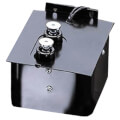


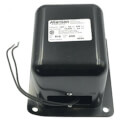
Allanson ignition transformers step up standard line voltage to the high voltage needed to create the spark that ignites the oil-air mixture in an oil-fired burner. Each transformer mounts directly to the burner housing and feeds two electrodes positioned in the combustion chamber, and a weak or failing transformer shows up as delayed ignition, a burner that locks out on safety, or soot buildup from incomplete combustion. Technicians match a replacement transformer to the burner manufacturer and model rather than swapping in whatever unit is on hand, since mounting bolt patterns and electrode lead connections differ across burner brands. Allanson transformers are a common OEM and aftermarket choice on residential and light commercial oil burners, and keeping a working transformer in stock shortens a no-heat service call considerably. Confirming the burner's ignition system type before ordering avoids a mismatch between an intermittent and a continuous-duty transformer.
Subcategories
- Intermittent Duty Transformers: Intermittent duty ignition transformers spark only during the burner's startup sequence and shut off once the flame is proven by the cad cell or flame sensor. Cutting spark once ignition is established reduces electrode wear and transformer run time compared with a unit that sparks continuously through the burn cycle. Most modern residential oil burners use intermittent ignition to match their primary control's timing sequence. Confirming the primary control's ignition timing before ordering keeps the transformer's duty cycle matched to the burner.
- Continuous Duty Transformers: Continuous duty ignition transformers spark for the full length of the burn cycle rather than shutting off once the flame is established, a setup found on some older or commercial oil burner installations. Running the spark continuously adds a layer of ignition reliability during a burn, but it also increases electrode wear compared with an intermittent duty setup. Replacing a continuous duty transformer with an intermittent duty unit on a burner not built for it can leave the flame unstable during the burn. Matching duty cycle to the original burner design is the deciding factor when selecting a replacement.
- Ignition Leads & Electrode Cables: Ignition leads carry the high-voltage output from the transformer to the electrodes in the combustion chamber, and cracked or brittle insulation on these leads is a common source of arcing outside the burner or a weak spark at the electrode tips. Leads are rated for the voltage output of the transformer they pair with, so a lead built for a lower-voltage transformer can break down under a higher-voltage unit's output. Inspecting leads for cracking or carbon tracking during routine burner service catches failures before they cause a no-ignition callback. Replacing leads at the same time as the transformer is common practice on older burners.
Buying Guide
Start by identifying the primary control on the burner, since the transformer's duty cycle, intermittent or continuous, has to match how that control sequences ignition; installing the wrong duty cycle can leave a burner short-cycling on safety lockout or running with an unstable flame. Pulling the model number stamped on the existing transformer's housing, along with the burner manufacturer and model, is the fastest way to confirm a correct match before ordering. Allanson Ignition Transformers are built to bolt onto specific burner housings, so checking the mounting bracket pattern against the burner in hand avoids ordering a unit that fits electrically but not physically. Voltage output matters as much as mounting: an electrode gap set for one transformer's output can misfire or arc externally if paired with a transformer built for a different voltage. Checking the condition of the ignition leads and electrodes at the same time as a transformer replacement is worth the extra few minutes, since a new transformer paired with cracked leads or worn electrodes will still produce a weak or unreliable spark. Keeping a couple of common replacement transformers on the truck cuts down on return trips for straightforward no-ignition calls.
Frequently Asked Questions
How do I know if an ignition transformer has failed versus another burner component?
A failed transformer typically produces no spark at all or a visibly weak, intermittent spark at the electrodes, while other ignition problems, like a dirty cad cell or a fouled nozzle, tend to show a normal spark with no flame or an unstable flame. Testing for spark at the electrodes with the burner running isolates the transformer from the rest of the ignition system. A transformer that hums audibly but produces no visible spark has usually failed internally.
What is the difference between intermittent and continuous duty transformers?
Intermittent duty transformers spark only during startup and shut off once the flame is proven, while continuous duty transformers spark for the entire burn cycle. Duty cycle needs to match the burner's primary control, since installing the wrong type can cause unstable ignition or premature electrode wear. Checking the original transformer's rating or the burner manufacturer's specification confirms which type a given burner needs.
Can an ignition transformer be tested without removing it from the burner?
Spark can often be checked in place by observing the electrode gap through an inspection port while the burner cycles, though a full voltage output test typically requires a meter rated for high-voltage secondary output and some disassembly. Visual signs like carbon tracking on the transformer case or a burning smell point to internal failure without needing a meter. A transformer that tests fine electrically but still produces weak ignition may have a mismatched electrode gap rather than a transformer problem.
Do ignition leads need to be replaced along with the transformer?
Not automatically, but leads showing cracking, carbon tracking, or brittle insulation should be replaced at the same time, since a new transformer paired with damaged leads will still produce unreliable ignition. Leads rated for a lower voltage than the replacement transformer's output are also worth upgrading during the swap. Inspecting leads takes only a few extra minutes and avoids a return trip for a problem that looks like a transformer failure.
Why does a new ignition transformer still produce a weak spark?
A weak spark after installing a new transformer usually points to an electrode gap that is set too wide or too narrow, carbon buildup on the electrode tips, or a cracked ignition lead rather than a defective transformer. Rechecking and resetting the electrode gap to the burner manufacturer's specification often resolves the issue without further parts replacement. Confirming the transformer's voltage output matches what the burner's electrodes and gap are designed for prevents this from recurring.
