




Aluminum Liquid Tight Straight Connectors (Non-Insulated)


 --%3E %3Csvg version='1.1' id='No-RB' xmlns='http://www.w3.org/2000/svg' xmlns:xlink='http://www.w3.org/1999/xlink' x='0px' y='0px' viewBox='0 0 100 100' enable-background='new 0 0 100 100' xml:space='preserve'%3E %3Cpath fill='%23CECECE' d='M79.44,0.95H20.56C9.78,0.95,0.95,9.78,0.95,20.56v58.87c0,10.79,8.82,19.61,19.61,19.61h58.87 c10.79,0,19.61-8.83,19.61-19.61V20.56C99.05,9.78,90.22,0.95,79.44,0.95z M65.38,58.24l9.38,29.58L49.69,69.78L24.5,87.82 l9.34-29.6L8.8,39.6l30.73-0.17c0,0,6.98-19.61,10-28.93c0.54,1.36,9.88,29.1,9.88,29.1H91.2L65.38,58.24z'/%3E %3C/svg%3E)



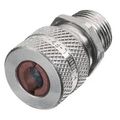
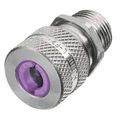
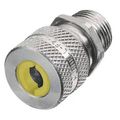
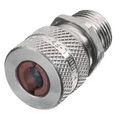
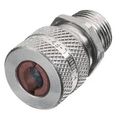
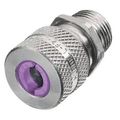
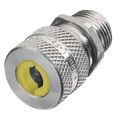

Aluminum Liquid Tight Straight Connectors (Non-Insulated) join flexible liquid tight conduit to boxes, panels, and enclosures in a straight, in-line run. Electricians reach for these fittings to protect wiring from moisture, oil, and dust in outdoor, industrial, and washdown environments where flexible conduit is required. Each connector includes a locknut and sealing ring, and a hex-shaped gland nut speeds up assembly with a standard wrench. A reusable, long ferrule grips the conduit jacket to resist pull-out under vibration or repeated movement. Sizes generally run from 3/8 inch through 6 inch, covering control wiring up to heavy feeder runs. Non-insulated versions skip the internal insulating sleeve found on insulated connectors, which keeps the fitting simple where wire abrasion protection isn't a code requirement. UL-listed straight connectors carry wet location ratings, and select listings extend to hazardous locations under Class I Division 2 and Class II Divisions 1 and 2. Picking the correct diameter and non-insulated body keeps a liquid tight conduit run both code-compliant and durable on demanding job sites.
Subcategories
- Straight Connectors: Straight connectors extend liquid tight conduit in a direct, in-line path to a box or enclosure knockout. Electrical contractors use this style for standard runs where the conduit approaches the connection point head-on. Non-insulated straight connectors ship with a locknut and sealing ring for a complete, ready-to-install fitting. The hex gland nut lets installers tighten the connection with a standard wrench rather than specialty tools.
- 45-Degree Connectors: 45-degree connectors angle the conduit run to ease tight bends near equipment or wall penetrations. Installers select this angle when a straight connector would force the conduit into a sharp, stress-inducing curve. Like straight versions, 45-degree connectors use a reusable long ferrule to grip the conduit jacket and resist pull-out. Aluminum construction keeps the fitting lightweight for overhead or panel-mounted installations.
- 90-Degree Connectors: 90-degree connectors turn the conduit run a full quarter turn at the connection point, often used where conduit enters an enclosure from above or below. Panel builders and machine shops favor this angle to keep wiring flush against equipment housings. The same hex gland nut and sealing ring design used on straight connectors applies here for consistent installation steps. Non-insulated 90-degree fittings work well where the conductors inside don't require extra abrasion protection.
- Insulated Connectors: Insulated connectors add an internal sleeve that shields conductors from sharp edges inside the fitting during pull-in and normal operation. Installers choose insulated versions when local code or the wiring type calls for extra abrasion protection at the termination point. Otherwise, insulated and non-insulated connectors share the same aluminum body, hex gland nut, and locknut hardware. The added sleeve makes insulated connectors a common substitute wherever non-insulated fittings aren't permitted.
- Malleable Iron Connectors: Malleable iron connectors offer the same straight, liquid tight design in a heavier metal built for high-abuse industrial settings. Maintenance crews specify malleable iron where impact resistance matters more than the lighter weight aluminum provides. Both metals accept the same locknut and sealing ring hardware, so switching materials doesn't change the installation process. Malleable iron is a common alternative on this connector style where aluminum's corrosion resistance isn't the deciding factor.
Buying Guide
Start with conduit size. Liquid tight connectors are sized to match the conduit trade size already specified for the run, not the wire count inside it, so confirm the conduit diameter before ordering. Next, decide on angle. Straight connectors suit runs that approach the box head-on, while 45-degree and 90-degree versions solve tight clearance problems near panels or equipment housings without forcing a sharp bend in the conduit itself.
Material choice comes next. Aluminum bodies are lighter and resist corrosion well in most outdoor and washdown settings, while malleable iron holds up better where the fitting faces regular impact or heavy mechanical stress. Aluminum Liquid Tight Straight Connectors (Non-Insulated) are a practical default for general-purpose electrical work where the wiring itself doesn't require extra abrasion protection at the termination.
Insulated versus non-insulated matters most when local code or the conductor type calls for an internal sleeve; check the job specifications before substituting one for the other. Confirm UL listing and, for industrial or classified environments, verify the hazardous location rating matches the space where the conduit terminates. Finally, check that the connector arrives complete with locknut and sealing ring so installation doesn't stall waiting on a missing part. Matching size, angle, material, and insulation type to the actual job conditions keeps the installation both compliant and durable.
Frequently Asked Questions
What's the difference between insulated and non-insulated liquid tight connectors?
Insulated connectors include an internal sleeve that shields conductors from sharp edges inside the fitting, while non-insulated connectors skip that sleeve for a simpler build. Non-insulated versions work fine where the wiring type or local code doesn't call for extra abrasion protection at the termination point. Both styles use the same aluminum body, hex gland nut, and locknut hardware.
What sizes do aluminum liquid tight straight connectors come in?
Aluminum liquid tight straight connectors are typically available from 3/8 inch through 6 inch to match common conduit trade sizes. Selecting the correct size means matching the connector to the conduit diameter already specified for the run, not the number or gauge of conductors inside. Always confirm trade size against the job's conduit specification before ordering.
Are non-insulated aluminum connectors rated for hazardous locations?
Select UL-listed liquid tight connectors carry ratings for hazardous locations under Class I Division 2 and Class II Divisions 1 and 2. Not every connector carries this rating, so checking the listing on the specific part is necessary before installing in a classified space. Aluminum liquid tight straight connectors used outside classified areas still benefit from standard wet location ratings.
What comes included with a liquid tight straight connector?
Aluminum liquid tight straight connectors ship with a locknut and sealing ring so the fitting is ready to install without sourcing separate hardware. The hex-shaped gland nut allows tightening with a standard wrench rather than a specialty tool. A reusable long ferrule inside the connector grips the conduit jacket to resist pull-out.
When should someone choose malleable iron instead of aluminum?
Malleable iron connectors suit settings where the fitting faces regular impact or heavy mechanical stress, since the metal holds up better under abuse than aluminum. Aluminum remains the lighter option and resists corrosion well in most outdoor and washdown environments. Both metals accept the same locknut and sealing ring hardware, so the installation process doesn't change between materials.
