




Apollo RVW17 Relief Valves

 --%3E %3Csvg version='1.1' id='Fill' xmlns='http://www.w3.org/2000/svg' xmlns:xlink='http://www.w3.org/1999/xlink' x='0px' y='0px' viewBox='0 0 100 100' enable-background='new 0 0 100 100' xml:space='preserve'%3E %3Cpath fill='%23F15C02' d='M79.44,0.95H20.56C9.78,0.95,0.95,9.78,0.95,20.56v58.87c0,10.79,8.82,19.61,19.61,19.61h58.87 c10.79,0,19.61-8.83,19.61-19.61V20.56C99.05,9.78,90.22,0.95,79.44,0.95z M65.38,58.24l9.38,29.58L49.69,69.78L24.5,87.82 l9.34-29.6L8.8,39.6l30.73-0.17c0,0,6.98-19.61,10-28.93c0.54,1.36,9.88,29.1,9.88,29.1H91.2L65.38,58.24z'/%3E %3C/svg%3E)

 --%3E %3Csvg version='1.1' id='No-RB' xmlns='http://www.w3.org/2000/svg' xmlns:xlink='http://www.w3.org/1999/xlink' x='0px' y='0px' viewBox='0 0 100 100' enable-background='new 0 0 100 100' xml:space='preserve'%3E %3Cpath fill='%23CECECE' d='M79.44,0.95H20.56C9.78,0.95,0.95,9.78,0.95,20.56v58.87c0,10.79,8.82,19.61,19.61,19.61h58.87 c10.79,0,19.61-8.83,19.61-19.61V20.56C99.05,9.78,90.22,0.95,79.44,0.95z M65.38,58.24l9.38,29.58L49.69,69.78L24.5,87.82 l9.34-29.6L8.8,39.6l30.73-0.17c0,0,6.98-19.61,10-28.93c0.54,1.36,9.88,29.1,9.88,29.1H91.2L65.38,58.24z'/%3E %3C/svg%3E)
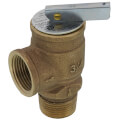
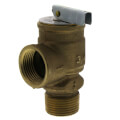

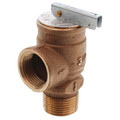
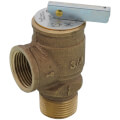
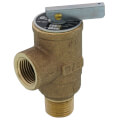
Apollo RVW17 relief valves are pressure relief valves built for hot water heating boilers, protecting hydronic systems from pressure that climbs past what the boiler and piping can safely handle. Unlike a steam relief valve, they're rated for hot water heating service only and don't include the temperature-sensing element found on a water heater's combination temperature and pressure valve. Contractors specify this style on residential and light commercial hydronic boilers feeding baseboard, radiator, or radiant heating loops, threading the valve into a tapped opening on the boiler itself. Hot water heating boilers commonly carry a 30 psi maximum working pressure rating, well above the 15 psi ceiling on low-pressure steam equipment, so a relief valve for this application is set accordingly. Bronze construction resists the mineral buildup and corrosion that circulating system water causes over years of service. Replacing a leaking or corroded relief valve is a routine part of hydronic boiler service, and matching thread size, connection orientation, and discharge capacity to the boiler being serviced keeps the swap a single visit rather than two.
Subcategories
- Residential Hydronic Boiler Applications: This valve fits boilers serving single-family and small multi-family hydronic heating systems rated to the standard 30 psi maximum working pressure for hot water heating equipment. Compact valve bodies thread directly into the boiler's tapped relief opening without additional fittings. Selecting a valve rated to match the boiler's working pressure, rather than over- or under-rated, keeps the system protected without nuisance discharge.
- Multi-Family and Light Commercial Hydronic Systems: Larger hydronic plants serving apartment buildings and light commercial space use the same 30 psi classification, so discharge capacity relative to boiler BTU input becomes the deciding factor rather than pressure rating alone. Property maintenance teams commonly stock a spare given how disruptive a heating outage is in an occupied building. Matching connection size to the existing tapping avoids a second trip for a different valve.
- OEM Replacement and Retrofit: Hydronic boilers ship with a factory-installed relief valve that eventually needs replacing once mineral buildup or corrosion compromises the seat, and the RVW17 serves as a common cross-reference during that swap. Replacing a valve during a scheduled boiler tune-up is standard practice rather than waiting for a failure, since a relief valve that won't open is a safety issue. Confirming thread size and body orientation against the boiler's tapping before ordering avoids a mismatch.
- New Hydronic Boiler Installations: New hydronic boiler installs need a relief valve sized to the unit's working pressure rating from the start, and installers commonly pair the RVW17 with boilers in the same 30 psi class during startup. Testing the valve's lift lever is a standard commissioning step before the system is turned over. Recording the valve's set pressure on the startup paperwork simplifies future service calls.
Buying Guide
Sizing a hydronic boiler relief valve starts with matching the boiler's maximum working pressure rating rather than assuming every hot water heating valve is interchangeable with a steam valve. Hot water heating boilers are typically rated to a 30 psi maximum working pressure, double the 15 psi ceiling that applies to low-pressure steam equipment, so a steam-rated valve won't provide the right protection on a hydronic system and a hydronic-rated valve isn't a substitute for a steam application either. Discharge capacity, listed by the manufacturer in pounds per hour, needs to meet or exceed the boiler's rated BTU input at the valve's set pressure; undersizing the discharge capacity leaves the boiler under-protected even if the connection threads together cleanly. Confirming NPT thread size and body orientation, straight or angled, against the existing boiler tapping is the next step, since a valve that doesn't physically seat correctly isn't safe to force into place. Bronze body construction is standard for this application and holds up well against the mineral content in circulating system water over years of service. Replacing rather than attempting to repair a relief valve is standard once it's leaking, won't reseat, or fails a lift test, given how inexpensive a relief valve is relative to the boiler and building it protects. Testing the lift lever annually as part of routine hydronic boiler maintenance catches a stuck valve before it turns into an emergency call.
Frequently Asked Questions
What's the difference between a hydronic boiler relief valve and a steam relief valve?
A hydronic boiler relief valve like the RVW17 is rated for hot water heating systems at the standard 30 psi maximum working pressure, while a steam relief valve is rated for the 15 psi ceiling that applies to low-pressure steam boilers. The two aren't interchangeable even when the connection size matches, since each is built and tested for a different pressure classification. Checking the boiler's nameplate before ordering a replacement avoids installing the wrong type.
Does a hydronic relief valve need to sense temperature as well as pressure?
No, a boiler relief valve for a closed hydronic heating loop only needs to respond to pressure, unlike a water heater's combination temperature and pressure valve used on a potable water system. Hydronic systems are closed loops that don't see the same temperature-related pressure spikes a domestic water heater does. That's why boiler relief valves and water heater T&P valves aren't sold as the same product.
How is discharge capacity different from pressure rating?
Pressure rating is the point at which the valve opens, while discharge capacity is how much water the valve can vent once it's open, measured against the boiler's rated BTU input. A valve can have the correct pressure rating and still be undersized if its discharge capacity doesn't match a larger boiler's output. Both figures need to be checked against the specific boiler being serviced.
When should a hydronic boiler relief valve be replaced instead of just tested?
A valve that fails to reseat cleanly after a lift test, shows visible corrosion at the seat, or drips continuously under normal operating pressure should be replaced rather than left in service. Mineral buildup from circulating system water is the most common cause of a valve failing to seal over time. Testing the lift lever annually as part of routine maintenance catches most of these issues before they become an emergency.
Can the RVW17 be installed on a boiler from a different manufacturer?
Yes, as long as the connection thread size, body orientation, and discharge capacity match what the boiler's tapping and rated output require, a relief valve isn't tied to a single boiler brand. Confirming those specifications against the original equipment being replaced is the standard way contractors cross-reference a relief valve. When in doubt, matching the pressure rating and discharge capacity of the original valve is the safest approach.
