




Filters
SORT
Product Availability –
BTU (Max) –
Amperage –
Review Score –
 --%3E %3Csvg version='1.1' id='Fill' xmlns='http://www.w3.org/2000/svg' xmlns:xlink='http://www.w3.org/1999/xlink' x='0px' y='0px' viewBox='0 0 100 100' enable-background='new 0 0 100 100' xml:space='preserve'%3E %3Cpath fill='%23F15C02' d='M79.44,0.95H20.56C9.78,0.95,0.95,9.78,0.95,20.56v58.87c0,10.79,8.82,19.61,19.61,19.61h58.87 c10.79,0,19.61-8.83,19.61-19.61V20.56C99.05,9.78,90.22,0.95,79.44,0.95z M65.38,58.24l9.38,29.58L49.69,69.78L24.5,87.82 l9.34-29.6L8.8,39.6l30.73-0.17c0,0,6.98-19.61,10-28.93c0.54,1.36,9.88,29.1,9.88,29.1H91.2L65.38,58.24z'/%3E %3C/svg%3E)
 --%3E %3Csvg version='1.1' id='With-RB' xmlns='http://www.w3.org/2000/svg' xmlns:xlink='http://www.w3.org/1999/xlink' x='0px' y='0px' viewBox='0 0 100 100' enable-background='new 0 0 100 100' xml:space='preserve'%3E %3Cpath fill='%23FBC8B4' d='M79.44,0.95H20.56C9.78,0.95,0.95,9.78,0.95,20.56v58.87c0,10.79,8.82,19.61,19.61,19.61h58.87 c10.79,0,19.61-8.83,19.61-19.61V20.56C99.05,9.78,90.22,0.95,79.44,0.95z M65.38,58.24l9.38,29.58L49.69,69.78L24.5,87.82 l9.34-29.6L8.8,39.6l30.73-0.17c0,0,6.98-19.61,10-28.93c0.54,1.36,9.88,29.1,9.88,29.1H91.2L65.38,58.24z'/%3E %3C/svg%3E)
Price Range –
Aspen Mini Split Condensate Pumps


 --%3E %3Csvg version='1.1' id='Half' xmlns='http://www.w3.org/2000/svg' xmlns:xlink='http://www.w3.org/1999/xlink' x='0px' y='0px' viewBox='0 0 100 100' enable-background='new 0 0 100 100' xml:space='preserve'%3E %3Cg%3E %3Cpath fill='%23F15C02' d='M30.05,70.23l3.79-12.01L8.8,39.6l30.73-0.17c0,0,6.98-19.61,10-28.93c0.54,1.36,9.88,29.1,9.88,29.1h1.58 L93.71,7.18c-3.58-3.82-8.66-6.23-14.28-6.23H20.56C9.78,0.95,0.95,9.78,0.95,20.56v58.87c0,5.41,2.22,10.32,5.79,13.88 L30.05,70.23z'/%3E %3C/g%3E %3Cpath fill='%23FBC8B4' d='M93.71,7.18L60.98,39.6H91.2L65.38,58.24l9.38,29.58L49.69,69.78L24.5,87.82l5.55-17.59L6.75,93.32 c3.55,3.54,8.44,5.73,13.82,5.73h58.87c10.79,0,19.61-8.83,19.61-19.61V20.56C99.05,15.4,97.01,10.69,93.71,7.18z'/%3E %3C/svg%3E)

 --%3E %3Csvg version='1.1' id='No-RB' xmlns='http://www.w3.org/2000/svg' xmlns:xlink='http://www.w3.org/1999/xlink' x='0px' y='0px' viewBox='0 0 100 100' enable-background='new 0 0 100 100' xml:space='preserve'%3E %3Cpath fill='%23CECECE' d='M79.44,0.95H20.56C9.78,0.95,0.95,9.78,0.95,20.56v58.87c0,10.79,8.82,19.61,19.61,19.61h58.87 c10.79,0,19.61-8.83,19.61-19.61V20.56C99.05,9.78,90.22,0.95,79.44,0.95z M65.38,58.24l9.38,29.58L49.69,69.78L24.5,87.82 l9.34-29.6L8.8,39.6l30.73-0.17c0,0,6.98-19.61,10-28.93c0.54,1.36,9.88,29.1,9.88,29.1H91.2L65.38,58.24z'/%3E %3C/svg%3E)

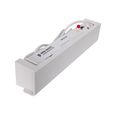
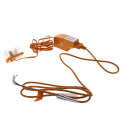
Aspen mini split condensate pumps are small electric pumps that remove condensate from ductless mini-split and high-wall air handlers when the unit sits above a usable gravity drain or when running a line downhill isn't practical. A ductless indoor unit produces condensate continuously while cooling, and without a working pump the water backs up in the drain pan, trips a float switch, or drips onto a wall or ceiling below. A built-in reservoir and float sensor trigger the motor once collected water reaches a set level, pushing it through narrow discharge tubing up and over to a drain line, vent stack, or exterior discharge point. Compact housings let installers mount the pump inside the indoor unit's casing or nearby on a wall, keeping the condensate assembly out of sight in finished living spaces. Matching pump lift capacity and reservoir size to the installation keeps nuisance shutoffs and callbacks to a minimum, particularly on units mounted well above the nearest available drain.
Subcategories
- Standard Condensate Pumps: Standard Aspen mini split pumps handle everyday single-zone installations where the lift needed to reach a drain line is modest. A quiet motor and small footprint make them a common choice for bedrooms and living areas where noise and visibility both matter. Installers typically mount the reservoir directly beneath or beside the indoor unit for the shortest possible intake run. Routine maintenance is limited to flushing the reservoir and checking the float switch for buildup.
- High-Lift Condensate Pumps: High-lift models push condensate a greater vertical distance, which suits installations where the indoor unit sits far from an exterior wall or where the discharge line has to travel up through a ceiling cavity. A stronger motor and larger reservoir capacity handle the added head pressure without cycling excessively. Contractors reach for these pumps most often on multi-story installations or units mounted high on a wall. Selecting a pump rated for the actual vertical lift, not just the horizontal run, avoids premature motor wear.
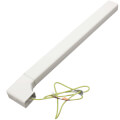
- Low-Profile Condensate Pumps: Low-profile pumps fit behind or beneath an indoor unit in tight mechanical spaces where a standard reservoir housing won't clear the wall or ceiling. A shallow reservoir still holds enough condensate to prevent frequent cycling despite the reduced footprint. Installers favor these units on retrofit jobs where cabinetry or soffits limit available clearance. Careful attention to reservoir orientation during installation keeps the float switch functioning correctly in the reduced space.
- Condensate Pump Accessories: Accessories for these pumps include discharge tubing, safety float switches, and mounting brackets that adapt a pump to a specific installation. A secondary safety switch wired to the indoor unit shuts down cooling if the primary pump fails, preventing water damage before it starts. Replacement tubing and check valves keep an aging pump running without a full unit swap. Stocking common accessory parts alongside the pumps themselves reduces trips back to the supply house mid-installation.
Buying Guide
Selecting the right Aspen mini split condensate pump starts with the vertical lift and horizontal run the discharge line needs to cover, since undersizing either figure leads to a pump that cycles constantly or fails to clear the line altogether. Reservoir capacity matters almost as much as pump power. A larger reservoir means fewer pump cycles over the course of a day, which extends motor life and cuts down on the audible clicking some occupants notice in quiet rooms. Noise level deserves attention on installations near bedrooms or offices, where a pump mounted directly to the indoor unit can transmit vibration into the wall. Isolating the pump housing with rubber mounts or choosing a quieter model addresses that complaint before it becomes a callback. Available clearance behind or beneath the indoor unit narrows the field further. Standard reservoirs need more depth than low-profile designs, so measuring the installation space before ordering saves a return trip. Pairing the pump with a safety float switch wired into the equipment's control circuit is worth the extra part on any installation above a finished ceiling or wall, since it shuts the system down before a failed pump causes water damage. Compatibility with the specific indoor unit's drain pan connection and tubing diameter rounds out the short list of things to confirm before checkout.
Frequently Asked Questions
How do I know if a mini split installation needs a condensate pump instead of a gravity drain?
A gravity drain works when the indoor unit sits high enough above an exterior wall, floor drain, or vent stack to let condensate flow downhill the entire route. Once the drain line has to travel uphill at any point, or the indoor unit sits below the nearest usable drain, a pump becomes necessary to move the water against gravity.
What causes a condensate pump to trip its safety switch repeatedly?
Repeated trips usually point to a clogged reservoir, a stuck float, or a pump that's undersized for the actual lift and run distance. Flushing the reservoir and checking the discharge tubing for kinks resolves most cases, though a persistent trip after cleaning often means the pump itself needs replacement.
Can one condensate pump serve multiple indoor units?
Some higher-capacity pumps accept multiple intake lines, but running several units into one pump increases the risk of one unit's condensate overwhelming the reservoir during peak cooling. Dedicating a pump to each indoor unit is the more reliable approach on multi-zone systems.
How often should a mini split condensate pump be serviced?
Checking the reservoir and float switch once a cooling season catches most buildup before it causes a failure. Systems in areas with hard water or heavy dust may need more frequent flushing to keep the float moving freely.
Does a condensate pump need a dedicated electrical circuit?
Most residential mini split condensate pumps run on low-voltage power tapped from the indoor unit's control board rather than a separate circuit. Checking the pump's voltage rating against the indoor unit's available connection before installation avoids a mismatch that keeps the pump from running.
