




Filters
SORT
Product Availability –
Differential –
Max Temp (F) –
Min Temp (F) –
Switch Action –
Review Score –
 --%3E %3Csvg version='1.1' id='Fill' xmlns='http://www.w3.org/2000/svg' xmlns:xlink='http://www.w3.org/1999/xlink' x='0px' y='0px' viewBox='0 0 100 100' enable-background='new 0 0 100 100' xml:space='preserve'%3E %3Cpath fill='%23F15C02' d='M79.44,0.95H20.56C9.78,0.95,0.95,9.78,0.95,20.56v58.87c0,10.79,8.82,19.61,19.61,19.61h58.87 c10.79,0,19.61-8.83,19.61-19.61V20.56C99.05,9.78,90.22,0.95,79.44,0.95z M65.38,58.24l9.38,29.58L49.69,69.78L24.5,87.82 l9.34-29.6L8.8,39.6l30.73-0.17c0,0,6.98-19.61,10-28.93c0.54,1.36,9.88,29.1,9.88,29.1H91.2L65.38,58.24z'/%3E %3C/svg%3E)
Bimetal Disc Thermostats

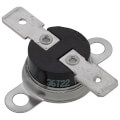

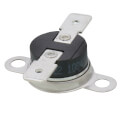
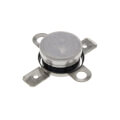
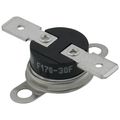
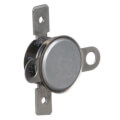
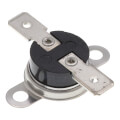
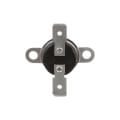
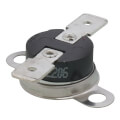
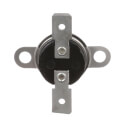
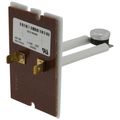
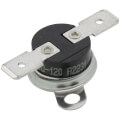
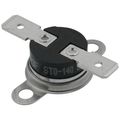
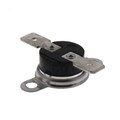
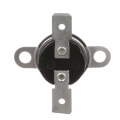
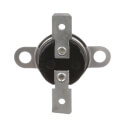
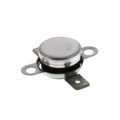
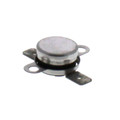
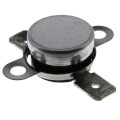
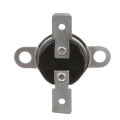
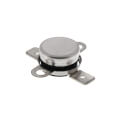
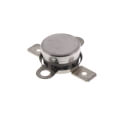


Bimetal Disc Thermostats are temperature-actuated switches that use a bonded, two-metal disc to open or close an electrical circuit at a set temperature. HVAC technicians and appliance repair contractors rely on this type of thermostat because it operates purely on mechanical action, with no external power or electronics needed to sense temperature and trigger a switch. That simplicity makes bimetal disc thermostats a durable, low-cost control for water heaters, unit heaters, motors, and other equipment where a straightforward high-temperature cutoff or set-point control is all the application needs.
Because the two metals in the disc expand at different rates as temperature rises, the disc snaps to a new shape at a specific temperature, opening or closing the contact instantly rather than gradually. Selecting the correct trip temperature and switch configuration for the equipment being serviced keeps the safety or control function working as intended after replacement.
Subcategories
- Normally Closed Thermostats: Normally closed disc thermostats keep the circuit closed until the disc reaches its trip temperature, then open the circuit to cut power. These are common as high-limit safety switches on water heaters and unit heaters, where the goal is to shut equipment off if it overheats.
- Normally Open Thermostats: Normally open disc thermostats stay open until the trip temperature is reached, then close the circuit to activate a connected component, such as a fan or auxiliary heater. Technicians select these when the application needs something to turn on at temperature rather than shut off.
- Auto-Reset Thermostats: Auto-reset models return to their original switch position once the temperature drops back below the trip point, allowing the equipment to resume normal operation without manual intervention. These suit applications where a temporary temperature spike should not require a service call to restore function.
- Manual-Reset Thermostats: Manual-reset models stay tripped until someone physically resets them, even after the temperature returns to normal. This is a deliberate safety feature on equipment where an automatic restart after an overheat event could pose a hazard, requiring a technician or the equipment owner to confirm the issue before restoring power.
Buying Guide
Match the trip temperature to the original part being replaced, since bimetal disc thermostats are manufactured for specific set points and installing the wrong temperature rating can leave equipment either shutting off too early or not protecting against overheating at all. Checking the stamped rating on the old thermostat, when it is still legible, is the most reliable way to confirm the correct replacement.
Confirm whether the application calls for normally open or normally closed operation, and whether an auto-reset or manual-reset design is appropriate. Bimetal Disc Thermostats used as safety high-limit switches typically call for manual-reset models so a technician has to verify the equipment before it powers back on, while auto-reset models suit less critical temperature-control functions.
Check the physical mounting style and electrical rating as well, since these thermostats come in different mounting configurations, including bracket-mounted and threaded-well styles, and are rated for specific voltage and amperage loads. Using a thermostat rated below the equipment's electrical load can cause premature switch failure.
Frequently Asked Questions
What does it mean if a thermostat is normally closed versus normally open?
Normally closed means the circuit stays closed until the trip temperature is reached, then opens to cut power. Normally open means the opposite, staying open until the trip temperature closes the circuit to activate a component.
Why would a piece of equipment use a manual-reset thermostat instead of auto-reset?
Manual-reset thermostats are used as a safety measure so equipment does not automatically restart after an overheat event. A technician or owner has to reset the switch, which allows the underlying cause to be checked first.
How do I find the correct trip temperature for a replacement?
Check the stamped rating on the original thermostat if it is legible, or refer to the equipment manufacturer's documentation for the correct temperature and switch specification.
Can a bimetal disc thermostat fail without any visible damage?
Yes, repeated temperature cycling over time can fatigue the bimetal disc so it no longer switches reliably at its rated temperature, even without visible physical damage to the housing or contacts.
Do these thermostats require external power to function?
No. Bimetal disc thermostats operate mechanically using the temperature-driven expansion of the disc itself, so they do not need external power to sense temperature and switch the circuit.
