




Filters
SORT
Product Availability –
Brand –
Review Score –
 --%3E %3Csvg version='1.1' id='Fill' xmlns='http://www.w3.org/2000/svg' xmlns:xlink='http://www.w3.org/1999/xlink' x='0px' y='0px' viewBox='0 0 100 100' enable-background='new 0 0 100 100' xml:space='preserve'%3E %3Cpath fill='%23F15C02' d='M79.44,0.95H20.56C9.78,0.95,0.95,9.78,0.95,20.56v58.87c0,10.79,8.82,19.61,19.61,19.61h58.87 c10.79,0,19.61-8.83,19.61-19.61V20.56C99.05,9.78,90.22,0.95,79.44,0.95z M65.38,58.24l9.38,29.58L49.69,69.78L24.5,87.82 l9.34-29.6L8.8,39.6l30.73-0.17c0,0,6.98-19.61,10-28.93c0.54,1.36,9.88,29.1,9.88,29.1H91.2L65.38,58.24z'/%3E %3C/svg%3E)
 --%3E %3Csvg version='1.1' id='With-RB' xmlns='http://www.w3.org/2000/svg' xmlns:xlink='http://www.w3.org/1999/xlink' x='0px' y='0px' viewBox='0 0 100 100' enable-background='new 0 0 100 100' xml:space='preserve'%3E %3Cpath fill='%23FBC8B4' d='M79.44,0.95H20.56C9.78,0.95,0.95,9.78,0.95,20.56v58.87c0,10.79,8.82,19.61,19.61,19.61h58.87 c10.79,0,19.61-8.83,19.61-19.61V20.56C99.05,9.78,90.22,0.95,79.44,0.95z M65.38,58.24l9.38,29.58L49.69,69.78L24.5,87.82 l9.34-29.6L8.8,39.6l30.73-0.17c0,0,6.98-19.61,10-28.93c0.54,1.36,9.88,29.1,9.88,29.1H91.2L65.38,58.24z'/%3E %3C/svg%3E)
Price Range –
Bolts & Shims

 --%3E %3Csvg version='1.1' id='No-RB' xmlns='http://www.w3.org/2000/svg' xmlns:xlink='http://www.w3.org/1999/xlink' x='0px' y='0px' viewBox='0 0 100 100' enable-background='new 0 0 100 100' xml:space='preserve'%3E %3Cpath fill='%23CECECE' d='M79.44,0.95H20.56C9.78,0.95,0.95,9.78,0.95,20.56v58.87c0,10.79,8.82,19.61,19.61,19.61h58.87 c10.79,0,19.61-8.83,19.61-19.61V20.56C99.05,9.78,90.22,0.95,79.44,0.95z M65.38,58.24l9.38,29.58L49.69,69.78L24.5,87.82 l9.34-29.6L8.8,39.6l30.73-0.17c0,0,6.98-19.61,10-28.93c0.54,1.36,9.88,29.1,9.88,29.1H91.2L65.38,58.24z'/%3E %3C/svg%3E)
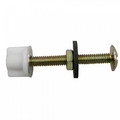
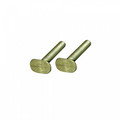
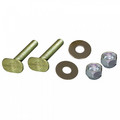

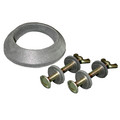
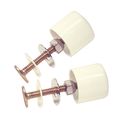
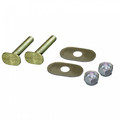

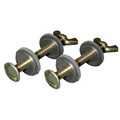
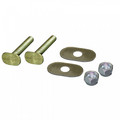
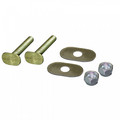
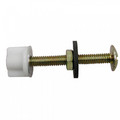
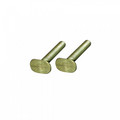
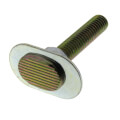
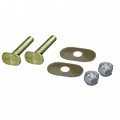
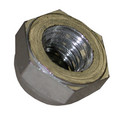
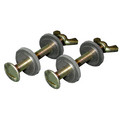
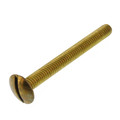
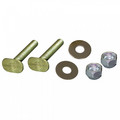

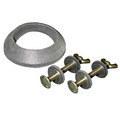
Bolts and shims are the small hardware pieces that hold flanged connections, mechanical joints, and equipment mounts secure while keeping them properly aligned. On a job site they rarely get much attention until one is missing, since a mismatched bolt length or a stack lacking the right shim thickness can leave a flange gasket unevenly compressed or a piece of equipment sitting out of level. Contractors and maintenance crews stock these parts alongside the fittings and equipment they support rather than treating them as an afterthought.
Shims specifically solve the leveling and gap-filling problems that come up during installation and re-leveling work, from squaring up a pump base to taking up clearance in a mechanical coupling. Bolts complete the connection by clamping the assembly together with enough torque to keep it sealed under system pressure and vibration without over-stressing the gasket or housing material.
Subcategories
- Flange Bolts: Flange bolts are sized and threaded to match standard pipe flange bolt-hole patterns, letting a crew join two flanged fittings or a fitting to a valve body. Matching bolt length to flange thickness plus gasket compression is what keeps the joint from either bottoming out before full clamp load or leaving threads exposed past the nut.
- Equipment Mounting Bolts: These bolts secure pumps, motors, and other mechanical equipment to their base plates or foundations. Grade and coating matter here since mounting bolts often see vibration loads over the life of the equipment, and an undersized or mismatched bolt can work loose over time.
- Leveling Shims: Leveling shims come in a range of thicknesses so a technician can build up exactly the gap needed to true up a piece of equipment or take slack out of a joint. Stacking multiple thin shims instead of relying on one thick piece gives finer control over the final height or alignment.
- Shim Stock: Shim stock is sold as sheet material that a technician cuts to a custom shape and size on site, useful when a pre-formed shim doesn't match the footprint of the equipment being leveled. It's a practical option to keep on the truck for one-off leveling jobs that don't fit a standard shim size.
Buying Guide
Matching bolt diameter and thread pitch to the flange or equipment base being fastened is the starting point, since a bolt that's even slightly undersized in diameter won't develop the clamp load the joint needs. Pull the bolt-hole pattern and thread spec from the flange or equipment manufacturer's documentation rather than measuring an old, worn bolt that may no longer represent the original spec.
Length matters just as much as diameter. A bolt that's too short won't fully engage the nut or tapped hole, while one that's too long can bottom out in a blind hole or require extra washers to take up the gap. When shims will be added to the stack, account for that added thickness before selecting bolt length so the finished joint has the right amount of thread engagement.
Material and coating should match the environment the joint will see. Bolts exposed to moisture, chemicals, or outdoor conditions need a corrosion-resistant coating or a stainless grade, while indoor mechanical-room hardware can often use standard plated steel. Mixing incompatible metals between the bolt and the base material can lead to galvanic corrosion over time.
For shims, thickness range and material both matter. Metal shims hold up under sustained load and vibration better than plastic shims, which makes them the better choice for permanent equipment leveling rather than temporary adjustments.
Keep an assortment of common bolt lengths and shim thicknesses on hand rather than ordering one size at a time, since field conditions rarely match the spec sheet exactly and having options on the truck avoids a return trip for the right piece.
Frequently Asked Questions
Why do shims matter on a flanged connection?
A shim fills small gaps that keep a gasket from compressing evenly across the full face of the flange, which helps the joint seal properly and reduces stress concentrated in one spot.
What happens if a bolt is too short for the joint?
A bolt that's too short won't fully engage the nut or tapped hole, which reduces the clamp load the joint can hold and increases the chance the connection loosens under vibration or pressure cycling.
Should shims be plastic or metal?
Metal shims generally hold up better under sustained load and vibration, making them the more durable choice for permanent equipment leveling, while plastic shims are more often used for lighter, temporary adjustments.
Can mismatched bolt and base metals cause problems?
Yes, pairing incompatible metals can lead to galvanic corrosion over time, especially in damp or outdoor environments, so it's worth matching bolt material to the base material or adding a barrier where that's not possible.
How many shims should stack up on one joint?
Using several thinner shims instead of one thick piece gives finer control over the final gap or alignment, so stacking multiple thin shims is generally preferred over relying on a single thick shim.
