




Burnham Series 3 Boilers


 --%3E %3Csvg version='1.1' id='No-RB' xmlns='http://www.w3.org/2000/svg' xmlns:xlink='http://www.w3.org/1999/xlink' x='0px' y='0px' viewBox='0 0 100 100' enable-background='new 0 0 100 100' xml:space='preserve'%3E %3Cpath fill='%23CECECE' d='M79.44,0.95H20.56C9.78,0.95,0.95,9.78,0.95,20.56v58.87c0,10.79,8.82,19.61,19.61,19.61h58.87 c10.79,0,19.61-8.83,19.61-19.61V20.56C99.05,9.78,90.22,0.95,79.44,0.95z M65.38,58.24l9.38,29.58L49.69,69.78L24.5,87.82 l9.34-29.6L8.8,39.6l30.73-0.17c0,0,6.98-19.61,10-28.93c0.54,1.36,9.88,29.1,9.88,29.1H91.2L65.38,58.24z'/%3E %3C/svg%3E)
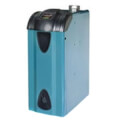


Burnham Series 3 boilers are cast iron, gas-fired hot water boilers built for residential and light commercial hydronic heating systems. Contractors specify Series 3 boilers in replacement jobs where a building already has baseboard, radiator, or radiant hydronic distribution and needs a reliable cast iron heat exchanger rather than a switch to a different heating approach. Cast iron construction gives the heat exchanger a long service life and resistance to the corrosion issues that can affect other exchanger materials over decades of use. Series 3 boilers are available in a range of output sizes, so matching the boiler to the building's heat loss calculation is the main step before ordering. Many replacement jobs on older cast iron boilers move to a Series 3 model specifically because contractors trust the design's track record in hydronic systems that have already run for twenty or thirty years.
Subcategories
- Standard Efficiency Series 3 Boilers: Standard efficiency Series 3 boilers cover straightforward space heating replacements where the building's existing hydronic distribution stays the same. Contractors select this tier for homes and small commercial spaces with baseboard or radiator heat and no need for domestic hot water production from the boiler. Cast iron sections size up or down depending on the building's calculated heat loss. Straightforward piping connections keep installation similar to the unit being replaced in most retrofit jobs.
- Series 3 Boilers with Indirect Water Heater Tie-In: Series 3 boilers configured for an indirect water heater tie-in add domestic hot water production alongside space heating, using the boiler to heat water stored in a separate indirect tank. Contractors specify this setup for homes replacing an aging boiler and separate water heater with a single combined system. Piping and control changes are more involved than a straight boiler swap since the system needs zone control between space heating and domestic hot water priority. Confirming the indirect tank's compatibility and sizing with the boiler's output is necessary before finalizing the installation.
- Replacement and Retrofit Series 3 Installations: Replacement and retrofit installations cover jobs where an older cast iron boiler is failing and needs a direct swap. Contractors lean on the Series 3 line for these jobs because the piping connections and footprint are generally familiar from decades of similar installations. Confirming near boiler piping, venting, and gas line sizing against the new unit's requirements is still necessary even on a like-for-like replacement. Keeping the original heat loss calculation or requesting a new one prevents oversizing or undersizing the replacement boiler.
Buying Guide
Sizing a Burnham Series 3 boiler starts with a heat loss calculation for the building, not simply matching the output of the unit being replaced. Older boilers are frequently oversized relative to actual building heat loss, and carrying that oversizing forward into a new installation reduces efficiency and can cause short cycling. Distribution type matters next. Baseboard, panel radiators, and radiant systems all have different water temperature and flow requirements, so confirming the existing distribution's design parameters against the new boiler's output range avoids a mismatch. For buildings adding domestic hot water production, deciding between a standard space-heating configuration and one with an indirect water heater tie-in changes both the piping layout and the control strategy, so that decision should happen before ordering rather than during installation. Venting requirements deserve a close look too, since a straight swap does not always mean the existing vent connector and chimney or sidewall venting will work without modification. Contractors replacing an aging cast iron unit with a Burnham Series 3 Boiler should also confirm gas line sizing can support the new unit's input rating, particularly on older buildings where the gas line was sized for a smaller original boiler. Reviewing heat loss, distribution type, domestic hot water needs, and venting together before ordering keeps the installation on schedule.
Frequently Asked Questions
How do I know what size Series 3 boiler to order?
Base the sizing on a heat loss calculation for the building rather than matching the output of the unit being replaced, since older boilers are often oversized relative to actual heat loss. Carrying an oversized rating forward can cause short cycling in the new unit.
Can a Series 3 boiler provide domestic hot water as well as space heating?
Yes, through an indirect water heater tie-in that uses the boiler to heat water stored in a separate indirect tank. That configuration needs additional piping and zone control compared to a space-heating-only setup.
Will the existing venting work with a new Series 3 boiler?
Not always. Confirming the existing vent connector, chimney, or sidewall venting against the new unit's requirements is necessary even on a like-for-like replacement, since venting needs can differ between boiler models.
Does the existing gas line need to be checked before installing a new boiler?
Yes. Gas line sizing needs to support the new unit's input rating, and older buildings sometimes have a gas line sized for a smaller original boiler that will not support a larger replacement.
What distribution types work with a Series 3 boiler?
Series 3 boilers work with baseboard, panel radiator, and radiant hydronic distribution, but each has different water temperature and flow requirements. Confirming the existing distribution's design parameters against the new boiler's output range prevents a mismatch.
