




Filters
SORT
Product Availability –
Review Score –
 --%3E %3Csvg version='1.1' id='Fill' xmlns='http://www.w3.org/2000/svg' xmlns:xlink='http://www.w3.org/1999/xlink' x='0px' y='0px' viewBox='0 0 100 100' enable-background='new 0 0 100 100' xml:space='preserve'%3E %3Cpath fill='%23F15C02' d='M79.44,0.95H20.56C9.78,0.95,0.95,9.78,0.95,20.56v58.87c0,10.79,8.82,19.61,19.61,19.61h58.87 c10.79,0,19.61-8.83,19.61-19.61V20.56C99.05,9.78,90.22,0.95,79.44,0.95z M65.38,58.24l9.38,29.58L49.69,69.78L24.5,87.82 l9.34-29.6L8.8,39.6l30.73-0.17c0,0,6.98-19.61,10-28.93c0.54,1.36,9.88,29.1,9.88,29.1H91.2L65.38,58.24z'/%3E %3C/svg%3E)
 --%3E %3Csvg version='1.1' id='With-RB' xmlns='http://www.w3.org/2000/svg' xmlns:xlink='http://www.w3.org/1999/xlink' x='0px' y='0px' viewBox='0 0 100 100' enable-background='new 0 0 100 100' xml:space='preserve'%3E %3Cpath fill='%23FBC8B4' d='M79.44,0.95H20.56C9.78,0.95,0.95,9.78,0.95,20.56v58.87c0,10.79,8.82,19.61,19.61,19.61h58.87 c10.79,0,19.61-8.83,19.61-19.61V20.56C99.05,9.78,90.22,0.95,79.44,0.95z M65.38,58.24l9.38,29.58L49.69,69.78L24.5,87.82 l9.34-29.6L8.8,39.6l30.73-0.17c0,0,6.98-19.61,10-28.93c0.54,1.36,9.88,29.1,9.88,29.1H91.2L65.38,58.24z'/%3E %3C/svg%3E)
Price Range –
Carrier Capacitors

 --%3E %3Csvg version='1.1' id='No-RB' xmlns='http://www.w3.org/2000/svg' xmlns:xlink='http://www.w3.org/1999/xlink' x='0px' y='0px' viewBox='0 0 100 100' enable-background='new 0 0 100 100' xml:space='preserve'%3E %3Cpath fill='%23CECECE' d='M79.44,0.95H20.56C9.78,0.95,0.95,9.78,0.95,20.56v58.87c0,10.79,8.82,19.61,19.61,19.61h58.87 c10.79,0,19.61-8.83,19.61-19.61V20.56C99.05,9.78,90.22,0.95,79.44,0.95z M65.38,58.24l9.38,29.58L49.69,69.78L24.5,87.82 l9.34-29.6L8.8,39.6l30.73-0.17c0,0,6.98-19.61,10-28.93c0.54,1.36,9.88,29.1,9.88,29.1H91.2L65.38,58.24z'/%3E %3C/svg%3E)
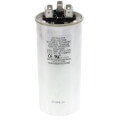
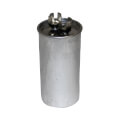
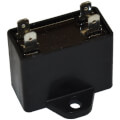

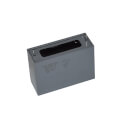
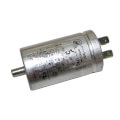
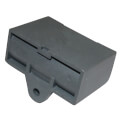
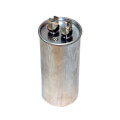
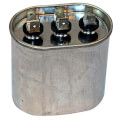
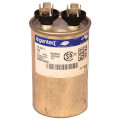
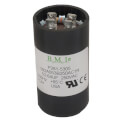
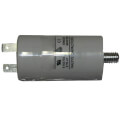

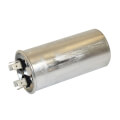
Carrier Capacitors store and release the electrical energy that starts and runs the compressor and fan motors in Carrier air conditioning and heat pump equipment. A start capacitor delivers a brief, high-intensity surge of torque to get a motor moving before disconnecting once the motor reaches roughly 75 percent of its operating speed, while a run capacitor stays in the circuit continuously, stabilizing voltage and current to keep the motor running efficiently. Dual run capacitors combine both the compressor and fan motor functions into a single physical unit, a common configuration on residential and light commercial systems where panel space is limited. Replacing a failed capacitor with the exact microfarad and voltage rating specified for the equipment is what keeps motor start and run performance within design tolerance.
Subcategories
- Run Capacitors: Run capacitors remain in the motor circuit during normal operation, modifying current flow to keep the compressor or fan motor running smoothly and efficiently. A weak or failing run capacitor is a common cause of a system that starts but then runs poorly, cycles more than it should, or draws more current than normal. Replacement units need to match the original microfarad rating and voltage class exactly, since an incorrect rating leaves the motor running outside its intended tolerance. Technicians typically verify a suspect run capacitor with a multimeter capacitance test before replacing it.
- Start Capacitors: Start capacitors deliver a short, high-torque surge that gets a compressor or fan motor moving from a standstill, then drop out of the circuit once the motor is up to speed. They see brief, intermittent duty rather than continuous operation, which is part of why a failed start capacitor often shows up as a motor that hums but does not start rather than one that runs poorly. Matching the replacement to the equipment's specified rating is just as important here as with run capacitors. Start capacitors are typically paired with a run capacitor rather than used alone in most Carrier equipment.
- Dual Run Capacitors: Dual run capacitors combine two separate run capacitor functions, compressor and condenser fan motor, into a single physical housing. This space-saving format is standard on many residential and light commercial Carrier systems where the electrical compartment does not have room for two separate capacitors. Both microfarad ratings on a dual unit need to match the original specification for their respective motor, since the compressor and fan sides are rated independently even though they share one housing. A technician testing a dual run capacitor checks both ratings separately rather than treating the unit as a single value.
Buying Guide
The starting point for replacing a Carrier capacitor is identifying which type failed: a start capacitor, a run capacitor, or a dual run unit that combines compressor and fan motor functions in one housing. A technician typically narrows this down by how the system failed, since a motor that hums without starting points toward a start capacitor issue, while a motor that starts but runs poorly or cycles excessively points toward the run side. Once the type is confirmed, the replacement has to match the original unit's microfarad rating and voltage class exactly rather than an approximate substitute, since a mismatched rating leaves the motor operating outside its designed tolerance and can shorten its life or cause it to fail to start altogether. On dual run capacitors, both the compressor-side and fan-side ratings need to be confirmed separately, since the two values are independent even though they share a single housing. Voltage class matters alongside the microfarad rating, and a capacitor rated for a higher voltage class can generally substitute for a lower-rated one, though the reverse is not true. Professional testing with a multimeter capacitance function confirms whether a suspect capacitor still falls within its manufacturer's acceptable tolerance range before it is replaced, which avoids swapping a component that was not actually the cause of the system's symptoms. Keeping a small stock of commonly needed ratings on hand is standard practice for technicians who service Carrier equipment regularly, since capacitor failure is one of the more frequent electrical service calls on both air conditioners and heat pumps.
Frequently Asked Questions
What is the difference between a start capacitor and a run capacitor?
A start capacitor delivers a brief, high-torque surge to get a motor moving and then disconnects, while a run capacitor stays in the circuit continuously to stabilize current and keep the motor running efficiently.
What is a dual run capacitor?
A dual run capacitor combines the run capacitor functions for both the compressor and the condenser fan motor into a single physical unit, a common space-saving configuration on residential and light commercial systems.
How do I know if a capacitor has failed?
Common signs include reduced cooling performance, warm air from the system, frequent short cycling, higher than normal energy use, or a humming sound from the outdoor unit without the system actually starting.
Can I replace a capacitor with a different microfarad rating?
No. The replacement needs to match the original equipment's microfarad and voltage rating exactly, since a mismatched rating leaves the motor operating outside its designed tolerance.
How is a capacitor tested before replacement?
A technician uses a multimeter's capacitance function to measure the unit and confirm whether it still falls within the manufacturer's acceptable tolerance range.
