




Filters
SORT
Product Availability –
Review Score –
 --%3E %3Csvg version='1.1' id='Fill' xmlns='http://www.w3.org/2000/svg' xmlns:xlink='http://www.w3.org/1999/xlink' x='0px' y='0px' viewBox='0 0 100 100' enable-background='new 0 0 100 100' xml:space='preserve'%3E %3Cpath fill='%23F15C02' d='M79.44,0.95H20.56C9.78,0.95,0.95,9.78,0.95,20.56v58.87c0,10.79,8.82,19.61,19.61,19.61h58.87 c10.79,0,19.61-8.83,19.61-19.61V20.56C99.05,9.78,90.22,0.95,79.44,0.95z M65.38,58.24l9.38,29.58L49.69,69.78L24.5,87.82 l9.34-29.6L8.8,39.6l30.73-0.17c0,0,6.98-19.61,10-28.93c0.54,1.36,9.88,29.1,9.88,29.1H91.2L65.38,58.24z'/%3E %3C/svg%3E)
 --%3E %3Csvg version='1.1' id='With-RB' xmlns='http://www.w3.org/2000/svg' xmlns:xlink='http://www.w3.org/1999/xlink' x='0px' y='0px' viewBox='0 0 100 100' enable-background='new 0 0 100 100' xml:space='preserve'%3E %3Cpath fill='%23FBC8B4' d='M79.44,0.95H20.56C9.78,0.95,0.95,9.78,0.95,20.56v58.87c0,10.79,8.82,19.61,19.61,19.61h58.87 c10.79,0,19.61-8.83,19.61-19.61V20.56C99.05,9.78,90.22,0.95,79.44,0.95z M65.38,58.24l9.38,29.58L49.69,69.78L24.5,87.82 l9.34-29.6L8.8,39.6l30.73-0.17c0,0,6.98-19.61,10-28.93c0.54,1.36,9.88,29.1,9.88,29.1H91.2L65.38,58.24z'/%3E %3C/svg%3E)
Price Range –
Carrier TXV
 --%3E %3Csvg version='1.1' id='No-RB' xmlns='http://www.w3.org/2000/svg' xmlns:xlink='http://www.w3.org/1999/xlink' x='0px' y='0px' viewBox='0 0 100 100' enable-background='new 0 0 100 100' xml:space='preserve'%3E %3Cpath fill='%23CECECE' d='M79.44,0.95H20.56C9.78,0.95,0.95,9.78,0.95,20.56v58.87c0,10.79,8.82,19.61,19.61,19.61h58.87 c10.79,0,19.61-8.83,19.61-19.61V20.56C99.05,9.78,90.22,0.95,79.44,0.95z M65.38,58.24l9.38,29.58L49.69,69.78L24.5,87.82 l9.34-29.6L8.8,39.6l30.73-0.17c0,0,6.98-19.61,10-28.93c0.54,1.36,9.88,29.1,9.88,29.1H91.2L65.38,58.24z'/%3E %3C/svg%3E)

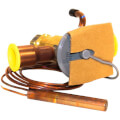
Carrier TXV parts are the thermal expansion valves used in Carrier air conditioning and heat pump systems to regulate refrigerant flow into the evaporator coil. A thermal expansion valve meters liquid refrigerant based on the superheat at the evaporator outlet, which keeps the system operating efficiently across a range of outdoor temperatures and load conditions. Carrier has used both fixed-orifice and TXV metering devices across its product lines, and the two are not interchangeable, so confirming which metering device an existing system uses is the first step before ordering a replacement. A failing TXV often causes symptoms that mimic a refrigerant leak, such as reduced cooling capacity or ice forming on the suction line, which makes correct diagnosis just as important as sourcing the right part. Because a TXV is refrigerant-specific, matching the valve to the system's refrigerant type is required for proper operation.
Subcategories
- R-410A TXVs: R-410A thermal expansion valves are sized and calibrated for systems using R-410A refrigerant, which covers most Carrier residential equipment produced in recent decades. Installing a valve rated for a different refrigerant can cause incorrect metering and poor system performance, even if the physical fitting matches.
- R-22 TXVs: R-22 thermal expansion valves are used on older Carrier systems that have not been converted to a newer refrigerant. Availability of R-22-specific parts has narrowed as older systems age out of service, so technicians confirm parts availability before committing to a repair versus a system replacement conversation.
- Bi-Flow TXVs: Bi-flow thermal expansion valves allow refrigerant to meter properly in both directions, which is required on Carrier heat pump systems that reverse refrigerant flow between heating and cooling modes. A standard, single-direction TXV is not a suitable substitute on a heat pump application.
- TXV Kits & Bulbs: TXV kits typically include the valve body along with the sensing bulb and equalizer line needed for a complete installation. The sensing bulb location and clamping are critical to correct valve operation, since a poorly mounted bulb causes the valve to respond to the wrong temperature and can mimic a valve failure that is actually an installation issue.
Buying Guide
Confirm the system's metering device type before ordering. Some Carrier systems use a fixed-orifice device rather than a thermal expansion valve, and the two require different replacement parts entirely, so checking the original equipment specification sheet or nameplate avoids an incorrect order.
Match the refrigerant type exactly. An R-410A system requires an R-410A-rated valve, and using a valve calibrated for a different refrigerant results in incorrect metering even when the physical connections appear to fit.
When ordering a Carrier TXV, check whether the application is a straight cooling system or a heat pump. Heat pump systems need a bi-flow valve to meter refrigerant correctly in both heating and cooling modes, while straight cooling systems use a standard single-direction valve.
Inspect the sensing bulb and equalizer line included in the kit, and confirm the bulb mounting location on the suction line matches the original installation. A misplaced or poorly insulated bulb is a common cause of poor valve performance that gets mistaken for a defective part.
Frequently Asked Questions
How can a technician tell if a Carrier system uses a TXV or a fixed orifice?
The equipment's specification sheet or nameplate identifies the metering device type, and the two devices are not interchangeable without replacing the entire metering assembly.
What symptoms suggest a failing thermal expansion valve?
Reduced cooling capacity, ice forming on the suction line, or inconsistent superheat readings often point to a failing valve, though these symptoms can also indicate a refrigerant leak.
Why does a heat pump need a bi-flow TXV instead of a standard valve?
A heat pump reverses refrigerant flow between heating and cooling modes, and a bi-flow valve is designed to meter refrigerant correctly in both directions, while a standard valve only meters in one.
Does the sensing bulb location matter when installing a TXV?
Yes, the sensing bulb must be mounted on the suction line at the location and orientation specified for the valve, since an incorrect placement causes the valve to respond to the wrong temperature.
Can an R-410A TXV be used on an older R-22 system?
No, the valve must be rated for the refrigerant in use, since metering characteristics differ between refrigerant types and an incorrect match leads to poor system performance.
