




Carrier Variable Air Volume Zone Controllers

 --%3E %3Csvg version='1.1' id='No-RB' xmlns='http://www.w3.org/2000/svg' xmlns:xlink='http://www.w3.org/1999/xlink' x='0px' y='0px' viewBox='0 0 100 100' enable-background='new 0 0 100 100' xml:space='preserve'%3E %3Cpath fill='%23CECECE' d='M79.44,0.95H20.56C9.78,0.95,0.95,9.78,0.95,20.56v58.87c0,10.79,8.82,19.61,19.61,19.61h58.87 c10.79,0,19.61-8.83,19.61-19.61V20.56C99.05,9.78,90.22,0.95,79.44,0.95z M65.38,58.24l9.38,29.58L49.69,69.78L24.5,87.82 l9.34-29.6L8.8,39.6l30.73-0.17c0,0,6.98-19.61,10-28.93c0.54,1.36,9.88,29.1,9.88,29.1H91.2L65.38,58.24z'/%3E %3C/svg%3E)
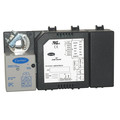


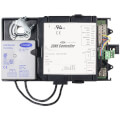
Carrier Variable Air Volume Zone Controllers are electronic devices that regulate airflow to individual VAV terminal boxes, adjusting damper position in response to zone temperature and system demand. Models like the 33ZCVAVTRM use pressure-independent control through a proportional integral derivative algorithm, which holds airflow steady at the setpoint even as duct static pressure shifts elsewhere in the system. Communication runs over the Carrier Comfort Network protocol, letting a single front-end system monitor and adjust every zone controller on a job from one interface instead of walking each terminal box individually.
Terminal-mounted versions, such as the 33ZCFANTRM, install directly onto the VAV box damper shaft and cover terminals up to 9000 CFM, handling everything from a small interior office zone to a larger open floor plan. Because each controller manages its own zone independently while still reporting back to the network, a building can maintain comfort in occupied areas without overcooling or overheating spaces that see less traffic. For controls contractors retrofitting older pneumatic VAV systems, swapping in a networked electronic zone controller cuts down on the tubing and calibration work that pneumatic actuators require.
Subcategories
- VAV Terminal Zone Controllers: VAV terminal zone controllers, such as the 33ZCVAVTRM, use a proportional integral derivative algorithm to hold pressure-independent control over airflow at each terminal box. Facilities engineers rely on this style when duct static pressure varies across a system and zone comfort still needs to stay consistent. The controller covers terminals up to 9000 CFM, matching everything from a single office to a larger open area. Controls contractors specify this type on new VAV installations where each zone needs its own dedicated airflow regulation.
- Fan-Powered Terminal Zone Controllers: Fan-powered terminal zone controllers, like the 33ZCFANTRM, include a factory-installed actuator rated at 35 lb-in of torque with a 90-degree stroke, mounted directly onto the VAV box damper shaft. Shipping the actuator and controller as a single calibrated assembly cuts down on field pairing work during installation. The controller also covers terminals up to 9000 CFM and adds diagnostic alarms for airflow, temperature deviation, and occupancy status. Retrofit jobs favor this style when the fan-powered box needs both damper control and terminal fan staging from a single controller.
- VVT Zone Controllers: VVT (Variable Volume and Temperature) zone controllers, such as the 33ZCVVTZC-01, run on Carrier's 3V Control System and connect to the network through Carrier Comfort Network protocol. A single network on this platform supports up to 128 zones, making it a fit for larger buildings with many small tenant spaces or offices. The controller performs pressure-independent PID-based airflow control and self-calibrates its airflow transducer, cutting down on manual balancing during startup. Controls contractors working on multi-tenant buildings often specify VVT over standard VAV when zone count runs high.
- Network-Level Zone Controllers: Every Carrier VAV zone controller communicates back to a building's control system over the Carrier Comfort Network protocol, which lets one front-end panel monitor and adjust every zone from a single interface. High-speed communication at 38.4 kilobaud keeps response times fast even on networks with many connected devices. Facility managers use this network layer to pull diagnostic alarms for airflow, temperature deviation, and occupancy across the whole building instead of checking each terminal box in person. Specifying CCN-compatible controllers throughout a building keeps every zone on one common monitoring platform.
Buying Guide
Start with the terminal box type already installed or specified for the job, since the controller has to match. A single-duct VAV box calls for a standard VAV terminal controller like the pressure-independent PID style, while a fan-powered box needs a controller with an integrated actuator built for the damper shaft and fan staging. Zone count comes next: a small office suite with a handful of zones runs fine on standard CCN communication, but a larger multi-tenant building with dozens or hundreds of zones benefits from a VVT-based system built to support up to 128 zones per network. Carrier Variable Air Volume Zone Controllers all report back over the same Carrier Comfort Network protocol, so mixing terminal types on one job doesn't create a communication problem as long as every device is CCN-compatible.
Airflow capacity matters too: controllers rated for terminals up to 9000 CFM cover most interior zones, but confirming the box's actual airflow requirement against the controller's rated capacity before ordering avoids an undersized fit. Retrofit jobs replacing pneumatic controls should also check whether the existing actuator can be reused or whether a factory-installed actuator model saves field calibration time. Diagnostic features, like alarms for airflow deviation and occupancy status, add value on buildings where facility staff manage the system remotely rather than walking each floor. Confirming network capacity and terminal type before ordering keeps a multi-zone retrofit from turning into a mismatched parts list.
Frequently Asked Questions
What's the difference between a VAV zone controller and a fan-powered zone controller?
A VAV zone controller regulates damper position on a single-duct terminal box, holding airflow steady at setpoint through pressure-independent control. A fan-powered zone controller adds an integrated actuator built for a fan-powered box's damper shaft and also stages the terminal fan. Matching the controller to the terminal box type installed on the job keeps calibration straightforward.
How many zones can one Carrier VAV controller network support?
A VVT-based network built on Carrier's 3V Control System supports up to 128 zones through Carrier Comfort Network connectivity. Standard VAV terminal controllers operate as individual zone-level devices that report back to the same network. Building size and zone count determine which architecture, standard VAV or VVT, fits a given job.
What airflow capacity do Carrier VAV zone controllers handle?
Standard VAV and fan-powered terminal zone controllers cover terminals up to 9000 CFM, which handles most interior office zones and moderate-sized open areas. Confirming the terminal box's actual airflow requirement against the controller's rated capacity avoids an undersized fit. Larger air handling zones may need multiple terminal boxes rather than a single oversized unit.
Can Carrier VAV zone controllers work with existing pneumatic controls?
Carrier VAV zone controllers replace pneumatic actuators and receivers with electronic pressure-independent control communicating over Carrier Comfort Network protocol. Retrofitting a pneumatic VAV box with an electronic controller usually requires swapping the actuator as well, since pneumatic and electronic actuators aren't interchangeable. Choosing a factory-installed actuator model reduces the amount of field calibration needed during the swap.
What diagnostic features come standard on Carrier VAV zone controllers?
Fan-powered terminal zone controllers include real-time alarms for airflow deviation, temperature deviation, and occupancy status, reporting back over Carrier Comfort Network protocol. Facility staff can monitor these alarms from a single front-end system instead of checking each terminal box in person. Network communication runs at high speed, keeping alarm response times fast even on buildings with many connected zones.
