




Class R Fuse Blocks


 --%3E %3Csvg version='1.1' id='No-RB' xmlns='http://www.w3.org/2000/svg' xmlns:xlink='http://www.w3.org/1999/xlink' x='0px' y='0px' viewBox='0 0 100 100' enable-background='new 0 0 100 100' xml:space='preserve'%3E %3Cpath fill='%23CECECE' d='M79.44,0.95H20.56C9.78,0.95,0.95,9.78,0.95,20.56v58.87c0,10.79,8.82,19.61,19.61,19.61h58.87 c10.79,0,19.61-8.83,19.61-19.61V20.56C99.05,9.78,90.22,0.95,79.44,0.95z M65.38,58.24l9.38,29.58L49.69,69.78L24.5,87.82 l9.34-29.6L8.8,39.6l30.73-0.17c0,0,6.98-19.61,10-28.93c0.54,1.36,9.88,29.1,9.88,29.1H91.2L65.38,58.24z'/%3E %3C/svg%3E)

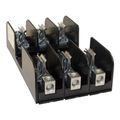


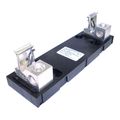


Class R Fuse Blocks are the bases that hold fuses and connect them to the conductors in a panel or electrical system. Bussmann series Class R modular blocks from Eaton come as single-pole versions that snap together for the required number of poles, or as factory configured 2-pole and 3-pole versions. The single-pole Eaton block in this listing is rated 250V. The listing also includes Mersen blocks, such as Class J models rated 600V and DIN rail mount models rated 600 VAC/VDC, so installers can compare pole counts, amp ratings and terminal styles across the range. Every block has to match the fuse class, voltage and current of the circuit it serves, and it has to accept the conductor size on the job. Choosing the right block early keeps the panel build clean and avoids a return trip for a mismatched part.
Subcategories
- Single-Pole Modular Fuse Blocks: Single-pole modular fuse blocks are individual poles that snap together to reach the number of poles a panel design needs. Panel builders and contractors use them to match a fuse bank to the circuit. Eaton describes its Bussmann series Class R modular blocks as using a standard fuse clip reinforcing spring for electrical contact between the block and fuse. The single-pole Eaton block in this listing is rated 250V.
- Class J Fuse Blocks: Class J fuse blocks are built for Class J fuses, such as the 600V Mersen models in this listing. Installers and panel builders use them to terminate conductors at the fuse. The Mersen 60308SJ is a 3-pole, 30A block and the 60608J is a 3-pole, 60A block, both rated 600V. Both use box lug terminals and spring reinforced clips for 14 to 2 AWG aluminum or copper conductors.
- DIN Rail Mount Fuse Blocks: DIN rail mount fuse blocks are made for installation on a DIN rail. Panel builders use them to hold fuses on a rail. The Mersen 30352 is a 2-pole, 30A block and the 30323R is a 3-pole, 30A block, both rated 600 VAC/VDC. Both take 13/32 inch diameter by 1-1/2 inch fuses.
Buying Guide
Start with the fuse. A block has to match the fuse class, the voltage rating and the current rating of the circuit, so confirm those three before looking at anything else. The listing shows a 250V single-pole Eaton block, 600V Class J Mersen blocks and 600 VAC/VDC DIN rail mount Mersen blocks, so the voltage on the job narrows the choices quickly.
Next, set the pole count when specifying Class R Fuse Blocks. Eaton's Bussmann series Class R modular blocks come as single-pole versions that snap together for the required number of poles, or as factory configured 2-pole and 3-pole versions. Snap-together blocks add versatility, and Eaton notes the modular design reduces labor. The Mersen blocks in this listing include 2-pole and 3-pole models.
Then check conductor fit and terminals. The Class J models listed here use box lug terminals for 14 to 2 AWG aluminum or copper conductors, while the 30352 DIN rail block is listed for 14 to 6 AWG. Wire size varies by model, so read the range on the specific part number.
When comparing options, also look at mounting style and approvals. DIN rail mount blocks suit rail layouts, and the Mersen Class J models listed here carry UL and CSA approval. Confirm the rating and approval on the exact part number before ordering, because one block's specifications do not apply to every block in the category.
Frequently Asked Questions
What are Class R fuse blocks used for?
Class R fuse blocks hold fuses and connect them to the circuit conductors in a panel or electrical system. Eaton's Bussmann series Class R modular blocks are offered for the full Class R fuse amp range. Check the rating of the specific block against the fuse and the circuit before ordering.
Can I snap single-pole Class R fuse blocks together for a multi-pole setup?
Bussmann series Class R modular fuse blocks from Eaton are available as single-pole versions that snap together for the required number of poles. Factory configured 2-pole and 3-pole versions are also offered. Confirm details on the product page for the specific part.
What voltage ratings show up on fuse blocks in this category?
The Class R Fuse Blocks listing includes a 250V single-pole Eaton block, Mersen Class J blocks rated 600V and Mersen DIN rail mount blocks rated 600 VAC/VDC. Voltage varies by model, so read the rating on the exact part before ordering.
What wire sizes do the Mersen Class J fuse blocks accept?
The Mersen 60308SJ and 60608J Class J fuse blocks list a wire size of 14 to 2 AWG for aluminum or copper conductors with box lug terminals. Both are 3-pole, 600V models, rated 30A and 60A respectively. Other fuse blocks in the Class R Fuse Blocks category differ, so check the wire range on each model.
Are there DIN rail mount fuse blocks in this category?
Yes. DIN rail mount fuse blocks in this category include the Mersen 30352, a 2-pole 30A block, and the 30323R, a 3-pole 30A block, both rated 600 VAC/VDC. Both are listed for 13/32 inch diameter by 1-1/2 inch fuses. Compare the conductor size ranges before choosing.
