




Fuse Blocks

 --%3E %3Csvg version='1.1' id='Fill' xmlns='http://www.w3.org/2000/svg' xmlns:xlink='http://www.w3.org/1999/xlink' x='0px' y='0px' viewBox='0 0 100 100' enable-background='new 0 0 100 100' xml:space='preserve'%3E %3Cpath fill='%23F15C02' d='M79.44,0.95H20.56C9.78,0.95,0.95,9.78,0.95,20.56v58.87c0,10.79,8.82,19.61,19.61,19.61h58.87 c10.79,0,19.61-8.83,19.61-19.61V20.56C99.05,9.78,90.22,0.95,79.44,0.95z M65.38,58.24l9.38,29.58L49.69,69.78L24.5,87.82 l9.34-29.6L8.8,39.6l30.73-0.17c0,0,6.98-19.61,10-28.93c0.54,1.36,9.88,29.1,9.88,29.1H91.2L65.38,58.24z'/%3E %3C/svg%3E)
 --%3E %3Csvg version='1.1' id='With-RB' xmlns='http://www.w3.org/2000/svg' xmlns:xlink='http://www.w3.org/1999/xlink' x='0px' y='0px' viewBox='0 0 100 100' enable-background='new 0 0 100 100' xml:space='preserve'%3E %3Cpath fill='%23FBC8B4' d='M79.44,0.95H20.56C9.78,0.95,0.95,9.78,0.95,20.56v58.87c0,10.79,8.82,19.61,19.61,19.61h58.87 c10.79,0,19.61-8.83,19.61-19.61V20.56C99.05,9.78,90.22,0.95,79.44,0.95z M65.38,58.24l9.38,29.58L49.69,69.78L24.5,87.82 l9.34-29.6L8.8,39.6l30.73-0.17c0,0,6.98-19.61,10-28.93c0.54,1.36,9.88,29.1,9.88,29.1H91.2L65.38,58.24z'/%3E %3C/svg%3E)


 --%3E %3Csvg version='1.1' id='No-RB' xmlns='http://www.w3.org/2000/svg' xmlns:xlink='http://www.w3.org/1999/xlink' x='0px' y='0px' viewBox='0 0 100 100' enable-background='new 0 0 100 100' xml:space='preserve'%3E %3Cpath fill='%23CECECE' d='M79.44,0.95H20.56C9.78,0.95,0.95,9.78,0.95,20.56v58.87c0,10.79,8.82,19.61,19.61,19.61h58.87 c10.79,0,19.61-8.83,19.61-19.61V20.56C99.05,9.78,90.22,0.95,79.44,0.95z M65.38,58.24l9.38,29.58L49.69,69.78L24.5,87.82 l9.34-29.6L8.8,39.6l30.73-0.17c0,0,6.98-19.61,10-28.93c0.54,1.36,9.88,29.1,9.88,29.1H91.2L65.38,58.24z'/%3E %3C/svg%3E)


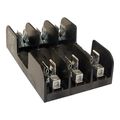

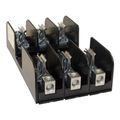
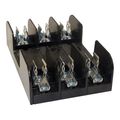

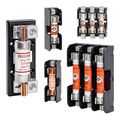
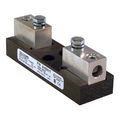


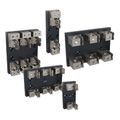
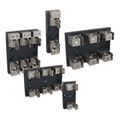


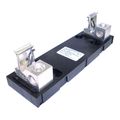



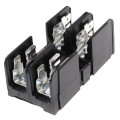
Fuse Blocks are mounting bases that hold cartridge fuses in place and connect them into a circuit, protecting motors, control panels, and electrical equipment from overcurrent damage. Blocks range from single-pole units rated up to 600 amps and 1000VAC/1000VDC for heavier industrial circuits down to compact midget and Class G blocks sized for smaller control and branch circuits. Each block is built around a specific fuse class, such as Class G, Class J, or a stud-mount style for semiconductor fuses, so the fuse and block must be matched by class and amperage rather than swapped freely between types. Stud-mount and bolt-in connection styles secure the fuse under load while keeping the block compact enough for a crowded panel. Electricians and HVAC technicians use fuse blocks throughout equipment disconnects, motor control centers, and panel boards wherever a replaceable fuse offers simpler service than a fixed breaker, since swapping a blown fuse takes less time than troubleshooting a tripped circuit's cause.
Subcategories
- Class G Fuse Blocks: Class G fuse blocks hold compact Class G fuses used in space-constrained panels and smaller branch circuits. Their smaller physical size compared to Class J or Class R blocks lets installers fit more circuits into a crowded enclosure. Class G fuses and blocks are keyed to their class, so a Class J or Class R fuse won't fit into a Class G block. Electricians commonly use them on lighting and small appliance branch circuits.
- Class J Fuse Blocks: Class J fuse blocks accept Class J fuses and are available in configurations such as 3-pole blocks rated for 30 and 60 amps at up to 600 volts. The 3-pole design protects all three legs of a three-phase circuit from a single mounting block. Class J blocks are common on motor control circuits and equipment disconnects where current-limiting fuse protection is specified. Matching the amperage rating of the block to the fuse prevents overheating at the connection point.
- Midget Fuse Blocks: Midget fuse blocks hold compact midget-style fuses, with bolt-in two-pole versions rated for 30 amps at 600 volts. Their small footprint suits control panels and equipment where space is limited but overcurrent protection is still required on multiple poles. The bolt-in connection style secures the fuse under vibration or load better than a simple clip. Technicians use midget blocks on control circuits for HVAC equipment and small motor loads.
- Single-Pole Stud-Mount Fuse Blocks: Single-pole stud-mount fuse blocks accept bolt-in fuses for heavier circuits, with models rated up to 600 amps and 1000VAC/1000VDC. The stud terminals, spaced a set distance apart, bolt directly to the fuse and the circuit conductor rather than using a spring clip. Semiconductor and other high-current fuse applications typically specify this stud-mount style when a standard clip-style block isn't rated for the current involved. Industrial and commercial installations use single-pole stud-mount blocks on heavier branch and feeder circuits.
Buying Guide
Start by identifying the fuse class already specified for the circuit, since a Class G, Class J, Class R, or midget fuse won't interchange between blocks designed for a different class. Confirm the pole count needed for the circuit. Single-pole blocks protect one conductor, while 2-pole and 3-pole blocks protect multiple legs of a circuit from a single mounting point, which matters on three-phase motor and equipment circuits. Match the amperage and voltage rating of the block to both the fuse and the circuit it protects, since a block rated below the circuit's voltage or current creates a safety hazard regardless of how well the fuse itself is rated. Fuse Blocks come in several connection styles, and clip-style or bolt-in midget blocks suit lower-current control circuits while stud-mount blocks handle heavier industrial and semiconductor fuse applications up to several hundred amps. Account for panel space before specifying a block, since Class G and midget blocks have a smaller footprint than Class J or stud-mount designs and fit more circuits into a crowded enclosure. Finally, check local and national electrical code requirements for the specific application, since fuse class and block selection often depend on the equipment being protected and the fault current at that point in the system.
Frequently Asked Questions
Can different fuse classes be used interchangeably in the same block?
Fuse Blocks are built for one specific fuse class, so a Class G, Class J, or midget fuse generally won't physically fit a block designed for a different class. Mixing classes risks either a fuse that won't seat properly or a mismatch between the block's rating and the fuse's rating. Matching the fuse class specified for the circuit to the block's class keeps the installation code-compliant.
What's the difference between a single-pole and a 3-pole fuse block?
A single-pole fuse block protects one conductor, while a 3-pole block protects all three legs of a three-phase circuit from a single mounting point. Three-pole Class J blocks are common on motor and equipment disconnects where all three phases need fuse protection. Choosing the correct pole count depends on how many conductors in the circuit require overcurrent protection.
How much current can a fuse block handle?
Amperage ratings for fuse blocks vary widely by type, from smaller midget and Class G blocks rated for lower currents up to single-pole stud-mount blocks rated for several hundred amps. The block's rating always needs to match or exceed the fuse's rating and the circuit's expected current. Checking both the block and fuse nameplate ratings before installation avoids an undersized connection.
What connection style do fuse blocks use?
Fuse blocks use either a clip-style connection, a bolt-in design, or stud-mount terminals, depending on the fuse class and current rating involved. Bolt-in midget blocks secure the fuse against vibration better than a simple clip. Stud-mount blocks bolt directly to both the fuse and the circuit conductor, a connection style used on heavier industrial and semiconductor fuse circuits.
Why use a fuse block instead of a circuit breaker?
Fuse blocks pair with replaceable cartridge fuses, which can offer current-limiting protection that some breakers don't provide, particularly in high fault-current applications. Swapping a blown fuse in a block is often quicker than diagnosing and resetting a tripped breaker. Many motor control and semiconductor protection circuits still specify fuse blocks for this current-limiting performance.
