




Class RK5 Power Fuses

 --%3E %3Csvg version='1.1' id='Fill' xmlns='http://www.w3.org/2000/svg' xmlns:xlink='http://www.w3.org/1999/xlink' x='0px' y='0px' viewBox='0 0 100 100' enable-background='new 0 0 100 100' xml:space='preserve'%3E %3Cpath fill='%23F15C02' d='M79.44,0.95H20.56C9.78,0.95,0.95,9.78,0.95,20.56v58.87c0,10.79,8.82,19.61,19.61,19.61h58.87 c10.79,0,19.61-8.83,19.61-19.61V20.56C99.05,9.78,90.22,0.95,79.44,0.95z M65.38,58.24l9.38,29.58L49.69,69.78L24.5,87.82 l9.34-29.6L8.8,39.6l30.73-0.17c0,0,6.98-19.61,10-28.93c0.54,1.36,9.88,29.1,9.88,29.1H91.2L65.38,58.24z'/%3E %3C/svg%3E)

 --%3E %3Csvg version='1.1' id='No-RB' xmlns='http://www.w3.org/2000/svg' xmlns:xlink='http://www.w3.org/1999/xlink' x='0px' y='0px' viewBox='0 0 100 100' enable-background='new 0 0 100 100' xml:space='preserve'%3E %3Cpath fill='%23CECECE' d='M79.44,0.95H20.56C9.78,0.95,0.95,9.78,0.95,20.56v58.87c0,10.79,8.82,19.61,19.61,19.61h58.87 c10.79,0,19.61-8.83,19.61-19.61V20.56C99.05,9.78,90.22,0.95,79.44,0.95z M65.38,58.24l9.38,29.58L49.69,69.78L24.5,87.82 l9.34-29.6L8.8,39.6l30.73-0.17c0,0,6.98-19.61,10-28.93c0.54,1.36,9.88,29.1,9.88,29.1H91.2L65.38,58.24z'/%3E %3C/svg%3E)
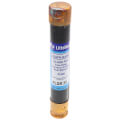
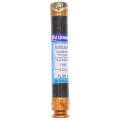
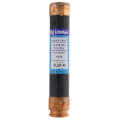


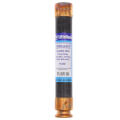
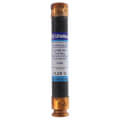
Class RK5 Power Fuses are UL Class RK5 dual-element, time-delay fuses used to protect electrical circuits, especially those containing motors. The Littelfuse examples listed here carry a 600V rating, with amperage ratings that include 0.15, 0.2, 20, 45, and 50 amps. Listed applications include service entrance switches, switchboard main and feeder switches, motor control center mains, and motor branch circuits. Indicator versions give visual blown fuse indication at a glance, so troubleshooting starts with the right circuit. Matching amperage, voltage, and fuse class to the circuit is the first step in any replacement or new install, and the time-delay design suits circuits with motor loads. Getting those three specs right matters because a fuse that doesn't match the circuit leaves the equipment unprotected or opens when it shouldn't.
Subcategories
- FLSR Dual-Element Time-Delay Fuses: FLSR series fuses are UL Class RK5 dual-element time-delay fuses. The 0.15 amp and 0.2 amp examples are rated at 600V. Listed applications include service entrance switches, switchboard main and feeder switches, and motor control center mains and motor branch circuits. The series description positions them for circuit protection, especially on circuits containing motors.
- FLSR_ID Indicator Fuses: FLSR_ID indicator fuses are Class RK5 dual-element time-delay fuses with visual blown fuse indication at a glance. The 20 amp and 50 amp versions are rated at 600V. The solid state design is described as patented. Listed applications include service entrance switches and motor control center mains and motor branch circuits.
- IDSR Indicator Fuses: The Littelfuse IDSR Indicator fuse is described as the first indicating power fuse. The 45 amp Class RK5 version is rated at 600V. Its window tells which circuit is open at a glance, so troubleshooting points to the open circuit.
Buying Guide
Start with the circuit's required amperage and voltage. The Littelfuse examples listed here are rated at 600V, with amperage values such as 0.15, 0.2, 20, 45, and 50. Match the fuse to the load, since an undersized or oversized fuse defeats the protection the circuit was designed around.
Next, confirm the fuse class and element type. When selecting Class RK5 Power Fuses, look for dual-element, time-delay construction, which the FLSR series describes as suited to circuits containing motors. The listed applications include motor control center mains and motor branch circuits.
Decide whether indicator style is worth specifying. FLSR_ID and IDSR fuses give a visual blown fuse indication, so a technician can spot the open circuit at a glance instead of testing each one. Standard FLSR fuses, such as the 0.15 and 0.2 amp examples, are listed without the indicator designation.
Finally, verify the application. The FLSR series lists service entrance switches and switchboard main and feeder switches among its applications. Check the equipment label and local code before choosing a fuse, and confirm the exact model on the product page. Replacement jobs should use the same class, voltage, and amperage as the fuse being removed unless the equipment documentation says otherwise. A correct match avoids callbacks and nuisance opening.
Frequently Asked Questions
What is a Class RK5 fuse?
Class RK5 Power Fuses are UL Class RK5 dual-element, time-delay fuses. The Littelfuse FLSR series is described as providing protection for circuits, especially those containing motors. The listed examples carry a 600V rating.
What amp ratings do the Littelfuse Class RK5 fuses come in?
Class RK5 Power Fuses from Littelfuse in this category include 0.15, 0.2, 20, 45, and 50 amp examples. All of those carry a 600V rating. Confirm the exact amperage needed against the circuit before ordering.
What's the difference between FLSR and FLSR_ID fuses?
FLSR_ID indicator fuses add visual blown fuse indication at a glance to the Class RK5 dual-element time-delay design. Standard FLSR fuses, like the 0.15 and 0.2 amp examples, are listed without that designation. Class RK5 Power Fuses with indicators help technicians find the open circuit faster.
Where are Class RK5 fuses used?
The listed applications for FLSR series Class RK5 Power Fuses include service entrance switches, switchboard main and feeder switches, motor control center mains, and motor branch circuits. Verify the application against the equipment and local code before choosing a fuse.
Can I tell which circuit opened on an IDSR fuse?
The Littelfuse IDSR Indicator fuse has a window that tells which circuit is open at a glance. The 45 amp Class RK5 version is rated at 600V. Class RK5 Power Fuses with this feature can shorten troubleshooting.
