




Filters
SORT
Product Availability –
Product Type –
Voltage –
Amperage –
Output –
Review Score –
 --%3E %3Csvg version='1.1' id='Fill' xmlns='http://www.w3.org/2000/svg' xmlns:xlink='http://www.w3.org/1999/xlink' x='0px' y='0px' viewBox='0 0 100 100' enable-background='new 0 0 100 100' xml:space='preserve'%3E %3Cpath fill='%23F15C02' d='M79.44,0.95H20.56C9.78,0.95,0.95,9.78,0.95,20.56v58.87c0,10.79,8.82,19.61,19.61,19.61h58.87 c10.79,0,19.61-8.83,19.61-19.61V20.56C99.05,9.78,90.22,0.95,79.44,0.95z M65.38,58.24l9.38,29.58L49.69,69.78L24.5,87.82 l9.34-29.6L8.8,39.6l30.73-0.17c0,0,6.98-19.61,10-28.93c0.54,1.36,9.88,29.1,9.88,29.1H91.2L65.38,58.24z'/%3E %3C/svg%3E)
 --%3E %3Csvg version='1.1' id='With-RB' xmlns='http://www.w3.org/2000/svg' xmlns:xlink='http://www.w3.org/1999/xlink' x='0px' y='0px' viewBox='0 0 100 100' enable-background='new 0 0 100 100' xml:space='preserve'%3E %3Cpath fill='%23FBC8B4' d='M79.44,0.95H20.56C9.78,0.95,0.95,9.78,0.95,20.56v58.87c0,10.79,8.82,19.61,19.61,19.61h58.87 c10.79,0,19.61-8.83,19.61-19.61V20.56C99.05,9.78,90.22,0.95,79.44,0.95z M65.38,58.24l9.38,29.58L49.69,69.78L24.5,87.82 l9.34-29.6L8.8,39.6l30.73-0.17c0,0,6.98-19.61,10-28.93c0.54,1.36,9.88,29.1,9.88,29.1H91.2L65.38,58.24z'/%3E %3C/svg%3E)
Littelfuse


 --%3E %3Csvg version='1.1' id='Half' xmlns='http://www.w3.org/2000/svg' xmlns:xlink='http://www.w3.org/1999/xlink' x='0px' y='0px' viewBox='0 0 100 100' enable-background='new 0 0 100 100' xml:space='preserve'%3E %3Cg%3E %3Cpath fill='%23F15C02' d='M30.05,70.23l3.79-12.01L8.8,39.6l30.73-0.17c0,0,6.98-19.61,10-28.93c0.54,1.36,9.88,29.1,9.88,29.1h1.58 L93.71,7.18c-3.58-3.82-8.66-6.23-14.28-6.23H20.56C9.78,0.95,0.95,9.78,0.95,20.56v58.87c0,5.41,2.22,10.32,5.79,13.88 L30.05,70.23z'/%3E %3C/g%3E %3Cpath fill='%23FBC8B4' d='M93.71,7.18L60.98,39.6H91.2L65.38,58.24l9.38,29.58L49.69,69.78L24.5,87.82l5.55-17.59L6.75,93.32 c3.55,3.54,8.44,5.73,13.82,5.73h58.87c10.79,0,19.61-8.83,19.61-19.61V20.56C99.05,15.4,97.01,10.69,93.71,7.18z'/%3E %3C/svg%3E)

 --%3E %3Csvg version='1.1' id='No-RB' xmlns='http://www.w3.org/2000/svg' xmlns:xlink='http://www.w3.org/1999/xlink' x='0px' y='0px' viewBox='0 0 100 100' enable-background='new 0 0 100 100' xml:space='preserve'%3E %3Cpath fill='%23CECECE' d='M79.44,0.95H20.56C9.78,0.95,0.95,9.78,0.95,20.56v58.87c0,10.79,8.82,19.61,19.61,19.61h58.87 c10.79,0,19.61-8.83,19.61-19.61V20.56C99.05,9.78,90.22,0.95,79.44,0.95z M65.38,58.24l9.38,29.58L49.69,69.78L24.5,87.82 l9.34-29.6L8.8,39.6l30.73-0.17c0,0,6.98-19.61,10-28.93c0.54,1.36,9.88,29.1,9.88,29.1H91.2L65.38,58.24z'/%3E %3C/svg%3E)
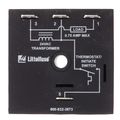


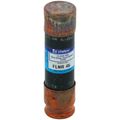
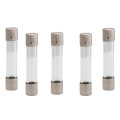

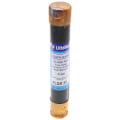

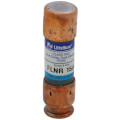

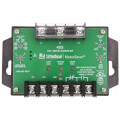
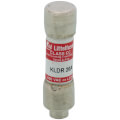
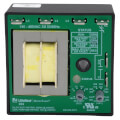
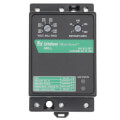
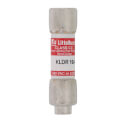
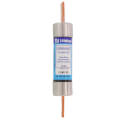
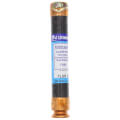

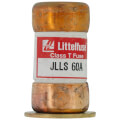
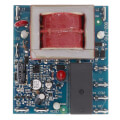
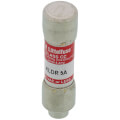

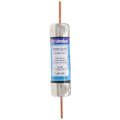
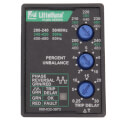
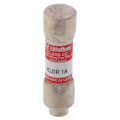
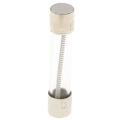
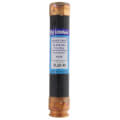

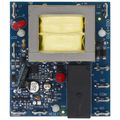


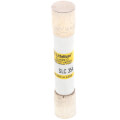

Littelfuse traces its roots to 1927, when Edward V. Sundt founded Littelfuse Laboratories in Chicago after encountering repeated electrical failures in diagnostic equipment at previous employers. Sundt's solution, an early protective fuse designed to regulate current and prevent damage to sensitive equipment, became the company's first product and the foundation of a business built around circuit protection.
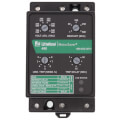
Littelfuse has grown into a manufacturer of fuses, protection relays, switches, and sensing devices serving industrial, automotive, and electronics markets, with continued headquarters in Chicago, Illinois. The company's industrial segment supplies fuses and protective devices used across HVAC equipment, factory automation, and other applications where motors and control circuits need protection from overcurrent conditions.
Product Lines
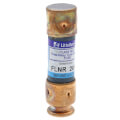
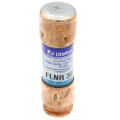
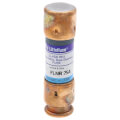
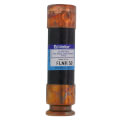
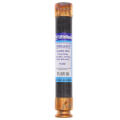
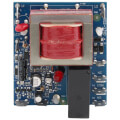
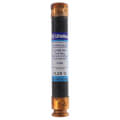
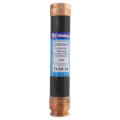
SupplyHouse carries a range of Littelfuse fuses used in HVAC control circuits, including Class RK5 dual-element time-delay fuses in the FLNR series, sized from 20 to 35 amps at 250 volts, and in-line time-delay fuses such as the LMF03.2, rated for 3.2 amps at 300 volts and sized for ballast transformer inrush current. These products cover typical residential and light commercial HVAC applications, from protecting compressor and blower motor circuits to safeguarding low-voltage transformers and control boards.
Why Contractors Specify Littelfuse
Dual-element time-delay construction allows a fuse to ride through the momentary inrush current a motor draws at startup, while still reacting quickly to a genuine overload or short circuit. On HVAC service calls, that distinction matters, since a nuisance fuse failure can otherwise be mistaken for a larger mechanical problem and lead to unnecessary part replacement.
Standardized UL fuse classes and consistent amperage and voltage markings make cross-reference straightforward, so a technician can match a replacement fuse to the original rating printed on the equipment nameplate or fuse holder regardless of which brand originally shipped with the unit.
How to Choose Littelfuse Products
Selecting a replacement fuse starts with the equipment nameplate or the marking on the original fuse: amperage, voltage rating, and UL class, such as RK5, should all match before a fuse is installed. Dual-element time-delay fuses are the appropriate choice for motor circuits that see a startup inrush, while fast-acting fuses suit circuits without that inrush characteristic.
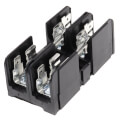
Physical fuse style also matters. In-line fuses, ferrule-style fuses, and larger blade-style Class RK5 fuses are not interchangeable with each other, so confirming the fuse holder style on the equipment before ordering a replacement avoids a second trip for the correct part.
Frequently Asked Questions
What fuse class is most common in HVAC motor circuits?
Class RK5 dual-element time-delay fuses, such as the Littelfuse FLNR series, are commonly used to protect motor circuits because they tolerate momentary starting inrush while still opening on a sustained overload.
Can a Littelfuse fuse replace a fuse from another manufacturer?
In most cases, yes, provided the replacement matches the original fuse's UL class, amperage rating, voltage rating, and physical size and style.
What is the difference between a fast-acting and a time-delay fuse?
A time-delay fuse allows a brief period of higher current, such as motor starting inrush, before opening, while a fast-acting fuse opens quickly once its rated current is exceeded, with no built-in delay.
Where are Littelfuse fuses typically installed in HVAC equipment?
They are commonly found protecting low-voltage control transformers, compressor and blower motor circuits, and other control board components inside air handlers, condensing units, and furnaces.
How is the correct amperage determined for a replacement fuse?
The amperage should match what is printed on the equipment nameplate, wiring diagram, or the fuse being replaced. Installing a higher-rated fuse than specified removes the intended level of circuit protection.
