




Copper 90° Elbow w/ Drain


 --%3E %3Csvg version='1.1' id='No-RB' xmlns='http://www.w3.org/2000/svg' xmlns:xlink='http://www.w3.org/1999/xlink' x='0px' y='0px' viewBox='0 0 100 100' enable-background='new 0 0 100 100' xml:space='preserve'%3E %3Cpath fill='%23CECECE' d='M79.44,0.95H20.56C9.78,0.95,0.95,9.78,0.95,20.56v58.87c0,10.79,8.82,19.61,19.61,19.61h58.87 c10.79,0,19.61-8.83,19.61-19.61V20.56C99.05,9.78,90.22,0.95,79.44,0.95z M65.38,58.24l9.38,29.58L49.69,69.78L24.5,87.82 l9.34-29.6L8.8,39.6l30.73-0.17c0,0,6.98-19.61,10-28.93c0.54,1.36,9.88,29.1,9.88,29.1H91.2L65.38,58.24z'/%3E %3C/svg%3E)

 --%3E %3Csvg version='1.1' id='Fill' xmlns='http://www.w3.org/2000/svg' xmlns:xlink='http://www.w3.org/1999/xlink' x='0px' y='0px' viewBox='0 0 100 100' enable-background='new 0 0 100 100' xml:space='preserve'%3E %3Cpath fill='%23F15C02' d='M79.44,0.95H20.56C9.78,0.95,0.95,9.78,0.95,20.56v58.87c0,10.79,8.82,19.61,19.61,19.61h58.87 c10.79,0,19.61-8.83,19.61-19.61V20.56C99.05,9.78,90.22,0.95,79.44,0.95z M65.38,58.24l9.38,29.58L49.69,69.78L24.5,87.82 l9.34-29.6L8.8,39.6l30.73-0.17c0,0,6.98-19.61,10-28.93c0.54,1.36,9.88,29.1,9.88,29.1H91.2L65.38,58.24z'/%3E %3C/svg%3E)
 --%3E %3Csvg version='1.1' id='Half' xmlns='http://www.w3.org/2000/svg' xmlns:xlink='http://www.w3.org/1999/xlink' x='0px' y='0px' viewBox='0 0 100 100' enable-background='new 0 0 100 100' xml:space='preserve'%3E %3Cg%3E %3Cpath fill='%23F15C02' d='M30.05,70.23l3.79-12.01L8.8,39.6l30.73-0.17c0,0,6.98-19.61,10-28.93c0.54,1.36,9.88,29.1,9.88,29.1h1.58 L93.71,7.18c-3.58-3.82-8.66-6.23-14.28-6.23H20.56C9.78,0.95,0.95,9.78,0.95,20.56v58.87c0,5.41,2.22,10.32,5.79,13.88 L30.05,70.23z'/%3E %3C/g%3E %3Cpath fill='%23FBC8B4' d='M93.71,7.18L60.98,39.6H91.2L65.38,58.24l9.38,29.58L49.69,69.78L24.5,87.82l5.55-17.59L6.75,93.32 c3.55,3.54,8.44,5.73,13.82,5.73h58.87c10.79,0,19.61-8.83,19.61-19.61V20.56C99.05,15.4,97.01,10.69,93.71,7.18z'/%3E %3C/svg%3E)
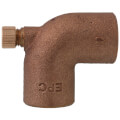

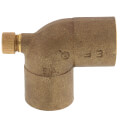

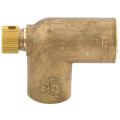
Copper 90° Elbow w/ Drain fittings are cast bronze DWV elbows that change a drain, waste, or vent line's direction by 90 degrees while adding a threaded port for draining trapped water or connecting a test tee. The NIBCO 807 elbow, for example, pairs a solder cup on one end with a female NPT thread on the other, letting installers transition from a soldered copper joint straight into a threaded connection at the same fitting. Pairing a solder cup with a female NPT thread on one fitting removes the need for a separate coupling when a drain line needs both a direction change and a threaded drain or cleanout access point. Plumbers use these elbows most often on water heater relief lines, condensate drains, and low points in hydronic piping where trapped water needs a way out. Choosing the correct configuration, sweat by threaded versus threaded by sweat, depends on which side of the joint already has pipe in place and which side needs a fitting connection.
Subcategories
- Sweat x FNPT Drain Elbows: Sweat by female NPT drain elbows have a solder cup on the inlet and a female NPT threaded drain port on the outlet, matching the configuration used on the NIBCO 807 bronze DWV elbow. Plumbers use this style when a soldered copper branch line needs a threaded connection point for a plug, test tee, or drain valve. The threaded port also works as a cleanout access point on a drain line, and installers commonly specify this elbow for water heater pan drains and relief valve discharge lines.
- FTG x Sweat Drain Elbows: FTG by sweat drain elbows use a fitting, or street, end on one side and a solder cup on the other, letting the elbow fit directly into another fitting's hub without an extra coupling. Installers use this style in tight spaces where every joint counts toward clearance, such as inside a wall cavity or under a sink. The compact profile shortens the overall run compared to a standard sweat by sweat elbow with an added coupling. Drain ports on these elbows still provide a threaded access point for testing or clearing a line.
- Sweat x Sweat Drain Elbows: Sweat by sweat drain elbows use a solder cup on both ends of the direction change while adding a separate threaded drain tap on the fitting body. Installers use this style when both sides of the connection are soldered copper and only the drain tap needs a threaded fitting. The elbow still handles the 90 degree direction change in a single fitting instead of stacking a standard elbow with a separate tee. Drain taps on these elbows commonly accept a plug, valve, or gauge fitting.
Buying Guide
Selecting a copper elbow with a drain starts with identifying which side of the connection already has pipe versus which side needs a fitting or threaded port. A sweat by female NPT configuration works when a soldered copper line needs to transition into a threaded plug, valve, or test tee at the direction change. An FTG by sweat configuration works better in tight quarters, since the fitting end seats directly into another fitting's hub without an additional coupling, shortening the overall assembly. Copper 90° Elbow w/ Drain fittings show up most often on water heater temperature and pressure relief discharge lines, condensate drains from cooling equipment, and low points in a hydronic loop where trapped water needs an exit path. Bronze construction resists the corrosion that a straight copper elbow without a bronze cap can develop over years of exposure to condensate or relief water. Matching pipe size to the existing line matters just as much as connection type, since a mismatched size adds a bushing or reducer that the elbow alone would have handled. Checking local plumbing code for required drain routing and termination points before finalizing the fitting selection keeps the installation compliant. For most residential and light commercial jobs, a sweat by FNPT elbow covers the majority of drain and relief applications, while FTG by sweat variants solve space-constrained installs.
Frequently Asked Questions
What's the difference between a sweat by FNPT and FTG by sweat copper drain elbow?
A sweat by FNPT copper drain elbow has a solder cup on one end and a female NPT threaded port on the other, letting a soldered line transition into a threaded plug, valve, or test tee. An FTG by sweat elbow instead has a fitting end that seats directly into another fitting's hub, which shortens the assembly in tight spaces. Both styles still provide a threaded drain or cleanout port at the elbow.
Where are copper elbows with a drain typically installed?
Copper 90 degree elbows with a drain typically show up on water heater relief valve discharge lines, condensate drains from cooling equipment, and low points in hydronic piping loops. The threaded drain port on the elbow gives trapped water or discharge a path out of the line. Bronze construction on these elbows holds up well against the corrosion that relief and condensate water can cause over time.
Why use a bronze drain elbow instead of a standard copper elbow?
Bronze drain elbows, like the NIBCO 807, combine a solder cup with a female NPT thread in one fitting, removing the need for a separate coupling at a drain or relief point. Standard copper elbows without a threaded port require an additional fitting to add drain access. Bronze construction also resists corrosion better than plain copper at threaded connections exposed to condensate or relief water.
What sizes do copper drain elbows come in?
Copper drain elbows are available in the common residential and light commercial plumbing sizes used for water heater relief lines and condensate drains. Matching the elbow size to the existing pipe run avoids adding a bushing or reducer at the connection. Checking the specific size against the drain line's existing pipe diameter before ordering keeps the installation straightforward.
Do copper drain elbows meet plumbing code requirements?
Copper and bronze drain elbows used on relief and condensate lines need to meet local plumbing code requirements for drain routing and termination. Confirming code requirements for the specific application, such as water heater relief discharge or condensate drainage, before finalizing the fitting keeps the installation compliant. Local code officials or the SupplyHouse technical team can confirm requirements for a specific jurisdiction.
