




Corrosion Grenades

 --%3E %3Csvg version='1.1' id='No-RB' xmlns='http://www.w3.org/2000/svg' xmlns:xlink='http://www.w3.org/1999/xlink' x='0px' y='0px' viewBox='0 0 100 100' enable-background='new 0 0 100 100' xml:space='preserve'%3E %3Cpath fill='%23CECECE' d='M79.44,0.95H20.56C9.78,0.95,0.95,9.78,0.95,20.56v58.87c0,10.79,8.82,19.61,19.61,19.61h58.87 c10.79,0,19.61-8.83,19.61-19.61V20.56C99.05,9.78,90.22,0.95,79.44,0.95z M65.38,58.24l9.38,29.58L49.69,69.78L24.5,87.82 l9.34-29.6L8.8,39.6l30.73-0.17c0,0,6.98-19.61,10-28.93c0.54,1.36,9.88,29.1,9.88,29.1H91.2L65.38,58.24z'/%3E %3C/svg%3E)

 --%3E %3Csvg version='1.1' id='Fill' xmlns='http://www.w3.org/2000/svg' xmlns:xlink='http://www.w3.org/1999/xlink' x='0px' y='0px' viewBox='0 0 100 100' enable-background='new 0 0 100 100' xml:space='preserve'%3E %3Cpath fill='%23F15C02' d='M79.44,0.95H20.56C9.78,0.95,0.95,9.78,0.95,20.56v58.87c0,10.79,8.82,19.61,19.61,19.61h58.87 c10.79,0,19.61-8.83,19.61-19.61V20.56C99.05,9.78,90.22,0.95,79.44,0.95z M65.38,58.24l9.38,29.58L49.69,69.78L24.5,87.82 l9.34-29.6L8.8,39.6l30.73-0.17c0,0,6.98-19.61,10-28.93c0.54,1.36,9.88,29.1,9.88,29.1H91.2L65.38,58.24z'/%3E %3C/svg%3E)
 --%3E %3Csvg version='1.1' id='With-RB' xmlns='http://www.w3.org/2000/svg' xmlns:xlink='http://www.w3.org/1999/xlink' x='0px' y='0px' viewBox='0 0 100 100' enable-background='new 0 0 100 100' xml:space='preserve'%3E %3Cpath fill='%23FBC8B4' d='M79.44,0.95H20.56C9.78,0.95,0.95,9.78,0.95,20.56v58.87c0,10.79,8.82,19.61,19.61,19.61h58.87 c10.79,0,19.61-8.83,19.61-19.61V20.56C99.05,9.78,90.22,0.95,79.44,0.95z M65.38,58.24l9.38,29.58L49.69,69.78L24.5,87.82 l9.34-29.6L8.8,39.6l30.73-0.17c0,0,6.98-19.61,10-28.93c0.54,1.36,9.88,29.1,9.88,29.1H91.2L65.38,58.24z'/%3E %3C/svg%3E)
 --%3E %3Csvg version='1.1' id='Half' xmlns='http://www.w3.org/2000/svg' xmlns:xlink='http://www.w3.org/1999/xlink' x='0px' y='0px' viewBox='0 0 100 100' enable-background='new 0 0 100 100' xml:space='preserve'%3E %3Cg%3E %3Cpath fill='%23F15C02' d='M30.05,70.23l3.79-12.01L8.8,39.6l30.73-0.17c0,0,6.98-19.61,10-28.93c0.54,1.36,9.88,29.1,9.88,29.1h1.58 L93.71,7.18c-3.58-3.82-8.66-6.23-14.28-6.23H20.56C9.78,0.95,0.95,9.78,0.95,20.56v58.87c0,5.41,2.22,10.32,5.79,13.88 L30.05,70.23z'/%3E %3C/g%3E %3Cpath fill='%23FBC8B4' d='M93.71,7.18L60.98,39.6H91.2L65.38,58.24l9.38,29.58L49.69,69.78L24.5,87.82l5.55-17.59L6.75,93.32 c3.55,3.54,8.44,5.73,13.82,5.73h58.87c10.79,0,19.61-8.83,19.61-19.61V20.56C99.05,15.4,97.01,10.69,93.71,7.18z'/%3E %3C/svg%3E)
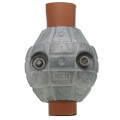
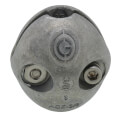

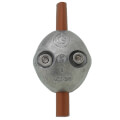
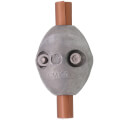
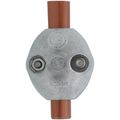
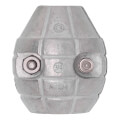
Corrosion grenades are sacrificial anode devices installed inside a water heater tank, boiler, or hydronic system to slow internal corrosion by attracting the corrosive reaction away from the tank wall itself. Made from magnesium, aluminum, or zinc, they work through electrolysis, corroding in place of the surrounding metal so the tank or vessel lasts longer before rust perforates it. Contractors typically install or replace one during routine water heater service, especially on tanks in areas with aggressive water chemistry that eats through a standard anode rod faster than usual.
Selecting the right material and size for the water heater or system in question keeps the sacrificial reaction working as intended, since a grenade too small for the tank volume wears out well before its expected service interval. Replacing a spent grenade before it fully depletes protects the tank from the accelerated corrosion that follows once the sacrificial metal is gone.
Subcategories
- Magnesium Corrosion Grenades: Magnesium grenades provide the strongest sacrificial reaction and are the standard choice for tanks with soft water, since magnesium corrodes fastest and offers the most complete protection in that water chemistry. They tend to deplete quicker than aluminum or zinc versions, so tanks with soft water may need more frequent inspection.
- Aluminum Corrosion Grenades: Aluminum grenades last longer than magnesium in most water conditions and work well in hard water areas where magnesium tends to develop a coating that slows its reaction. They're a common substitute when a magnesium grenade has been depleting faster than expected.
- Zinc Corrosion Grenades: Zinc grenades offer a milder reaction and are often chosen for systems where a sulfur odor has been a problem with a magnesium anode. They provide somewhat less aggressive protection but reduce the odor-causing reaction that magnesium can trigger in certain water supplies.
- Grenade Adapters & Fittings: Corrosion grenades install through a tank's anode port, drain valve opening, or a dedicated fitting depending on the water heater or boiler model, and the correct adapter keeps the grenade seated and sealed. Picking the wrong thread size or fitting style is a common reason a grenade doesn't seat fully in the port.
Buying Guide
Choosing the right corrosion grenade starts with matching the anode material to the water chemistry at the job site rather than defaulting to whatever was installed originally, since hard water, soft water, and sulfur-heavy water each respond differently to magnesium, aluminum, and zinc.
Tank volume and grenade length both need to line up with the vessel being protected; a grenade too short for the tank leaves part of the interior without adequate sacrificial protection, while one too long can be difficult to seat through a standard anode port.
Corrosion grenades that deplete faster than expected are usually a sign that the water chemistry calls for a different material rather than a defective part, so switching material type is often the better fix compared to simply installing another grenade of the same kind.
Checking thread size and port style against the tank or boiler model before ordering avoids a fitting mismatch, since not every port accepts every adapter style without a bushing or reducer.
Replacing a grenade on a set interval rather than waiting for full depletion protects the tank consistently, particularly on water heaters that have already shown early signs of tank corrosion during inspection.
Frequently Asked Questions
What is a corrosion grenade used for?
A corrosion grenade is a sacrificial anode installed inside a water heater tank or hydronic system to attract corrosion away from the tank wall. It corrodes in place of the surrounding metal, extending the life of the tank.
How do I know which anode material to choose?
Water chemistry drives the choice: magnesium works well in soft water, aluminum tends to last longer in hard water, and zinc reduces sulfur odor issues that magnesium can trigger. Matching material to local water conditions gives the most consistent protection.
Why did my last corrosion grenade wear out faster than expected?
Rapid depletion is usually a sign that the water chemistry doesn't match the anode material rather than a defective part. Switching to a different material, such as aluminum instead of magnesium, often solves the problem.
Can a corrosion grenade cause a sulfur smell in the water?
Yes, magnesium anodes can react with certain bacteria in the water supply to produce a sulfur odor. Switching to a zinc grenade typically reduces or eliminates that reaction.
How often should a corrosion grenade be replaced?
Replacement interval depends on water chemistry and tank size, but checking the grenade during routine water heater service and replacing it before full depletion keeps the tank protected consistently.
