




Curb Stops
Water Works
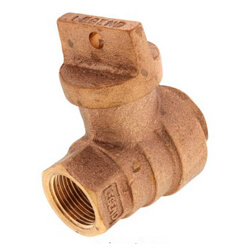


| PRODUCT | SIZE | SINGLE UNIT | BOX UP & SAVE | STOCK STATUS | LIST | COMPARE |
|---|

Curb stops are underground shutoff valves installed on the water service line between the municipal main and a building, typically located near the property line or curb. A curb stop lets a utility or plumber shut off water to an individual property without affecting service to neighboring buildings, and without needing access inside the structure itself. Operated from the surface with a long curb key that reaches down through a curb box to the valve, a curb stop stays buried and out of the way during normal operation.
Plumbers work with curb stops most often during water service repairs, meter replacements, or full service line replacements, where isolating the property's water supply at the curb is the first step before any work begins downstream. Matching the correct valve pattern and connection type to the existing service line keeps the shutoff sealing properly after years underground.
Subcategories
- Ball Curb Stops: Ball curb stops use a quarter-turn ball valve design, offering a full-bore opening with minimal flow restriction and a quick on-off operation with the curb key. Utilities and plumbers favor ball-style stops for their reliable long-term sealing in buried service applications.
- Compression Curb Stops: Compression curb stops connect to copper or plastic service line using a compression fitting rather than solder or threads, simplifying installation in a trench without needing heat or pipe threading tools. This style suits replacement jobs where working space in the trench is limited.
- Curb Stop Repair Parts: Repair parts, including replacement stems, seals, and operating nuts, let a utility or contractor restore an existing curb stop to working condition without excavating and replacing the entire valve. Repairing in place saves significant labor compared to a full valve replacement.
- Curb Boxes & Extension Rods: Curb boxes provide the surface-accessible housing that lets a curb key reach down to operate the buried valve, while extension rods adjust reach for varying burial depths. Selecting the correct extension length keeps the operating nut positioned correctly at the curb box opening.
Buying Guide
Selecting the correct curb stop starts with matching connection type and size to the existing service line, whether that's a compression fitting for copper or plastic pipe, or a threaded connection for older galvanized or specific municipal standards. Confirming pipe material and outside diameter before ordering avoids a fitting that doesn't seal properly in the trench.
Valve pattern compatibility matters because different municipalities and utilities standardize on specific curb stop patterns, such as Ford, Minneapolis, or Mueller styles, each with distinct dimensions and operating nut configurations. Installing a valve pattern that doesn't match local utility standards can create compatibility issues with the curb key and curb box already in use in that service area.
Burial depth determines the correct curb box and extension rod length needed to reach the valve from the surface. Contractors measure the actual depth of the service line at the specific job site rather than assuming a standard depth, since frost line requirements and existing infrastructure vary by region.
Material selection rounds out the decision. Bronze and brass curb stops resist the corrosion that comes with decades of underground service better than lower-grade alternatives, which matters given that a curb stop typically stays in place for the working life of the service line rather than getting periodic replacement.
Frequently Asked Questions
Who is responsible for maintaining a curb stop, the homeowner or the utility?
This varies by municipality, since some utilities own and maintain the curb stop as part of the public water main infrastructure, while others consider it the property owner's responsibility once it's on private property. Checking local utility policy clarifies which applies to a specific address.
How do you operate a curb stop if it's buried underground?
A curb key, a long T-handled tool, extends down through the curb box to reach the operating nut on the valve, letting a technician turn the valve on or off from the surface without excavating.
What's the difference between a curb stop and the main shutoff valve inside a house?
A curb stop sits underground near the property line and controls water to the entire service line, while an interior main shutoff valve is located where the line enters the building and only affects plumbing inside the structure. Shutting off the curb stop isolates the property before the interior valve is even reached.
How do I know which valve pattern my area uses?
Local utilities typically standardize on one pattern, such as Ford, Minneapolis, or Mueller, so checking with the water utility or matching an existing curb box and key already in service confirms the correct pattern for a replacement.
What are signs that a curb stop needs repair or replacement?
A curb stop that won't fully shut off water flow, won't turn with a curb key, or shows visible leaking at the curb box are all signs the valve or its seals have worn out and need service.
