



Water Works
Water works covers the components used at the connection point between a municipal water main and a building's service line, including corporation stops, curb stops, meter setters, and the yokes and saddles that complete the tap.
Corporation stops are the valves installed directly on the water main, while curb stops sit near the property line to give a utility or property owner a way to shut off service without excavating at the main. Service saddles clamp onto an existing main to create a tap point without cutting the pipe.
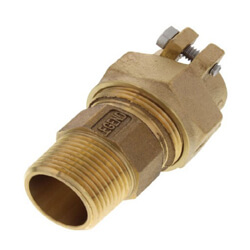
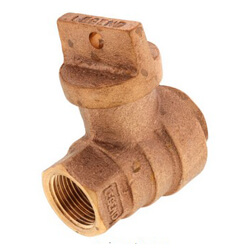
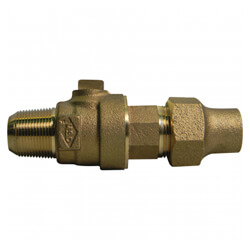
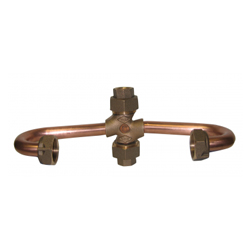

Subcategories
- Copper Meter Setters: Copper meter setters hold the water meter in place between the service line and the building's plumbing, typically including integrated shutoff valves on each side of the meter. Setter length and valve configuration need to match the meter size and the utility's spacing requirements.
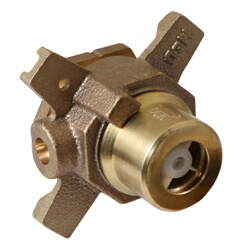
- Corporation Stops: Corporation stops are the valves installed directly on the water main that control flow into the service line, usually opened and closed with a specialized key rather than a standard handle. Thread type on a corporation stop needs to match both the main tap and the service line fitting on the other side.
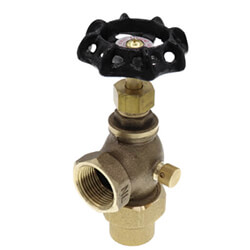
- Curb Stops: Curb stops are the shutoff valves located near the property line, giving the utility or property owner a way to isolate water service without accessing the main. Curb stops are commonly paired with a curb box that provides street-level access to the valve.
- Iron Yokes: Iron yokes support and align the meter setter assembly inside the meter pit or basement installation, keeping the setter from shifting under the weight of the meter and connected piping. Yoke size needs to match the setter it's paired with.
- Meter Valves: Meter valves are the shutoff valves built into or paired with a meter setter, allowing the meter to be isolated for replacement or testing without shutting down the entire service line. Valve type varies between ball, gate, and specialized meter valve designs depending on the utility's standard.
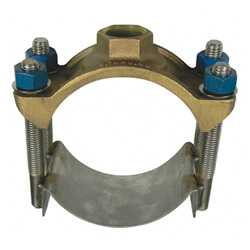
- Service Saddles: Service saddles clamp onto an existing water main to create a tap point for a new service line without cutting into the main pipe. Saddle size and material need to match the main's outer diameter and pipe material for a proper seal.
Buying Guide
Water works parts are governed largely by the local water utility's standards, so confirming the utility's approved materials and fitting types before ordering is the first step on most jobs. A part that meets general plumbing code may still be rejected by a utility inspector if it doesn't match their specific standard.
Corporation stops and curb stops need thread types that match both the main tap and the service line pipe material, whether that's copper, PEX, or polyethylene. Mixing thread standards between the stop and the service line is a common cause of installation delays.
Meter setter selection depends on the meter size the utility requires and the physical spacing between the service line and the building's interior plumbing. Setters are available in a range of lengths and valve configurations to fit different meter pit depths and installation layouts.
Material choice, typically bronze, copper, or ductile iron, should match what the local utility specifies and what's compatible with the existing main. Bronze and copper resist corrosion well in most soil conditions, while ductile iron is common on larger commercial services.
Service saddles need to be sized to the main's actual outer diameter, not just its nominal pipe size, since actual outer diameter varies by pipe material and manufacturer. Measuring the main directly before ordering a saddle avoids a poor seal at the tap.
Frequently Asked Questions
What's the difference between a corporation stop and a curb stop?
A corporation stop is located at the water main and typically requires a specialized key to operate, while a curb stop sits closer to the property line and is more accessible for routine shutoffs. Both control the same service line but at different points along its length.
Do water works fittings need to meet local utility standards?
Yes, most utilities maintain their own approved materials list separate from general plumbing code, and installations that don't match can be rejected during inspection. Checking with the utility before ordering avoids a costly return trip.
How is a service saddle sized for a specific main?
Sizing is based on the main's actual outer diameter, which can vary by pipe material even at the same nominal size. Measuring the main directly is more reliable than relying on nominal size alone.
What material is typically used for meter setters?
Bronze and copper are common for their corrosion resistance, though the specific requirement depends on the local utility's standard and the pipe materials being connected. Some utilities also specify plastic or composite setters for certain applications.
Can a curb stop be operated without a special tool?
Most curb stops require a curb key to operate from street level through a curb box, since the valve itself is typically buried below grade. Attempting to operate one without the proper key or access can damage the valve stem.
Resources
Subcategories
- Copper Meter Setters: Copper meter setters hold the water meter in place between the service line and the building's plumbing, typically including integrated shutoff valves on each side of the meter. Setter length and valve configuration need to match the meter size and the utility's spacing requirements.
- Corporation Stops: Corporation stops are the valves installed directly on the water main that control flow into the service line, usually opened and closed with a specialized key rather than a standard handle. Thread type on a corporation stop needs to match both the main tap and the service line fitting on the other side.
- Curb Stops: Curb stops are the shutoff valves located near the property line, giving the utility or property owner a way to isolate water service without accessing the main. Curb stops are commonly paired with a curb box that provides street-level access to the valve.
- Iron Yokes: Iron yokes support and align the meter setter assembly inside the meter pit or basement installation, keeping the setter from shifting under the weight of the meter and connected piping. Yoke size needs to match the setter it's paired with.
- Meter Valves: Meter valves are the shutoff valves built into or paired with a meter setter, allowing the meter to be isolated for replacement or testing without shutting down the entire service line. Valve type varies between ball, gate, and specialized meter valve designs depending on the utility's standard.
- Service Saddles: Service saddles clamp onto an existing water main to create a tap point for a new service line without cutting into the main pipe. Saddle size and material need to match the main's outer diameter and pipe material for a proper seal.
Buying Guide
Water works parts are governed largely by the local water utility's standards, so confirming the utility's approved materials and fitting types before ordering is the first step on most jobs. A part that meets general plumbing code may still be rejected by a utility inspector if it doesn't match their specific standard.
Corporation stops and curb stops need thread types that match both the main tap and the service line pipe material, whether that's copper, PEX, or polyethylene. Mixing thread standards between the stop and the service line is a common cause of installation delays.
Meter setter selection depends on the meter size the utility requires and the physical spacing between the service line and the building's interior plumbing. Setters are available in a range of lengths and valve configurations to fit different meter pit depths and installation layouts.
Material choice, typically bronze, copper, or ductile iron, should match what the local utility specifies and what's compatible with the existing main. Bronze and copper resist corrosion well in most soil conditions, while ductile iron is common on larger commercial services.
Service saddles need to be sized to the main's actual outer diameter, not just its nominal pipe size, since actual outer diameter varies by pipe material and manufacturer. Measuring the main directly before ordering a saddle avoids a poor seal at the tap.
Frequently Asked Questions
What's the difference between a corporation stop and a curb stop?
A corporation stop is located at the water main and typically requires a specialized key to operate, while a curb stop sits closer to the property line and is more accessible for routine shutoffs. Both control the same service line but at different points along its length.
Do water works fittings need to meet local utility standards?
Yes, most utilities maintain their own approved materials list separate from general plumbing code, and installations that don't match can be rejected during inspection. Checking with the utility before ordering avoids a costly return trip.
How is a service saddle sized for a specific main?
Sizing is based on the main's actual outer diameter, which can vary by pipe material even at the same nominal size. Measuring the main directly is more reliable than relying on nominal size alone.
What material is typically used for meter setters?
Bronze and copper are common for their corrosion resistance, though the specific requirement depends on the local utility's standard and the pipe materials being connected. Some utilities also specify plastic or composite setters for certain applications.
Can a curb stop be operated without a special tool?
Most curb stops require a curb key to operate from street level through a curb box, since the valve itself is typically buried below grade. Attempting to operate one without the proper key or access can damage the valve stem.