




Filters
SORT
Product Availability –
Tank Volume –
Connection Size –
Diameter (Inches) –
Length (Inches) –
Review Score –
 --%3E %3Csvg version='1.1' id='Fill' xmlns='http://www.w3.org/2000/svg' xmlns:xlink='http://www.w3.org/1999/xlink' x='0px' y='0px' viewBox='0 0 100 100' enable-background='new 0 0 100 100' xml:space='preserve'%3E %3Cpath fill='%23F15C02' d='M79.44,0.95H20.56C9.78,0.95,0.95,9.78,0.95,20.56v58.87c0,10.79,8.82,19.61,19.61,19.61h58.87 c10.79,0,19.61-8.83,19.61-19.61V20.56C99.05,9.78,90.22,0.95,79.44,0.95z M65.38,58.24l9.38,29.58L49.69,69.78L24.5,87.82 l9.34-29.6L8.8,39.6l30.73-0.17c0,0,6.98-19.61,10-28.93c0.54,1.36,9.88,29.1,9.88,29.1H91.2L65.38,58.24z'/%3E %3C/svg%3E)
 --%3E %3Csvg version='1.1' id='With-RB' xmlns='http://www.w3.org/2000/svg' xmlns:xlink='http://www.w3.org/1999/xlink' x='0px' y='0px' viewBox='0 0 100 100' enable-background='new 0 0 100 100' xml:space='preserve'%3E %3Cpath fill='%23FBC8B4' d='M79.44,0.95H20.56C9.78,0.95,0.95,9.78,0.95,20.56v58.87c0,10.79,8.82,19.61,19.61,19.61h58.87 c10.79,0,19.61-8.83,19.61-19.61V20.56C99.05,9.78,90.22,0.95,79.44,0.95z M65.38,58.24l9.38,29.58L49.69,69.78L24.5,87.82 l9.34-29.6L8.8,39.6l30.73-0.17c0,0,6.98-19.61,10-28.93c0.54,1.36,9.88,29.1,9.88,29.1H91.2L65.38,58.24z'/%3E %3C/svg%3E)
Price Range –
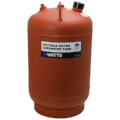
DETA Potable Water Expansion Tanks

 --%3E %3Csvg version='1.1' id='No-RB' xmlns='http://www.w3.org/2000/svg' xmlns:xlink='http://www.w3.org/1999/xlink' x='0px' y='0px' viewBox='0 0 100 100' enable-background='new 0 0 100 100' xml:space='preserve'%3E %3Cpath fill='%23CECECE' d='M79.44,0.95H20.56C9.78,0.95,0.95,9.78,0.95,20.56v58.87c0,10.79,8.82,19.61,19.61,19.61h58.87 c10.79,0,19.61-8.83,19.61-19.61V20.56C99.05,9.78,90.22,0.95,79.44,0.95z M65.38,58.24l9.38,29.58L49.69,69.78L24.5,87.82 l9.34-29.6L8.8,39.6l30.73-0.17c0,0,6.98-19.61,10-28.93c0.54,1.36,9.88,29.1,9.88,29.1H91.2L65.38,58.24z'/%3E %3C/svg%3E)

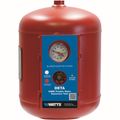
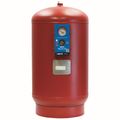

DETA potable water expansion tanks are pre-pressurized tanks that absorb the added volume created when water expands during heating in a closed commercial or industrial system. Each tank pairs a carbon steel shell with a fixed butyl bladder rated FDA-approved for potable water, so the water never contacts the metal tank wall. The line ships precharged to 40 psi, with a standard tire valve that lets a tech field-adjust the charge to match a system's static pressure before tie-in. Capacities run from roughly 5 gallons up to 125 gallons, covering a single water heater tie-in on the small end and a multi-unit recirculation loop on the large end. Every tank carries ASME Section VIII construction and meets NSF/ANSI Standard 61 for potable water contact. Matching tank size and precharge to the system keeps the T&P relief valve from weeping every time the water heater fires, which is the most common complaint that sends a customer looking for a bigger tank.
Subcategories
- Small Capacity Tanks: Small capacity DETA tanks cover the lower end of the line, sized for a single water heater installation in a light commercial building. A tech typically specs one of these for a standalone tank-type water heater where floor or wall space near the heater is limited. Like the rest of the line, they ship precharged to 40 psi and use a fixed butyl bladder rated for potable water contact.
- Mid Capacity Tanks: Mid capacity DETA tanks handle larger single water heaters or smaller multi-unit buildings where more than one fixture group draws from a shared hot water loop. They sit in mechanical rooms serving apartment buildings, small hotels, or multi-fixture commercial restrooms. The carbon steel shell and butyl bladder construction stays consistent across the line, so the sizing decision comes down to system volume rather than material differences.
- Large Capacity Tanks: Large capacity DETA tanks sit at the top of the line, built for high-volume commercial and industrial hot water systems with heavy simultaneous draw. Multi-unit residential towers, hospitals, and large commercial kitchens are typical applications where thermal expansion volume is too high for a mid-size tank to handle. Every size in the line carries the same ASME Section VIII and NSF/ANSI 61 certifications, so stepping up to a larger tank doesn't change the compliance picture for the job.
Buying Guide
Sizing starts with the water heater's storage capacity and the system's static supply pressure, since an undersized tank lets the T&P relief valve open every heating cycle while an oversized one wastes mechanical room space without adding protection. Check the incoming water pressure with a gauge before ordering, then match the tank's precharge to that reading rather than leaving it at the factory-set 40 psi if the building's static pressure runs higher or lower.
Confirm the connection type and mounting orientation the job needs before ordering, since some installations call for a floor-standing tank and others need one that ties directly into overhead piping. DETA Potable Water Expansion Tanks all use a stainless steel NPT male inlet, which keeps the connection consistent across the lineup regardless of capacity.
Check local plumbing code for any requirement on tank certification before finalizing a spec, since some jurisdictions require NSF/ANSI 61 listing for anything touching the potable supply. Every tank in this line already carries that certification along with ASME Section VIII construction, so code compliance isn't a differentiator between sizes.
Finally, verify the tank's bladder integrity monitor stays accessible after installation. A tech doing routine maintenance checks that feature to catch a failing bladder before it causes a pressure problem, and a tank installed in a tight space that blocks that access point creates an avoidable callback down the line.
Frequently Asked Questions
What does a DETA expansion tank do in a potable water system?
It absorbs the extra volume created when water heats and expands in a closed system, keeping that pressure spike off the water heater's T&P relief valve. Without one, thermal expansion has nowhere to go and the relief valve ends up doing that job on every heating cycle.
What is the factory precharge on a DETA tank, and can it be adjusted?
Every tank ships precharged to 40 psi, but the tire valve lets a tech field-adjust it to match the building's actual static water pressure before tie-in. Matching precharge to system pressure is what keeps the tank working as designed.
Are DETA tanks rated for potable water contact?
Yes. The bladder is a fixed butyl construction that is FDA-approved for potable water, and the tank line meets NSF/ANSI Standard 61 for contact with the drinking water supply.
How is tank size chosen for a job?
Sizing depends on the water heater's storage capacity and the system's static pressure, with capacities across the line running from roughly 5 gallons up to 125 gallons. An undersized tank causes the relief valve to weep on every cycle, while an oversized one just takes up extra mechanical room space.
What is the bladder integrity monitor, and why does it matter?
It is a built-in feature that lets a tech track the bladder's condition without removing the tank from service. Catching a failing bladder early through that monitor prevents an unplanned pressure problem and callback later.
